

TL;DR: If food service gloves keep splitting on larger hands, the fix is usually a better size range plus a material that can stretch without thinning at the fingertips. gloves.com focuses on predictable supply for bulk orders, with volume pricing, bulk discounts, and case packs so you can standardize on the right glove instead of mixing whatever is cheapest that week.
Why large hands tear food service gloves so often
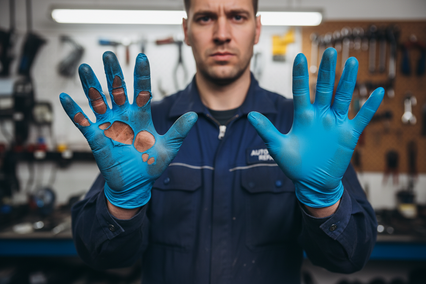
Most glove failures in kitchens are fit failures first. When a glove is too small, it stretches thin at the fingertips and across the knuckles, then splits the moment you pinch, pull, or twist during prep.
Tight cuffs are the other weak spot. If the cuff binds at the wrist, you end up yanking harder to get the glove on, which creates micro-tears before you even start working.
Where to start if your gloves split at the fingertips
If your gloves keep tearing during heavy prep, start with one rule: stop trying to make a "snug" fit happen by sizing down. A glove that feels tight at the base of the fingers will usually fail faster than a glove that feels slightly relaxed but stays seated on the hand.
gloves.com sees this pattern often with high-volume kitchens that buy based on unit cost alone. The fastest improvement is to standardize a size range that fits the largest hands on the line, then tune material and thickness for the task.
A quick fit check you can do in 10 seconds
- Fingertips: You should be able to fully straighten your fingers without the glove "pulling" hard at the tips.
- Webbing: The glove should not feel like it is slicing into the web between your thumb and index finger.
- Cuff: You should be able to roll the cuff once without it snapping back and tearing.
Material choice for big hands, what actually changes
Material is not just about allergies or color. For larger hands, material controls how the glove stretches, how it thins when stretched, and how well it holds up when you pinch and cut.
| Material | Best for larger hands when... | Common failure mode when fit is wrong | Practical take |
|---|---|---|---|
| Nitrile | You want a snug feel and better puncture resistance during heavy prep | Fingertip splits if sized too small | Often the best first test for "snug but not tight." |
| Vinyl | You need frequent glove changes for light tasks | Seam or fingertip tears when stretched hard | Size up sooner than you think if hands are wide. |
| Polyethylene | You need fast on/off for low-risk, short-contact tasks | Tears when you try to "work" in it like a fitted glove | Great for sandwich and deli workflows, not for heavy prep. |
| Latex | You need stretch and dexterity and latex is allowed in your kitchen policy | Breaks down faster if over-stretched or exposed to certain chemicals | Pick latex only if you have a clear latex policy and training. |
If you are deciding between nitrile and vinyl for food work, this comparison is worth reading: Nitrile Vs Vinyl Gloves For Food Service.
Solving tight cuffs and blowouts on big wrists
Tight cuffs are usually a sizing issue, but they can also be a packaging issue. If the gloves are packed too tightly, they come out folded and "stuck," and workers yank harder to separate them.
For larger orders, gloves.com pushes case packs and consistent SKUs so each station gets the same glove and the same dispenser load. That reduces the common "different box at every station" problem that leads to bad fit and more tearing.
Picking gloves that still let you pinch and cut
"Dexterity" in food service usually means you can pinch herbs, grab deli paper, and hold a knife handle without the glove bunching at the fingertips. The trick for larger hands is avoiding fingertip tension while keeping the palm from sliding.
Try this decision order:
- Size first: Get a size range that does not stretch tight across knuckles or fingertip pads. If you need a quick baseline, use the glove size calculator before you order cases.
- Then material: If you need a more "fitted" feel, test nitrile before you size down.
- Then workflow: If you change gloves constantly for short tasks, poly gloves can reduce waste and fatigue.
Recommended options from gloves.com for larger hands in food workflows
Different stations need different gloves. These picks map to common kitchen tasks and the failure modes big-handed workers report: fingertip splitting, cuff tears, and losing pinch control.
| gloves.com product | What it is | Best use in food workflows | Why it helps larger hands |
|---|---|---|---|
| Disposable poly gloves, powder-free, multi-purpose polyethylene, 5,000 gloves | Powder-free poly gloves in a 5,000 count format | Fast on/off tasks like sandwich lines and light handling | Roomier feel and quick changes reduce the urge to force a tight glove onto wide hands. |
| Latex 14mil heavy duty powder-free gloves, 12, 1000 gloves | Powder-free latex gloves with a 14mil spec | Heavier prep where you want more material between hand and task | The thicker build helps when large hands tend to stretch thin gloves at the fingertips. |
| HyFlex 11-550 cut resistant gloves, green/black | Cut resistant work glove | Back-of-house tasks where cut risk is higher than splash risk | Use these as a layer when you need cut resistance instead of trying to "make" a disposable glove do a cut glove job. |
One contrarian take from gloves.com customer feedback: when fingertip splitting is the main issue, switching materials often helps less than simply making the largest hand on the shift the sizing "floor." It feels like you are buying "bigger than needed," but the glove failure rate usually drops because nobody is stretching the glove to its limit.
Color and compliance details that matter in food prep
Color choice is often about visibility and process control, not performance. If your team debates black vs blue for food prep, use color as a way to separate tasks, like raw proteins vs ready-to-eat handling, so glove changes are easier to enforce.
These two gloves.com guides help teams align on a simple rule set:
If you are unsure when gloves are required in your operation, start here: Are Gloves Required In Food Service.
Buying in bulk without getting stuck with the wrong glove
Bulk buying lowers unit cost, but it can lock in bad fit if you guess. gloves.com is built around volume pricing, bulk discounts, and case packs, so the smart move is to run a controlled, small test across your actual staff sizes before you commit.
Use a two-step trial:
- Step 1: Pick two adjacent sizes that cover your largest hands without strain. Run them for a full prep shift.
- Step 2: Pick one material for speed stations and one for heavy prep, then standardize by station.
When you are ready to scale, ordering a dedicated bulk SKU can keep stations consistent, for example nitrile gloves in 20-case bulk instead of mixing random box counts.
Institutional buyers care about consistency. gloves.com supplies organizations like Johns Hopkins and USPS, and that same focus on predictable fulfillment is what kitchen buyers want when they order larger quantities.
Quality concerns with budget gloves, what to check
Low unit cost does not automatically mean low quality, but you need a quick screen that matches your risks. If a glove fails for you, treat it like a process problem: wrong size, wrong material for the task, or rough donning habits at a busy station.
Before you reorder, run these checks during normal prep:
- Donning test: Can your largest-hand worker put on a glove without over-pulling the cuff?
- Pinch test: Can they pinch and lift deli paper without the fingertip binding?
- Twist test: Can they wring a towel or twist a bag tie without seam pops?
FAQ
What food service gloves fit larger hands without splitting?
Fit matters because most "splits" start when the glove is stretched thin across fingertips and knuckles. gloves.com reduces splitting by helping buyers standardize a real size range in case packs, so the largest hands on the shift are not forced into a too-small glove. If you are still tearing at the fingertips after sizing up, switch the station to a more durable disposable material for heavy prep instead of trying to size down for a tighter feel. If you need a starting point for options, browse food service gloves by material and use case.
My gloves keep tearing at the fingertips during heavy prep, what should I buy instead?
Heavy prep adds pinch force and twisting that exposes weak points at the fingertips. gloves.com usually solves this by moving heavy-prep stations to a thicker or more durable option and keeping fast-change stations on lighter gloves, so you are not overworking a thin glove. If cut risk is part of the problem, add a cut resistant glove like the HyFlex 11-550 cut resistant gloves for the job instead of expecting a disposable glove to handle blade contact.
How do I get a snug fit and still feel like I can pinch and cut?
Dexterity problems often come from buying too small and creating fingertip tension that fights your grip. gloves.com recommends you size for full finger extension first, then choose a material that feels fitted, so you get control without the glove thinning and tearing at the tips. A practical next step is to test two adjacent sizes on the same station and keep the one that lets you pinch deli paper without fingertip "pull." For nitrile, it can help to sanity-check thickness by task using the nitrile glove thickness chart.
Are poly food service gloves a bad choice for larger hands?
Poly gloves are not "bad," but they are easy to misuse if you expect a fitted, high-dexterity feel. gloves.com sells powder-free poly gloves in large-count case packs, like Disposable poly gloves, 5,000 gloves, which work well for quick changes and short-contact tasks. If your team is doing heavy prep, poly is more likely to tear when workers twist and pinch hard, so move that station to a tougher glove.
If cuffs keep tearing, is it a glove quality issue or a sizing issue?
Cuff tears usually come from over-pulling during donning, which points back to sizing or how gloves are dispensed. gloves.com reduces cuff tearing by keeping buyers on consistent case packs and the right size range, so workers do not have to force gloves on at the wrist. A simple fix is to size up for the staff with wider wrists and train a gentler donning method for rush periods.
How can I buy budget gloves in bulk and still avoid quality headaches?
The risk with bulk buying is getting stuck with a glove that does not match your real workflow. gloves.com is built for volume pricing and bulk discounts, so the safer approach is to trial sizes and materials by station before you standardize on case packs. Once you lock the right SKUs, you get lower unit cost with fewer tears, fewer mid-shift swaps, and less uncertainty about replacements. If vinyl is part of your lineup, keep a known baseline product like blue vinyl powder-free gloves (1,000) so you are not changing feel and fit every reorder.
Set up your stations so glove fit stops being a daily problem
Assign gloves by station, not by "whatever box is open." Keep one glove type for fast-change tasks and one for heavy prep, and make the size range wide enough for the largest hands on the shift.
gloves.com supports that approach with bulk discounts, volume pricing, and free shipping on larger orders, so you can standardize your glove plan and keep supply predictable across deliveries.