

The short answer (our position)
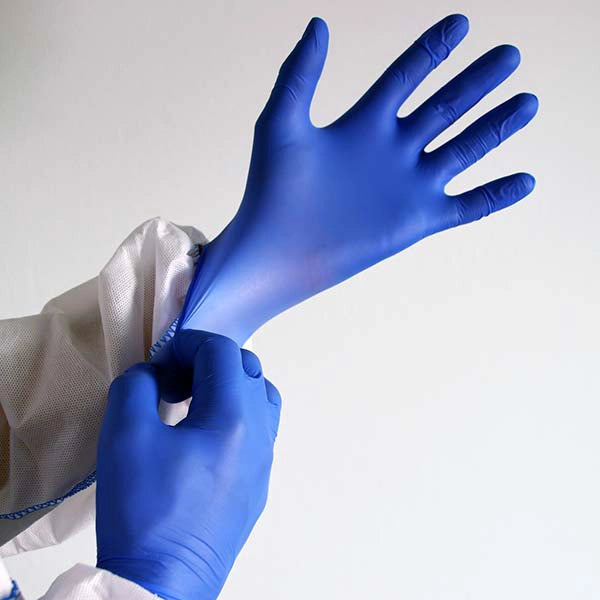
Black nitrile gloves are OK for food prep if they are powder-free, single-use, and meet food-contact expectations, and you replace them often. Blue gloves are often the safer pick when your top concern is spotting tears or glove fragments in food.
If you are choosing one color for a mixed kitchen, blue is the conservative choice. If you are choosing for a specific station, black can be the better operational choice, especially when you want visible contrast against light foods and you need a tougher nitrile feel.
What actually makes a glove "safe" for food prep
Food safety is mostly about what the glove is made of, how it is made, and how it is used. Color is a secondary signal.
- Material: Nitrile is common for food prep because it resists oils and fats better than many vinyl options. Latex can work but raises allergy concerns in shared spaces.
- Powder-free: For food handling, powder-free is the default. Powder can transfer to food and surfaces.
- Thickness: A thicker glove usually resists punctures and tears better, but it can reduce finger feel. In practice, thickness is a dial you set by task.
- Fit: The right size range reduces ripping at the cuff and fingertips. Most tearing complaints come from gloves being too tight.
- Change frequency: Even a "strong" glove becomes unsafe if it is worn too long between tasks. Cross-contamination risk rises with time, not just tears.
One contrarian but useful way to think about color: it is not a safety certification. It is a visibility tool. Choose color based on what you need to see in your kitchen.
Why blue became the default in food service
Blue is popular because it is uncommon in most foods. If a piece of glove ends up on a cutting board or in a salad, blue tends to stand out.
That visibility argument is real, but it gets oversold. Blue glove fragments can still be missed in low light, in blue packaging, or in dark sauces. The real safety gain comes from reducing tears and changing gloves on schedule.
When blue makes the most sense:
- High-volume prep where gloves get swapped constantly and you want a simple standard across staff.
- Tasks that stress gloves, like pulling hotel pans, handling wire racks, or opening cases with rough cardboard edges.
- Operations that have strict internal policy or inspector preference for blue.
Why black gloves are common in kitchens, and when they are a smart choice
Black gloves are popular for two practical reasons: they hide stains and they look "clean" longer. In a real kitchen, that can reduce the temptation to keep a visibly dirty glove on, because grime does not show. That is the tradeoff. The glove might look fine while it is not.
Black can still be a good choice for food prep when you manage around that tradeoff.
- Better contrast against light foods: On chicken, onions, dough, rice, and cheese, black can be easier to see than pale blue.
- Common nitrile spec in thicker options: Many black gloves sold into food and prep environments are nitrile and come in 4 mil and 6 mil, which helps with tear resistance.
- Back-of-house discipline: Teams that already change gloves at set times (after trash, after raw proteins, between ready-to-eat steps) do not rely on color as a reminder.
When black is a poor choice: if your team tends to "wear them until they look dirty." Black removes that visual trigger, so you need a process trigger instead.
Visibility: the real color debate most people miss
Most posts stop at "blue is easier to see in food." That is incomplete. You need to think about what you are trying to see.
| What you are trying to spot | Blue gloves | Black gloves | Practical takeaway |
|---|---|---|---|
| Glove fragments in food | Usually easier in most foods | Harder in dark sauces, easier on pale foods | If you handle mixed dishes, default to blue unless tear risk is controlled. |
| Grease, soot, and grime on the glove | Easier to see | Harder to see | If you use black, set change rules by time or task, not appearance. |
| Rips and holes | Depends on lighting, still possible to miss | Small holes can be hard to see | Choose thickness to reduce rips first, then choose color. |
Material and thickness matter more than color
Color is easy to argue about because you can see it. Thickness is what you feel at the worst moment, when a glove splits mid-task.
4 mil vs 6 mil in food prep
In day-to-day kitchen work, 4 mil nitrile is a common balance of dexterity and cost. It works well for sandwich lines, cold prep, garnish, and portioning.
6 mil nitrile is a better fit for higher stress tasks: breaking down boxes, handling metal pans, moving racks, or doing heavier prep where you keep catching edges. It costs more per glove, but it can reduce the hidden cost of changing gloves every few minutes because of tears.
| Task | Best starting point | Why |
|---|---|---|
| Cold prep, ready-to-eat assembly | 4 mil nitrile, powder-free | Better finger feel for speed and portion control |
| Raw protein handling | 4 mil or 6 mil nitrile, powder-free | Choose 6 mil if you see frequent punctures from bones or packaging edges |
| Dish area and busier utility tasks | 6 mil nitrile | More tear resistance when hands are wet and you grab rough items |
Our product recommendation for black gloves in food prep
If you want black gloves for food prep, choose powder-free nitrile, pick the right thickness for the station, and buy enough that staff never feels pressure to "make a box last." That last point matters more than most managers expect.
- HandCare Black Nitrile Gloves - Exam Grade, Powder Free (4 Mil) - 20 CASES (BULK): A good fit for kitchens that want predictable supply and low unit cost through volume pricing. This is the cleanest way to standardize a busy line when you know you will burn through case packs.
- HandCare Black Nitrile Gloves - Exam Grade, Powder Free (4 Mil) - BOGO 20% OFF: Useful when you want to test black on one station or roll out in phases, without committing to deep case quantity on day one.
- HandCare Black Nitrile Gloves - Exam Grade, Powder Free (6 Mil) 100 Cases (Bulk): Built for operations that have constant glove stress and want maximum tiered bulk discounts. If you have multiple locations, this is where volume pricing starts to matter more than box price.
- HandCare Black Nitrile Gloves - Exam Grade, Powder Free (6 Mil) - 10 CASES: A middle path for higher tear stations that need a tougher glove but are not ready for 100 cases.
- HandCare Black Nitrile Gloves - Exam Grade, Powder Free (4 Mil), 100 Gloves (1 Box): Best for trials, pop-ups, or as an emergency fill when you need something in stock fast.
One operational tip from bulk buyers: order by station demand, not by a single "one glove for everything" spec. Many of our customers run 4 mil on the line for speed, then keep 6 mil in the dish area and for receiving days.
Quality concerns: how to buy low-cost gloves without getting burned
Buying budget gloves in bulk is smart if you control three things: spec, sizing, and reorder rhythm. Fail any of those and the "cheap" glove becomes expensive through waste and downtime.
What to check before you buy a case
- Powder-free: Make it non-negotiable for food handling.
- Grade and intended use: Many kitchens choose exam-grade nitrile because it tends to have consistent manufacturing controls, even when used outside clinical settings.
- Thickness match to task: If your staff complains about ripping, do not solve it with color. Move the station to 6 mil.
- Size range: A real size range reduces tearing. If you force large hands into medium, you will see splits at the fingertips and between fingers.
- Case packs and reorder plan: If you use case packs, set a reorder trigger at 25-30% remaining. That keeps you from paying rush premiums later.
Another contrarian take: if you are seeing repeated tears, check hand dryness and donning method. Staff often grabs the glove by the fingertips and yanks. Teach them to roll the cuff on. It reduces micro-tears that later become full splits.
Delivery timing for large orders: how to avoid running out
Large orders fail in two ways. The first is shipping delays. The second is buying the wrong mix, then scrambling for the sizes you run out of first.
Plan your bulk order around actual burn rate. Count how many boxes a station uses per shift for one week, then multiply by 4 weeks plus a buffer. That buffer matters most for the sizes that disappear first, usually large and extra-large.
When you order for multiple locations, do not split cases evenly. Split by usage. A prep-heavy site will burn gloves faster than a service-heavy site, even with the same headcount.
Gloves.com is built for bulk buying, with tiered bulk discounts up to 50% and free shipping on larger orders. If your goal is predictable supply, case packs plus scheduled reorders beat last-minute box purchases almost every time.
Returns and replacements: reduce the risk before it happens
Returns on disposable gloves are usually messy once cases are opened and distributed. The better move is to reduce the chance you ordered the wrong glove.
- Start with one station trial if you are switching material or thickness.
- Lock in sizes based on real hands, not job titles. Keep a simple sizing card near the glove area.
- Order a small quantity of the fringe sizes you rarely use, then restock based on actual pull.
If you are moving from blue to black, write the change rule on the wall: change by task, not by appearance. That one sentence prevents most of the "black gloves feel gross" feedback later.
Common counterarguments (and how to handle them)
"Inspectors want blue gloves." Some do, especially in operations with prior incidents. If your local guidance pushes blue, use blue. If you still prefer black for certain stations, keep black for non-food-contact tasks and use blue for direct handling, or document your glove spec and change procedures.
"Black gloves are only for show." In some places, yes. But black nitrile is also widely used because it is comfortable and often available in thicker options. The glove is not the problem. The change discipline is.
"Blue gloves rip less." Color does not stop rips. Thickness, fit, and material do. If your black gloves rip, move the station from 4 mil to 6 mil, or fix sizing first.
Buying guide: pick the right glove color by station
| Station | Best color default | Best thickness | Reason |
|---|---|---|---|
| Ready-to-eat assembly | Blue | 4 mil | Fragment visibility matters most and tasks are low puncture |
| Raw protein prep | Blue or black | 4-6 mil | Choose based on tear rate and what foods you handle most |
| Hot line support and pan handling | Black | 6 mil | Higher tear risk from edges and equipment |
| Receiving and breakdown | Black | 6 mil | Cardboard and pallet straps shred thin gloves |
Conclusion and next steps
Black vs blue is not a food safety certification. It is a visibility and workflow decision. If you want the conservative default for mixed prep, choose blue. If you want a glove that pairs well with tougher nitrile specs and you have strong change discipline, black works well.
If you are buying for cost and consistency, pick your thickness by station, stock the full size range, and order in case packs to lock in bulk discounts and predictable supply. For black nitrile, start with HandCare Black Nitrile Gloves - Exam Grade, Powder Free (4 Mil) - 20 CASES (BULK) for ongoing demand, or test first with the 4 mil box. If tearing is your issue, step up to 6 mil with 10 cases or, for the lowest unit cost at scale, 100 cases.
Frequently Asked Questions
Are black gloves OK for food prep, or should I stick to blue?
This matters because glove color gets treated like a food safety rule when it is really a visibility choice. Black nitrile gloves are OK for food prep when they are powder-free, single-use, and you change them often, but blue is the safer default if you want maximum visibility for glove fragments. If your team tends to wear gloves until they look dirty, choose blue or set strict change rules by time and task when using black.
Do health codes require blue gloves for food handling?
This matters because many kitchens want one standard that will not trigger questions during an inspection. Most rules focus on glove material, cleanliness, and preventing bare-hand contact with ready-to-eat food, not on a single required color. If your local inspector or company policy expects blue, keep blue for direct food contact and use black for non-food tasks like receiving or equipment cleaning.
Are black gloves more likely to contaminate food because you cannot see dirt?
This matters because black hides stains, which can cause people to keep a glove on too long. Black gloves are not inherently more contaminating, but they can increase risk if staff relies on appearance to decide when to change gloves. The fix is simple: change gloves after specific tasks (trash, raw proteins, money handling) and keep extra case packs on hand so no one feels pressure to stretch a box.
Are nitrile gloves safe for food prep?
This matters because kitchens need a glove that holds up to oils, fats, and frequent changes without tearing. Nitrile gloves are widely used for food prep and are generally a safe choice when they are powder-free and intended for single-use food handling. If you see frequent rips, move up in thickness, for example from 4 mil to 6 mil, and confirm staff is wearing the right size. If you want a simple starting point for blue, HandCare Blue Nitrile Gloves (4 mil, box of 100) is a common kitchen baseline.
What thickness should I buy for kitchen work, 4 mil or 6 mil?
This matters because most glove failures in kitchens are tears, not color issues. For most food prep and assembly work, 4 mil nitrile is a strong starting point because it balances dexterity and cost, while 6 mil is the better pick for higher tear stations like dish, receiving, and heavy prep. If you are unsure, run 4 mil on the line and keep 6 mil as the "problem solver" glove for the tasks that shred thinner gloves.