
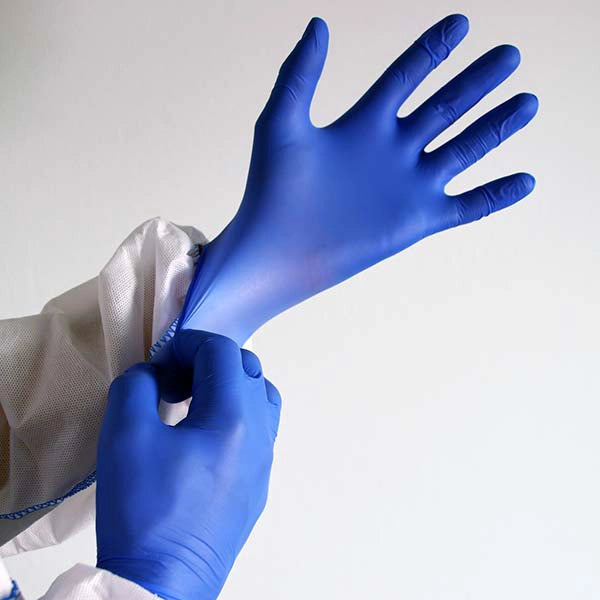

If you have small hands, most "latex-free" glove advice feels useless in practice. The glove might be latex-free, but if the fingers run long or the palm is loose, you lose grip, drop tools, and waste time pulling material back into place. In healthcare, cleaning, food prep, labs, and light industrial work, that poor fit can also raise the risk of tears when extra material snags.
The good news is that baggy fingers are usually predictable. They come from a few measurable fit issues, like finger length, palm width, and cuff stretch, plus the material you pick (nitrile, vinyl exam gloves, or neoprene). If you know what to check, you can buy low-cost gloves with a clean, snug fit.
This guide focuses on latex-free disposable gloves that actually work for small hands, with practical sizing checks, ordering tips for case packs, and what to do if a batch fits wrong. We will also call out two exam grade, powder-free nitrile options we stock that customers routinely choose when they need a tighter, more "true-to-size" feel.
Why baggy fingers happen (and why "small" is not a standard)
Glove sizing is not regulated like shoe sizing. One brand's Small can feel like another brand's Medium, and finger length can vary a lot even when the palm width is similar.
Baggy fingers usually come from one of these issues:
- Finger length runs long for the size. The glove is sized for a longer hand, so the fingertips collapse.
- Palm is too wide. Extra palm width pushes material into the fingers and creates folds.
- Low elasticity material. Some materials do not "snap back" to your hand, so they stay loose even if the size is close.
- Over-ordering to avoid tears. People move up a size because a glove feels tight, then end up with baggy fingertips and worse dexterity.
A contrarian but useful take: if your gloves keep tearing at the thumb crotch or along the palm seam area, going bigger is often the wrong fix. The better fix is a glove that matches your palm width but has better stretch and a more consistent pattern in the fingers. For most small hands that means nitrile, not vinyl.
Where to start (quick path to a better fit)
If you want the simplest way to avoid baggy fingers, do this:
- Start with powder-free nitrile in your usual size, not a size up.
- If you are between sizes, choose the smaller size and look for exam grade nitrile with good stretch.
- Buy one box first, then move to case packs once you confirm the fit.
Two latex-free options we recommend for small-hand fit are:
- Kingfa Blue Nitrile Gloves - Exam Grade, Powder Free (4 Mil) - BOX
- HandCare Blue Nitrile Gloves - Exam Grade, Powder Free (4 Mil) 100 Gloves (1 Box)
Both are exam grade, powder-free nitrile at 4 mil, a thickness many customers like because it balances touch feel and durability without feeling stiff in the fingertips.
How to choose latex-free gloves that actually fit small hands
Step 1: Check your hand shape, not just your size
Small hands are not all the same. Some people have narrow palms with long fingers, others have wider palms with short fingers. Baggy fingertips show up most when your palm fits but finger length runs too long.
Use this quick self-check:
- If the palm feels good but fingertips collapse, you need a glove with a shorter finger pattern, not a tighter palm.
- If the glove twists on your hand or bunches at the base of the fingers, the palm is too wide.
- If you cannot pinch small items or use a touchscreen, the glove is too loose at the fingertips or too thick for the task.
Step 2: Pick the right material for small-hand dexterity
Latex-free usually means nitrile, vinyl, or neoprene (less common for disposables). For small hands, elasticity and pattern consistency matter more than people expect.
| Material | How it tends to fit small hands | Best use | When it causes baggy fingers |
|---|---|---|---|
| Nitrile | More elastic than vinyl, better "snap" around fingertips | General exam, cleaning, light industrial, food handling (non-high-heat) | When you size up due to tightness instead of changing glove style |
| Vinyl | Looser feel, less stretch, often longer fingers in practice | Short tasks with low exposure risk and frequent changes | Often, even at correct size, because the material does not conform well |
| Neoprene | Good stretch and comfort, usually a closer fit | Chemical splash resistance in some settings (check compatibility) | Less common issue, but pricing can push buyers to size up and accept looseness |
If your top complaint is baggy fingers, nitrile is usually the best first move. It is latex-free, it stretches enough to reduce fingertip collapse, and it tends to be more consistent across case packs than low-cost vinyl.
Step 3: Match thickness to the work (4 mil is a safe baseline)
Very thin gloves can feel great on fingertips, but they can also tear faster when you have small hands and pull hard at the cuff to seat the glove. Very thick gloves can solve tearing but can make the fingertips feel clumsy, which leads people to size up.
A 4 mil nitrile exam glove is a practical middle ground for many jobs. It is thin enough for dexterity and thick enough for routine tasks like wiping down stations, handling packages, patient exams, and general shop work that is not heavy abrasion.
Two latex-free nitrile picks that tend to fit small hands well
We focus on disposable and work safety gloves, and we see the same pattern in feedback: small-hand buyers want a glove that feels "true" in the fingertips, not just at the palm. Here are two in-stock options that match that need for many teams.
Kingfa Blue Nitrile Gloves - Exam Grade, Powder Free (4 Mil) - BOX
This is a latex-free, powder-free, exam grade nitrile glove at 4 mil. It is a strong default if you want a snug feel without jumping to a thicker glove.
- Good pick when you need fingertip control for small parts, wipes, or instruments.
- Works well for teams standardizing across a size range, since nitrile stretch helps reduce fit complaints between adjacent sizes.
- Smart choice before you commit to case packs, because a single box is an easy fit test.
HandCare Blue Nitrile Gloves - Exam Grade, Powder Free (4 Mil) 100 Gloves (1 Box)
This is also a latex-free, powder-free, exam grade nitrile glove at 4 mil, sold as a 100-glove box. If you are trialing gloves for small hands across a department, this format makes it simple to buy a few boxes in different sizes and compare.
- Useful for clinics, janitorial closets, and front-of-house food prep where gloves are changed often.
- A good test box for people who normally size up to stop tearing.
How to test fit in 60 seconds (before you order case packs)
Do this with one glove, on your dominant hand. You will know fast if baggy fingers will be a problem.
- Pinch test: pinch a paper towel corner or a single wipe. If you pinch air or the glove folds, the fingertips are too long or too loose.
- Twist test: twist an alcohol wipe or rag once. If the glove spins on your hand, the palm is too wide.
- Tool test: pick up a pen, small screw, or key. If the glove bunches at the tips, you will fight it all shift.
- Cuff seat: pull the cuff on once, then stop. If you need repeated tugging to seat the glove, you might be in the wrong size or need a glove with better stretch.
When you get the fit right, you should be able to rub thumb to index fingertip and feel contact without a thick fold of material.
Buying in bulk without getting stuck with the wrong fit
Small-hand buyers get burned when they order case packs too early. The unit price looks great, then 1,000 gloves later they are still fighting baggy fingertips.
A better approach is a two-step buy:
- Order 1-3 boxes in adjacent sizes for a fast fit check on real tasks.
- Once the team agrees, move to case packs and use bulk discounts and volume pricing to cut unit cost, for example by ordering a 1,000-glove nitrile case pack.
If you are ordering for multiple users, stock two sizes, for example XS and S or S and M. In practice, that reduces waste because people stop forcing the wrong size.
For large replenishment cycles, plan to reorder before you hit the last case. That helps protect delivery timing and avoids emergency buys where you take whatever size is left.
Quality concerns with low-cost latex-free gloves (what to check)
Budget pricing does not have to mean random quality, but you should know what to look for. Most "failed glove" complaints come down to either the wrong thickness for the job or poor fit that puts stress in the wrong spots.
Here are practical checks you can do on arrival:
- Visual check: look for thin spots at fingertips and between fingers on a few gloves per box.
- Stretch check: gently stretch the glove at the palm and fingers. A glove that feels brittle or uneven is more likely to tear.
- Leak check (simple): fill one glove with water over a sink and watch for drips at fingertips and seams. Do not do this with your last pair.
If you need formal standards language for internal SOPs, the FDA maintains information on medical gloves and testing expectations. See: https://www.fda.gov/medical-devices/personal-protective-equipment-infection-control/medical-gloves.
How to stop baggy fingers without sizing down into tears
If you size down too far, you trade baggy fingers for ripping at the cuff or thumb. The goal is a glove that fits your palm and still gives fingertip control.
Try this order of operations:
- Switch material first: if you are using vinyl, move to nitrile before you change sizing strategy. If you need a baseline product to compare against, try a standard case like nitrile powder-free exam gloves (1,000 gloves).
- Stay at the same labeled size: test a different nitrile option in the same size before you drop a size.
- Only then size down: if two nitrile gloves in your current size both have baggy fingertips, try one box down.
This is where exam grade, powder-free nitrile at a moderate thickness helps. It usually gives you enough stretch to keep a snug fingertip without feeling like the glove is cutting into your knuckles.
Delivery timing and large orders (how to avoid running out)
Large glove orders fail for simple reasons: the buyer waits until the last case, then shipping becomes a crisis. Build a reorder point based on how many case packs you go through per week.
A simple method that works for most teams:
- Track how many boxes you use in 7 days.
- Multiply by 3.
- When inventory hits that number, reorder.
If you have multiple locations, do not split the last case across sites. Send a full case to the highest-use location and reorder. That prevents partial shortages everywhere.
When you are ready to scale, choose vendors that support predictable supply, clear case packs, and free shipping on larger orders, for example a bulk listing like ASAP Orange Nitrile Gloves (1,000 gloves, bulk). It keeps your unit cost low and your receiving schedule easier to manage.
Conclusion and next steps
Latex-free does not guarantee a good fit for small hands. To avoid baggy fingers, start with powder-free nitrile, confirm fingertip control with a quick pinch test, and only then commit to case packs.
Next steps:
- Pick one box to test: Kingfa Blue Nitrile Gloves - Exam Grade, Powder Free (4 Mil) - BOX.
- If you are comparing sizes for a team, add: HandCare Blue Nitrile Gloves - Exam Grade, Powder Free (4 Mil) 100 Gloves (1 Box).
- Once fit is confirmed, move to case packs and use bulk discounts, volume pricing, and free shipping on larger orders to lock in a low unit cost.
Frequently Asked Questions
What are the best latex-free gloves for small hands if I keep getting baggy fingertips?
Baggy fingertips usually mean the glove pattern is too long in the fingers or the material is not elastic enough to conform to your hand. The best fix for most small hands is a powder-free nitrile exam glove in the correct size, because nitrile stretch reduces fingertip collapse without forcing you to size up. Start by testing one box of a 4 mil nitrile option like the Kingfa Blue Nitrile Gloves (exam grade, powder-free) and confirm fit with a quick pinch test before you buy case packs.
How do I know if I should buy XS or S in latex-free nitrile gloves?
Choosing between XS and S matters because sizing up to avoid tightness often causes baggy fingers and worse grip. If the palm of a Small feels loose or the glove twists when you turn a wipe or rag, you should try XS; if XS tears at the cuff during donning, you likely need S in a glove with better stretch. Buy one box in each size, run a 60-second pinch and twist test, then standardize the winner for bulk discounts and volume pricing.
Are nitrile gloves better than vinyl for small hands?
Material choice matters because vinyl usually has less elasticity and tends to feel looser at the fingertips, especially on smaller hands. For most users, nitrile is better than vinyl when you want latex-free gloves that fit small hands without baggy fingers, since nitrile stretches and holds shape more like a second skin. If you are switching from vinyl, keep the same labeled size in nitrile first, then adjust sizing only if you still see fingertip collapse.
What thickness should I choose to avoid baggy fingers but still prevent tears?
Thickness affects both dexterity and tear risk, and sizing up to get "stronger" gloves is a common cause of baggy fingertips. A 4 mil, powder-free, exam grade nitrile glove is a reliable starting point for many tasks because it balances touch feel with day-to-day durability. If you still tear gloves during donning, look for better stretch and fit first, then consider a thicker option for higher-abrasion work like an 8 mil exam grade nitrile.
What should I do if I buy a case and the gloves fit wrong?
Large orders are where fit mistakes get expensive, especially for small-hand users who cannot "make do" with long fingers. If a case arrives and the gloves feel loose at the fingertips or twist on the palm, stop issuing them widely and test one box in the next size or a different nitrile option so you can correct the next reorder fast. Keep the misfit case as backup for low-dexterity tasks, and document what went wrong (size, lot, and who tested) so purchasing does not repeat the same case pack mistake.