
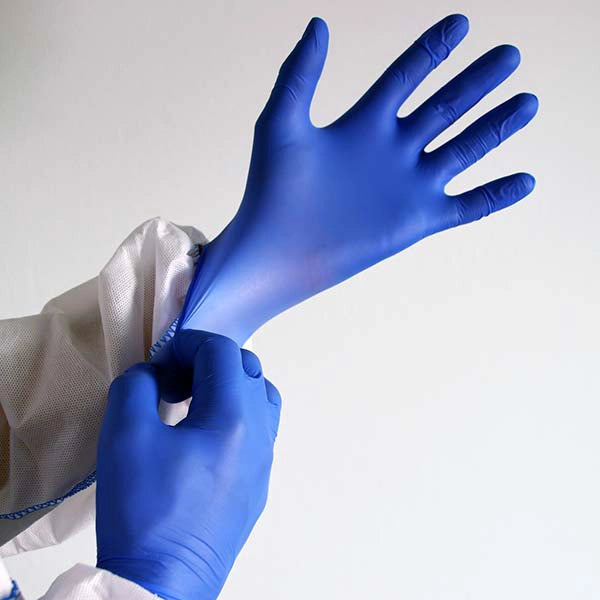

Buying exam gloves for a small clinic or dental office sounds simple until you do it by the case. Suddenly you are balancing latex-free requirements, medical grade specs, audit risk, and delivery timing, all while trying to keep cost per glove down. If you have ever opened a new case and found inconsistent sizing, a strong odor, or torn cuffs, you already know that the cheapest line item can become the most expensive problem.
The practical goal is predictable supply at a predictable unit cost, with gloves that hold up during real procedures, not just quick try-ons. That means you need a repeatable way to choose material (nitrile vs vinyl vs latex), match thickness to the work, control for lot-to-lot consistency, and order in case packs that fit your storage and burn rate.
This guide lays out a step-by-step buying method we use with small healthcare and dental customers who order by the case. It includes a simple forecasting method, a pass/fail checklist for inspections, and a clear recommendation for latex-free dental use so you can reorder with confidence.
Where to start (a simple 20-minute plan)
If you want a fast path to a correct first case order, start here. You will avoid the two most common mistakes we see: buying the wrong material for the work, and buying a mixed-size case that creates waste.
- Pick the material first. For most dental offices that want latex-free gloves, start with medical grade nitrile.
- Confirm your size range. Look at what your team actually uses for the last 2-4 weeks, not what the box says should fit.
- Choose powder-free. In clinical settings, powder-free reduces mess and avoids powder-related sensitivity issues.
- Order a single size per case pack when possible. Mixed cases sound convenient but often lock you into the wrong proportions.
- Set a reorder point. Put a sticky note on the shelf with "reorder at X cases" so you are not paying rush rates later.
What "by the case" really means (and why it matters)
Buying by the case is not just "more boxes." Case packs usually reduce your unit cost, but they also raise the stakes on fit, durability, and storage. A bad box is annoying. A bad case disrupts a week of patient care.
Cases also reduce the number of supply decisions you make each month. That is a win if you pick the right glove. It is a problem if you pick the wrong one, because you will either burn through it with complaints, or you will overstock something your team avoids.
When you buy by the case, think in these terms: cost per glove, failure rate (tears, cuff roll-down, pinholes), and "days of supply on shelf." If you cannot estimate those three, you are guessing.
Latex-free glove materials for clinics and dental offices
Most "latex-free" buying decisions come down to nitrile vs vinyl. Latex can still be appropriate in some medical settings, but many dental offices prefer to avoid it due to allergy policies and patient perception.
Nitrile (the default recommendation for latex-free dental use)
Medical grade nitrile is usually the best latex-free choice for dental work because it balances puncture resistance, dexterity, and chemical resistance. Dental procedures often include fine motor work, stretching around instruments, and contact with disinfectants. Nitrile tends to handle that mix well.
If you are trying to answer "best latex free gloves for dental office use," the practical answer is: powder-free, medical grade nitrile, in the right thickness for your procedures, in the size range your team actually wears. For a deeper breakdown, see dental gloves.
Vinyl (acceptable for low-risk tasks, not a primary dental exam glove)
Vinyl can work for short, low-risk tasks like food handling in breakrooms or quick non-clinical cleaning. For clinical exam use where you need a secure fit and fewer tears, vinyl often fails in ways that create hidden cost. You might save per box and lose it in glove changes during procedures. If you keep vinyl on hand for low-risk tasks, stock a consistent option like vinyl powder-free exam gloves so staff are not switching brands case to case.
Latex (performance is good, policy often says no)
Latex can feel great and often has strong elasticity, but latex-free policies exist for a reason. If your office has any latex sensitivity history, or you want a simple policy you do not have to explain to patients, latex-free keeps it clean.
How to choose the right thickness for dental and clinical work
Thickness is where "budget gloves" either work fine or become a problem. A thinner glove can feel better for dexterity, but it can tear more often when you stretch it over the cuff, pull it tight, or snag it on instruments.
Use this rule of thumb when ordering by the case: if you are changing gloves mid-procedure due to tears even once a day, you are paying too much. One mid-procedure change costs time, breaks flow, and increases glove usage.
| Task type | What to prioritize | Recommended material |
|---|---|---|
| Dental exams and routine procedures | Dexterity + tear resistance | Medical grade nitrile, powder-free |
| Instrument processing and disinfectant exposure | Chemical resistance + durability | Nitrile (consider thicker options) |
| Front desk, non-clinical cleaning, light tasks | Low cost + convenience | Vinyl or nitrile depending on policy |
Pass inspections: what to look for when you need medical grade gloves
If you are searching "where to get bulk medical grade gloves that pass inspections," you are really asking how to lower audit risk. Inspections usually do not fail you because a glove is "cheap." They fail you because documentation is unclear, labeling does not match the use, or the product is inconsistent.
Here is a practical checklist you can run on your next delivery. It takes 5 minutes per case.
- Check labeling: Look for "medical grade" on the box if you are using it for clinical exam use.
- Confirm powder-free: Powder-free is standard for most clinics and dental ops.
- Spot-check sizing: Pull 2 gloves from 3 different boxes in the case, check fit and cuff tension. If sizing feels off, stop and quarantine the case until you decide.
- Quick tear check: Put one glove on, stretch each finger gently, then pull at the cuff. If it tears easily, do not put the case into active stock.
- Track lot info: Take a photo of the case label and keep it in your supply folder. If you ever need a replacement, it saves time.
One brand-specific insight from how our customers buy: clinics that log lot photos have fewer "no one knows which box it came from" situations when a staff member reports a problem. It is simple, and it keeps returns clean.
Case pack math: forecast your burn rate and stop emergency orders
Small clinics often over-order one size and under-order another. The fix is not complex forecasting. It is a basic count based on your real weekly usage.
Use this method:
- Count how many boxes you went through last week by size (XS, S, M, L, XL).
- Multiply by 4 to estimate monthly usage.
- Add a buffer of 10-20% if you have seasonal swings, new providers, or back-to-school volume.
- Set a reorder point at 2-3 weeks of stock on hand, so shipping time does not put you in a bind.
Example: If you use 6 boxes of medium nitrile and 4 boxes of small nitrile per week, that is about 24 medium and 16 small per month. If your case packs are 10 boxes per case, you are looking at about 3 cases of medium and 2 cases of small per month with a little buffer.
Storage and shelf discipline (what breaks predictable supply)
Buying by the case only helps if you can store and rotate cases correctly. Heat, sunlight, and crushing boxes under heavy stock can affect glove performance over time.
- Store cases in a cool, dry place away from direct sunlight.
- Do not stack heavy items on top of glove cases.
- Use first-in, first-out rotation so older lots are used first.
- Keep one open "active" case per size and stash the rest sealed.
A simple operational detail that works: label your shelves by size and material (for example "Nitrile M," "Nitrile S"). When a temp or new hire restocks, they do not mix boxes and confuse counts.
How to keep unit cost low without buying gloves that fail
Low price is not the problem. Unstable supply and high failure rates are. When you buy by the case, you want budget pricing with predictable performance.
Use this value check:
- Compare cost per glove, not cost per box. Case packs make this easier to see.
- Track glove changes during procedures for one week. If one glove type forces extra changes, its real unit cost is higher.
- Standardize on 1-2 glove types. Too many options create dead stock.
At gloves.com, many customers buy exam gloves by the case for the same reason: volume pricing and bulk discounts up to 50% lower unit cost when they commit to consistent case orders. When they standardize sizes and reorder on a schedule, they also reduce last-minute purchases that cost more and ship slower. If you want a common baseline SKU to standardize around, Handcare blue nitrile exam gloves (powder-free, exam grade) is a typical starting point for high-volume case orders.
Delivery timing: how to order so you do not run out
Large orders feel risky because the consequence of a late delivery is immediate. The fix is a reorder point and a simple "two shipment" approach.
- Keep a minimum of 2-3 weeks of stock on shelf.
- If you are increasing volume, place one order now and one scheduled order 2 weeks later instead of one huge jump.
- Keep one emergency case in your least-used size, because it can be traded internally if needed.
We also see fewer timing issues when clinics stick to items that are clearly marked in stock, then reorder the same SKU instead of switching each month based on whatever is cheapest that day.
Returns and replacements: set expectations before you buy a pallet's worth
Uncertainty around returns keeps clinics from using bulk discounts. You do not want to be stuck with cases your team refuses to wear.
Before you commit to multiple cases, make a simple internal rule:
- Trial one case for sizing and feel, then scale to 3-6 cases once staff sign off.
- Document issues immediately with photos of the box and lot code.
- Quarantine problem cases so they do not get mixed into active stock.
If you run a tight process, replacements are straightforward because you can point to a specific case, lot, and issue instead of guessing.
Recommended buying setups (clear verdicts)
These setups fit most small clinics and dental offices that want latex-free and want to buy by the case without surprises.
| Office type | Recommendation | Why it works |
|---|---|---|
| Dental office (latex-free policy) | Powder-free medical grade nitrile exam gloves by the case, one size per case | Reliable fit and tear resistance for dental work, easy reordering and forecasting |
| Small family clinic (mixed tasks) | Nitrile medical grade for exam rooms, optional lower-cost glove for non-clinical tasks | Keeps clinical gloves consistent while controlling spend on low-risk use |
| Startup clinic with tight storage | Start with 1 case each of top two sizes, then expand once usage data is real | Prevents overstock in the wrong size range |
Shop exam gloves by the case (verified links)
For clinics that want predictable supply, case packs, and volume pricing, these are the fastest starting points:
When you build your cart, check that the glove is powder-free, medical grade (for clinical exam use), and in stock. Then line up cases by size so you do not end up heavy on medium and short on small, which is the most common imbalance we see in small offices. If you are comparing materials across roles in the office, glove material guide by job role helps you keep clinical use and low-risk tasks separated.
FAQ
What are the best latex-free gloves for dental office use?
Dental work needs a latex-free glove that keeps dexterity while resisting tears during frequent on-and-off changes. The best all-around choice for most dental offices is powder-free, medical grade nitrile exam gloves in the correct size range for your team. If you are getting fingertip tears or cuff roll-down, move to a more durable nitrile option and standardize one size per case so staff stop grabbing "close enough" sizes.
Where can I get bulk medical grade gloves that pass inspections?
Passing inspections depends on buying gloves that are labeled for medical exam use and keeping basic lot documentation so you can trace issues. You can reduce inspection risk by ordering medical grade, powder-free exam gloves by the case and saving a photo of the case label and lot code when the shipment arrives. If anything looks inconsistent, quarantine the case and report it with lot details so you do not mix it into clinical stock.
Should I buy mixed sizes in one case or separate cases by size?
The decision matters because wrong size distribution creates waste, especially in small offices with a predictable team. For most small clinics, separate cases by size work better because you can match your real burn rate, keep shelves organized, and reorder without guessing. If you are new or changing staff, start with one case of your top two sizes, measure usage for 2-4 weeks, then adjust your case split.
How many cases of exam gloves should a small clinic keep on hand?
Stock level matters because running out forces expensive emergency orders and product switching that upsets staff. A practical minimum is 2-3 weeks of supply on the shelf in each high-use size, with a reorder point set before you hit that minimum. If your delivery times vary, add one extra case as a buffer and rotate stock first-in, first-out so older lots get used first.
Conclusion and next steps
Buying exam gloves by the case works when you standardize the material, confirm the size range from real usage, and set a reorder point that covers shipping time. For most small dental offices that want latex-free, powder-free medical grade nitrile is the clean default because it balances dexterity and durability.
Next steps: estimate weekly box usage by size, decide how many case packs you need for a month, and place a first case order in your top sizes. When the shipment arrives, do a quick spot-check across boxes and save a photo of the lot label so replacements are simple if you ever need them.