
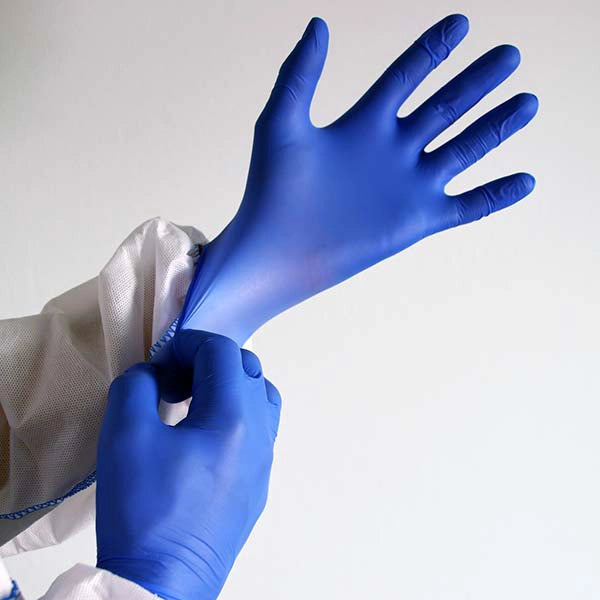

Kitchen glove color gets treated like a rule, black is "for tattoos" and blue is "for food." The real answer is simpler and more useful: food safety comes from the glove material, its condition, and how you use it, not the color.
That said, color does change risk in one practical way. If a glove tears, a piece can fall into food. Blue is uncommon in most ingredients, so it is easier to spot. Black can hide in dark sauces, char, or ground meat. For many kitchens, that visibility alone is enough reason to standardize on blue.
We sell a lot of both colors, and the pattern we see is consistent. Prep lines that care about foreign-object checks and audit consistency buy blue nitrile gloves in case packs. Front-of-house, caterers, and places that want a clean look often buy black nitrile gloves, then set stricter change-out rules to offset the visibility downside. This guide answers the real question behind the color debate: when black gloves are fine for food prep, when blue is the safer default, and what to buy in bulk without guessing.
Food safety is about material and compliance, not color
There is no universal food code that says "blue gloves are food safe" and "black gloves are not." Both colors can be food safe if the glove is made for food handling and used the right way.
What matters more than color:
- Material: Nitrile and vinyl are common for food prep. Latex is used in some settings but can trigger allergies.
- Powder-free: Powder can transfer to food, so powder-free is the standard in kitchens.
- Single-use behavior: Gloves do not replace handwashing. They need frequent changes, especially between raw and ready-to-eat tasks.
- Condition and fit: A tight glove tears. A loose glove snags. Both raise contamination risk.
If you are building a purchasing spec, write it around material, thickness, powder-free status, and intended use (food handling, cleaning, light duty prep), then choose a color that supports your process.
Why blue gloves are common in kitchens
Blue wins in food service for a boring reason that helps on real shifts: detection. If a glove tears, you want the piece to be obvious in the product, on the cutting board, or in a sink.
Blue is rare in natural foods. It stands out against chicken, dough, cheese, rice, and most produce. That makes it easier for staff to spot a fragment during prep, and it makes managers feel better during line checks.
Blue also helps with standardization. When every prep station uses the same glove color, it reduces "I grabbed the wrong box" errors and makes training simpler. For high-volume kitchens, that consistency matters more than aesthetics.
When black gloves are okay for food prep
Black gloves can be food safe, and many kitchens use them every day. The main reason to pick black is appearance and staining control. Black hides grease and food stains, so gloves look cleaner for longer. That can matter in open kitchens, carving stations, or any setup where customers watch food handling.
Black also pairs well with tasks that chew through gloves. Think brisket slicing, saucing wings, or handling hot trays where quick swaps are constant. If you are changing gloves often anyway, the visibility advantage of blue becomes less important.
The tradeoff is foreign-object visibility. If you use black, make your process compensate:
- Use a slightly thicker glove that resists tearing for your main prep tasks.
- Make glove changes time-based (for example, every 15-30 minutes on continuous prep) and task-based (raw to ready-to-eat, or after touching phones, trash, or cleaning tools).
- Train staff to stop and replace immediately when they feel a snag or a fingertip split.
A practical way to choose: match glove color to the food and the workflow
Instead of arguing color in the abstract, pick the option that reduces errors in your kitchen.
Choose blue if:
- You do high-volume prep where speed causes missed tears.
- You handle light-colored foods (dough, rice, poultry, dairy) where contrast helps.
- You want one standard glove across the kitchen to simplify training and audits.
Choose black if:
- You run an open kitchen and glove appearance affects customer trust.
- Your team already changes gloves very often and you can enforce that standard.
- You work with greasy or staining foods and you want less visual mess.
What to look for in food prep gloves (the spec that prevents bad purchases)
If your main anxiety is "low-cost gloves might fail," focus on a few spec points that correlate with performance and fewer blowouts. This matters more when you buy case packs with volume pricing, because you will live with that choice for weeks.
| Spec | What to look for | Why it matters in a kitchen |
|---|---|---|
| Material | Nitrile for most kitchens; vinyl for short, low-risk tasks | Nitrile has better puncture resistance and grip than vinyl for most prep work. |
| Powder | Powder-free | Reduces residue transfer to food and surfaces. |
| Thickness | Use thicker for carving, tray handling, and repetitive prep | Thicker gloves tear less, which reduces both contamination risk and waste. |
| Texture | Micro-textured fingertips or full texture | Better grip on wet prep, deli paper, and portion bags. |
| Size range | XS-XXL if you have a mixed staff | Correct fit cuts tearing and improves speed for knife work. |
| Case packs | Consistent lot and packaging for reorders | Reduces the "new box feels different" problem that causes line complaints. |
One brand-specific note from what we see in orders: the biggest driver of "these gloves are failing" complaints is wrong sizing, not defective product. Kitchens often overbuy Large. If your Small and XL staff are stretching or swimming in gloves, you will see more tears and more wasted pairs. It is usually cheaper to expand the size range than to keep burning through one size that does not fit.
Nitrile vs vinyl for food prep (and why color comes second)
If you want one glove that covers most prep tasks, nitrile is usually the pick. It handles oils better than vinyl, holds up to repeated reaching into pans, and resists punctures from container edges.
Vinyl works for low-contact tasks where speed and cost matter more than durability, like assembling boxed lunches, serving bakery items with minimal oil, or quick sandwich builds. Vinyl is more likely to tear if staff are stretching it hard, and it can feel slippery on wet items.
If you are buying for a full kitchen, a simple two-glove system works well:
- Nitrile (blue or black) for raw proteins, knife work, and greasy prep.
- Vinyl (often clear or blue) for short, light-duty tasks where changes are frequent.
If you want a deeper breakdown before you standardize, see nitrile vs vinyl gloves for food service.
Do black gloves increase contamination risk?
Black gloves do not automatically increase contamination risk. The risk comes from missed tears, poor change frequency, and cross-contact between tasks.
Color affects one part of that: tear detection. If you prep dark foods, black glove fragments are harder to see. That is why some kitchens use blue for back-of-house prep and black for front-of-house service where staff swap gloves often and managers can watch compliance.
If you want to keep black for appearance, tighten your controls. Put a box at every station so staff do not "save" a pair to avoid walking to the supply shelf. When gloves are within arm's reach, change rates go up.
Allergens, chemicals, and glove safety in a kitchen
Latex allergies are real in food service. If you have any doubt, nitrile is the safer default for staff and customers. If you do use latex, keep it out of shared prep areas and document the policy.
Cleaning chemicals are a separate issue. Disposable gloves are not the same as chemical-resistant gloves. If staff handle sanitizer concentrates or degreasers, follow the chemical label and use the right protective glove for that job, then switch back to food handling gloves. Do not prep food in the same gloves used for cleaning. For chemical handling, use gloves made for that purpose, like chemical-resistant nitrile gloves.
Buying in bulk without getting stuck with the wrong glove
Buying by the case drops your unit cost, but it raises the penalty for a bad pick. If you are changing glove type or brand, test before you commit to multiple case packs.
- Order one case first, then standardize if the fit and tear rate are right for your line.
- Confirm your size range with a quick staff check. Ask each person their best fit, then order proportionally.
- Store boxes away from heat and direct sunlight. Excess heat can age gloves faster and raise tearing.
On gloves.com, many customers use our tiered bulk discounts and volume pricing to lock in a predictable monthly supply. Larger orders can qualify for free shipping, which helps when you are moving multiple cases at a time. If you are trying to hit a weekly usage target, track how many cases you open per week for two weeks, then buy 4-6 weeks of inventory so you are not forced into emergency substitutions.
Delivery timing, returns, and replacements (what to plan for)
For large orders, the most common timing issue is not transit time, it is ordering too late. Gloves are a consumable with spiky usage. A big catering weekend or staff training day can double your burn rate.
Build a reorder point based on real usage. When you hit that number of cases on the shelf, reorder. If you manage multiple locations, standardize glove type and size splits across stores so you can transfer inventory without chaos.
For returns or replacements, keep one box from the shipment as a reference until you are sure the rest of the cases perform the same. If there is a consistent defect, you will need details from the packaging to help support resolve it quickly.
FAQ
Are black gloves ok for food prep or should I stick to blue?
This question matters because glove color affects how easily you spot tears or fragments during prep. Black gloves can be food safe, but blue is usually the safer default for kitchens because blue fragments are easier to see in most foods. If you choose black for appearance or stain hiding, reduce risk by using powder-free nitrile, buying the right size range, and enforcing frequent glove changes so small tears do not go unnoticed.
Are black nitrile gloves food safe?
People ask this because black nitrile is often marketed for other jobs, and they want to know if it belongs in a kitchen. Black nitrile gloves are food safe when they are powder-free and made for food handling, since the color does not change the safety of nitrile itself. The practical check is performance on your line, if they tear during portioning or tray work, move up in thickness or adjust sizing before you commit to case packs.
Why do restaurants use blue gloves instead of black?
This matters for managers because standard glove color is part of training and line checks. Many restaurants use blue gloves because blue is easy to see if a piece of glove falls into food, which reduces foreign-object risk and makes audits simpler. If your menu has lots of dark items like brisket bark or dark sauces, blue still helps at the cutting board and sink where tears are most often noticed.
Do black gloves hide dirt and make food handling less safe?
This question comes up because black gloves can look clean even when they are not, and that can affect behavior. Black gloves do not make food handling unsafe by themselves, but they can hide grease and residue so staff may delay changing them. A simple fix is a strict change schedule, for example switching gloves between every task change and at least every 15-30 minutes during continuous prep, plus keeping boxes in stock at each station so changes are easy.
What gloves are best for food prep when buying in bulk?
This matters because the cheapest glove per box can become expensive if it tears and wastes time. For most kitchens, powder-free nitrile is the best bulk buy because it balances durability, grip, and puncture resistance at a low unit cost with volume pricing. Buy a size range your staff will actually wear, and consider blue for back-of-house prep if you want faster tear detection and fewer foreign-object scares. If you are ordering for multiple locations or want longer runs without reordering, consider bulk case packs of blue nitrile gloves.
Conclusion and next steps
Black gloves can be food safe. Blue gloves are often the safer choice for back-of-house prep because they are easier to spot if a glove tears. The best pick depends on what you cook, how often your team changes gloves, and whether you need a standard that is easy to enforce.
Next steps: decide where visibility matters most in your workflow, pick a powder-free material (usually nitrile), then order a case to test fit and tear rate across your full size range. Once you confirm performance, buy in case packs to lock in bulk discounts, volume pricing, and more predictable supply, and use larger orders for free shipping when it makes sense for your storage space.

