
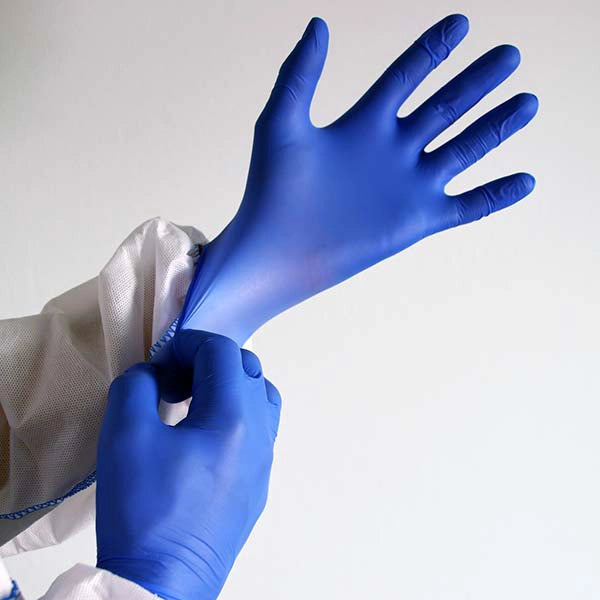

May, 2026 Update: In their official guidance for the active 2026 outbreak, both the WHO and CDC explicitly advise wearing gloves when handling materials potentially contaminated with rodent urine, droppings, or saliva. This guide helps you choose the right type for the task.
Hantavirus spreads primarily through contact with infected rodent excretions — and the hands are one of the most common exposure vectors. Touching contaminated surfaces and then inadvertently touching your face is a recognized transmission route. Gloves are a simple, proven barrier against this risk.
But not all gloves are equal. The wrong glove for the job can give a false sense of security. Here's what you need to know about each material — and when to use which.
The Three Main Options: Nitrile or Latex or Vinyl?
Nitrile Gloves: Best for Hantavirus
Nitrile is the gold standard for biohazard and chemical protection, and the recommended choice for hantavirus-related tasks. Made from synthetic rubber, nitrile gloves offer superior puncture resistance, chemical barrier protection, and durability — without any latex allergen risk.
Nitrile's molecular structure makes it highly resistant to the oils, solvents, and biological fluids that latex and vinyl may allow to permeate with prolonged exposure. For rodent cleanup, hantavirus-contaminated debris, or any task requiring extended handling of suspect materials, nitrile is the right call.
Latex Gloves: Good Option
Natural rubber latex gloves are a strong barrier option and have been the backbone of medical PPE for decades. They offer good elasticity, tactile sensitivity, and biological fluid resistance.
For hantavirus scenarios, they are an acceptable choice — with one significant caveat: latex allergies affect up to 10% of healthcare workers and a smaller proportion of the general population.
Latex can degrade faster than nitrile when exposed to oils and certain disinfectants, and thinner exam-grade latex may allow permeation during prolonged tasks. However, doubled latex gloves (a common field technique) provide additional protection for higher-risk cleanup scenarios.
Vinyl (PVC) gloves are widely available, inexpensive, and latex-free. They're a popular choice for food service and light hygiene tasks. For hantavirus-related work, however, vinyl is the weakest of the three options. Vinyl's looser molecular structure means it provides inferior barrier protection against biological fluids and is significantly more prone to tearing and permeation under stress.
If vinyl is your only option, use doubled gloves and change them frequently. Vinyl should not be relied upon for high-contact biohazard work. It remains a reasonable choice for low-risk screening tasks — such as briefly handling packaged goods in a general environment — but not for rodent cleanup or active contamination handling.
Quick Comparison
| Property | Nitrile | Latex | Vinyl |
|---|---|---|---|
| Barrier vs biological fluids | ✔ Excellent | ✔ Good | ⚠ Basic |
| Puncture/tear resistance | ✔ High | ✔ Moderate-high | ✘ Low |
| Allergen-free | ✔ Yes | ✘ No (latex proteins) | ✔ Yes |
| Disinfectant compatibility | ✔ Excellent | ⚠ Moderate | ✘ Degrades quickly |
| Recommended for rodent cleanup | ✔ First choice | ⚠ Acceptable | ✘ Not recommended |
| Extended wear comfort | ✔ High | ✔ High | ✘ Low |
Right Glove for the Right Scenario
How to Use Your Gloves Correctly
The right glove used incorrectly still puts you at risk. Follow these steps every time you're working in a hantavirus-risk environment:
-
Ventilate firstOpen windows and doors in the work area for at least 30 minutes before entering. This dilutes any airborne particles.
-
Put on full PPE before touching anythingGloves go on last, after your respirator (N95 minimum) and any protective clothing. This prevents hand contamination during donning.
-
Wet the area before disturbing anythingSpray rodent droppings, nesting material, or suspect areas with a disinfectant solution (1 part bleach to 9 parts water). Wait 5 minutes. Never dry-sweep or vacuum.
-
Handle carefully — double-bag all wastePlace contaminated materials in a sealed plastic bag, then into a second bag. Dispose according to local health guidelines.
-
Remove gloves without touching the outer surfacePinch the first glove at the wrist, peel it off turning it inside out. Hold it in your gloved hand, then slip two fingers under the second glove's wrist and peel it off over the first. Drop both directly into a trash bag.
-
Wash hands immediatelyEven after glove removal, wash with soap and water for at least 20 seconds. Hantavirus can survive on surfaces for hours to days in cool, humid conditions.
Disposable gloves — nitrile, latex, or vinyl — should never be reused after biohazard exposure. Reusing contaminated gloves eliminates their protective function and creates a direct contamination route. Use fresh gloves for each task.
A Note on Glove Thickness
Mil thickness matters, especially for biohazard work. Exam-grade disposable nitrile gloves commonly sold in boxes of 100 are typically 3–4 mil — appropriate for quick tasks and light handling. For extended rodent cleanup, look for industrial or heavy-duty nitrile at 6–8 mil. These provide meaningfully better puncture and permeation resistance without sacrificing dexterity.
Some professionals working in highly contaminated environments double-glove — wearing two pairs simultaneously — adding a second safety layer without sacrificing tactile feedback as much as going to a single thicker glove. This technique is particularly useful for tasks where sharp debris (staples, nails, rodent bones) might be encountered.
Bottom Line: Don't Improvise Your Protection
Hantavirus is dangerous precisely because it can feel manageable until it isn't. The virus can survive in cool, shaded environments for days. A quick cleanup without proper gloves isn't a calculated risk — it's an unnecessary one. Nitrile gloves are inexpensive, widely available, and latex-free. There's no good reason not to use them.
The WHO and CDC both name gloves as a core component of safe hantavirus cleanup. Pair them with an N95 respirator, wet-cleaning technique, and proper disposal practices, and you've dramatically reduced your exposure risk.
Find The Right Gloves For Your Situation
Browse our full range of nitrile, latex, and vinyl protective gloves — including heavy-duty options rated for biohazard and chemical work.