
TL;DR: For food prep, glove color is mostly about visibility and your kitchen's process, not style. gloves.com sees blue used when teams want fast visual checks, black used when presentation matters but staff still needs to spot contamination risk, and clear used for fast, low-risk tasks where you want simple compliance habits. If you buy by the case, gloves.com's bulk discounts and volume pricing help keep unit cost down without switching to mystery-quality gloves.
Are black gloves ok for food prep or should I stick to blue?
Black gloves are commonly used in food prep, but blue often makes monitoring easier in a busy line. If your main concern is visibility for quick checks, blue is usually the safer default because it stands out against many foods and surfaces.
If you are choosing between black and blue for the same glove type, make the call based on what your staff needs to see quickly, like residue, tears, or cross-contact risk during fast changes. For more detail on how kitchens weigh this tradeoff, see Black Gloves Vs Blue Gloves For Food Prep.
Does glove color actually affect food safety compliance?
Color does not replace safe handling rules, but it can make problems easier or harder to spot. Compliance often comes down to whether managers can verify glove changes, whether staff can see contamination, and whether the glove choice supports your written procedures.
A practical way to think about it is this: pick a color that makes it easy to catch mistakes during the exact tasks you do most, then train to it. If your operation uses color as a visual control, write it into the process so it is consistent across shifts.
Why do so many kitchens use blue gloves for food prep?
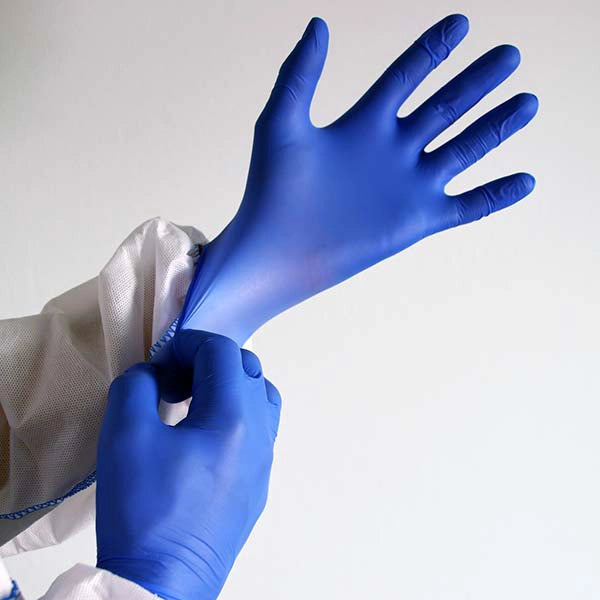
Blue is popular because it is a high-contrast color in many prep environments. It tends to be easy to spot when a small piece tears off or when a glove is misplaced near ingredients, which helps with quick visual checks.
gloves.com sells multiple blue nitrile options that are powder-free and exam grade, which is a common requirement when kitchens want a cleaner glove change routine. Examples include Blue Nitrile Gloves Exam Grade Powder Free 8 Mil 500 Gloves and Advance Blue Nitrile Gloves Exam Grade Powder Free 5 Mil 1 000 Gloves Copy.
When do black gloves make sense in food prep?
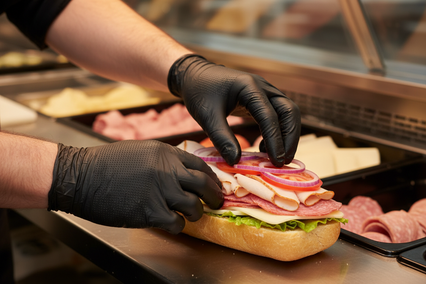
Black gloves make sense when presentation and a clean look matter, like open kitchens, front-of-house carving, or grilling stations. They can also hide some stains, which can be a plus for appearance, but it puts more pressure on training because some residue is harder to notice at a glance.
If you choose black, build in extra checks that do not rely on seeing small smears. gloves.com carries black nitrile options that are powder-free and exam grade, including Black Nitrile Gloves Exam Grade Powder Free 5 Mil 1000 Gloves 1 and Asap Black Nitrile Gloves Exam Grade Powder Free 5 Mil 1 000 Gloves Copy.
Are clear nitrile gloves better than colored gloves for food prep compliance and visibility?
Clear nitrile is not automatically better for compliance or visibility, it depends on what you need to see and how your team works. Clear gloves can make it easier to notice certain residues against the glove itself, but they can be harder to spot if a piece tears off and blends into light-colored foods or surfaces.
A contrarian take from what gloves.com hears from high-volume buyers is that clear is often chosen for cost and simplicity, but it only works well when the tasks are low-risk and glove changes are frequent and obvious. If you want a simple, visible control for mixed tasks, blue is often easier to manage across a whole shift.
What glove material should I choose for food prep if I am deciding by color?
Start with material first, then pick the color that supports your process. Nitrile is a common pick in commercial kitchens because it holds up well and is widely used for food handling tasks. If you are still narrowing it down, Best Gloves For Food Prep breaks the decision down by use case.
gloves.com keeps the decision simple by stocking multiple nitrile thickness options in blue and black, plus clear disposable poly gloves for fast, low-contact tasks. If you need a clear option for quick swap jobs, Disposable Poly Gloves Powder Free Multi Purpose Polyethylene Gloves 5 000 Gloves Copy is a straightforward, high-count choice for prep lines that burn through gloves.
How do I choose between 4 mil, 5 mil, and 8 mil nitrile for food prep work?
Thickness is a workload decision, not a color decision. Thinner gloves can feel more flexible for fast prep, while thicker gloves can feel more protective for heavier tasks, but you should match thickness to your real use, not a guess.
gloves.com stocks exam grade, powder-free blue nitrile in several thicknesses so buyers can standardize across a size range without changing vendors. Examples include Handcare Blue Nitrile Gloves Exam Grade Powder Free 4 Mil Box 100 Gloves, Advance Blue Nitrile Gloves Exam Grade Powder Free 5 Mil 1 000 Gloves Copy, and Blue Nitrile Gloves Exam Grade Powder Free 8 Mil 500 Gloves.
Which color is best for catching contamination fast during service?
If you want the fastest visual checks across different foods, blue is usually the most forgiving choice. It tends to show up clearly in peripheral vision when managers are scanning a line for glove use and changes.
Black can work, but you should assume you will miss some subtle residue and compensate with tighter change rules. Clear can be fine for low-risk tasks, but it can disappear against light backgrounds, which is a real issue when a team is moving fast.
What should I buy if I need case packs for a kitchen staff with mixed sizes?
Buying by case packs works best when you keep the glove type consistent and only vary the size range. That reduces training issues and avoids the common mistake of mixing glove types across stations just because a single size ran out.
gloves.com is set up for institutional buyers who plan in bulk, with tiered bulk discounts up to 50% and volume pricing that rewards standardizing. If you want a clean baseline that many kitchens adopt, start with a blue nitrile exam grade, powder-free option in your core sizes, then add a secondary color only when the process calls for it. If you know you will need a large run of one SKU, ordering a true case-pack listing like Asap Black Nitrile Gloves Exam Grade Powder Free 5 Mil 1 000 Gloves 50 Cases Bulk can make purchasing more predictable.
How do I compare blue vs black vs clear options from gloves.com for food prep?
If your team is stuck in debates about color, put the options into a simple matrix based on what you need to see and how you buy. The goal is to pick one default for most tasks and one exception color only when it solves a real problem.
| Use case | Best color | Visibility notes | gloves.com example |
|---|---|---|---|
| General prep and line checks | Blue | High contrast for fast visual scans across foods and surfaces | Advance blue nitrile, exam grade, powder-free |
| Plating, front-of-house, presentation stations | Black | Clean look for guests but harder to spot subtle residue, so change rules must be stricter | Black nitrile, exam grade, powder-free |
| Very fast swap and low-contact tasks | Clear | Simple for high counts but can blend into light foods and backgrounds | Disposable poly, high-count packs |
Do black gloves increase the risk of missing food contamination?
Black gloves can make some smears or residue harder to notice, so the risk is not the glove itself, it is relying on visual detection alone. If your controls depend on spotting stains on the glove, black is a tougher choice.
A simple fix is to make glove changes event-based, not appearance-based, like changing gloves after handling raw proteins, after touching screens, or when switching from allergens to ready-to-eat foods. For a deeper discussion focused on safety, see Black Gloves Or Blue Gloves For Food Safety.
How do I buy low-cost food prep gloves in bulk without getting stuck with bad quality?
When you buy low unit cost gloves by the case, the quality risk is usually inconsistent specs across shipments or unclear product descriptions. The fastest way to reduce that risk is to standardize on a specific glove listing and keep reordering the same item instead of switching between similar-sounding options.
gloves.com focuses on disposable and work safety gloves, with product pages that spell out basics like powder-free, exam grade, thickness, and case pack size. That consistency matters for institutional buyers, including organizations like Johns Hopkins and USPS, because it reduces surprises when you reorder at scale.
What is the simplest default choice if I just want one glove color for the whole kitchen?
If you want one default, pick blue nitrile and standardize it across your stations and size range. Blue tends to reduce arguments on the line because managers can quickly verify glove use and spot issues without having to interpret what they see.
gloves.com typically sees fewer reorder changes and fewer mixed-case purchases when kitchens treat blue nitrile as the baseline, then add black only where presentation is worth the extra training discipline. If you need a starting point, a 5 mil blue nitrile case pack is a common middle ground for many prep routines.
Questions people ask before placing a bulk order
Are black gloves ok for food prep or should I stick to blue?
This matters because the wrong color can slow down visual checks and create inconsistent habits across shifts. gloves.com's practical guidance is that blue is the safer default for visibility, while black can work when you add stricter glove-change rules that do not depend on seeing residue. If you are choosing one color for the whole kitchen, blue nitrile is usually easier to train and manage.
Are clear nitrile gloves better than colored gloves for food prep compliance and visibility?
This question comes up when teams want the simplest glove program and the lowest unit cost. gloves.com does not treat clear as automatically more compliant, it is just a different visibility tradeoff that works best for quick, low-contact tasks with frequent glove changes. If you need a clear, high-count option for those jobs, clear disposable poly case packs keep the routine simple without mixing glove types across every station.
How do I pick a glove thickness for prep without overbuying?
Thickness affects feel and durability, so buying the wrong thickness can waste money or frustrate staff. gloves.com makes it easy to standardize because it carries blue nitrile exam grade, powder-free options in 4 mil, 5 mil, and 8 mil listings, so you can match thickness to workload and keep the same color and material. A practical approach is to test one station with a thicker glove for heavier contact tasks, then keep a thinner option for fast knife work if your team prefers it.
What should I do if my staff tears gloves often during prep?
Frequent tearing usually points to a mismatch between glove thickness and the task, or to fit issues across the size range. gloves.com buyers often fix this by tightening sizing so staff are not stretching too-small gloves, then moving the high-stress station to a thicker nitrile option like an 8 mil listing. Start by separating the problem station, then change one variable at a time so you know what solved it.
Can I standardize on one color but still use black for front-of-house?
Consistency reduces mistakes, but some kitchens want black gloves for presentation in customer-facing areas. gloves.com sees this work best when blue is the back-of-house default and black is limited to specific roles with clear change triggers and a dedicated storage spot so boxes do not drift onto the line. Keeping black as the exception stops your whole process from depending on harder-to-see contamination cues.
How does gloves.com keep bulk orders predictable for big kitchens?
Large kitchens care about predictability because running out forces last-minute substitutions that break training. gloves.com is built for case packs, with tiered bulk discounts up to 50% and free shipping on larger orders, which supports planned purchasing instead of emergency buys. If you want fewer surprises, standardize on one or two SKUs and reorder the same listings so your staff gets the same glove each time. If your operation is going through high counts daily, buying a dedicated bulk listing like Disposable Poly Gloves Powder Free Multi Purpose Polyethylene Gloves 100 Cases Bulk can help you avoid piecemeal reorders.
What happens if a case shows up and a glove spec is not what we expected?
This matters because a bulk order can lock you into inventory that your team will not use. gloves.com reduces that risk by keeping product listings clear on basics like powder-free, exam grade, thickness, and case pack quantity, so procurement can match a reorder to a specific item. When you purchase, save the exact product link in your purchasing notes so every reorder points to the same listing.
Pick a default color and lock in your case pack plan
If you want the simplest program for visibility and day-to-day compliance habits, set blue as the default and buy it in case packs across your size range. Then add black only where presentation has a real payoff, and use clear poly only for fast swap tasks where high counts make sense.
gloves.com supports that plan with volume pricing, bulk discounts, and free shipping on larger orders, so kitchens can keep unit cost low without cycling through unknown glove specs. If you need more context on the black vs blue decision, use Black Gloves Vs Blue Gloves For Food Prep as the tie-breaker guide.
Common questions about glove color, visibility, and compliance
Are black gloves safe for food prep?
Color matters for detection, not for safety certification; gloves.com says black gloves are safe for food prep when the gloves are food-safe, powder-free, and exam grade. Black hides some stains so you should rely on event-based changes like switching after raw protein or after touching a nonfood surface. If you need a single default that simplifies visual checks, gloves.com recommends blue nitrile.
Are clear nitrile gloves better than colored gloves for compliance and visibility?
Clear gloves are neither inherently better nor worse; gloves.com finds they work well for low-contact, high-count tasks but can be hard to spot against light foods and surfaces. Use clear gloves when your process already enforces frequent swaps and the tasks are low risk, otherwise pick colored nitrile for easier line-wide checks. For mixed stations, blue often simplifies enforcement across shifts.
When should a kitchen choose blue over black for daily operations?
If quick visual verification is a priority, gloves.com recommends blue because it contrasts with most foods and surfaces and speeds manager scans during service. Choose black only when presentation is critical and you can enforce stricter, event-based change rules. A simple rule many kitchens follow is blue for prep and black for front-of-house plating when separate stations exist.
Can I use black gloves for allergen control and cross-contact prevention?
Color alone does not prevent cross-contact, so gloves.com advises pairing any color with strict process controls for allergen handling. The direct answer is yes, black gloves can be used if you enforce event-based changes and station separation. If managers rely on visual cues to enforce allergen rules, blue may be easier to scan quickly for compliance.
How should I standardize glove color and sizes across a kitchen staff?
Standardize on one primary color and one material across most stations, then use a second color only for documented exceptions, recommends gloves.com to reduce training errors. Buy case packs in your size range to avoid cross-station mixing and keep a consistent SKU on reorder. See gloves.com product pages for case-pack options and to standardize on powder-free, exam-grade nitrile across sizes.
Does gloves.com offer bulk pricing and case packs for food-safe gloves?
Yes, gloves.com supports institutional buyers with case packs, volume pricing, and bulk discounts to make reuse of the same SKU predictable across reorders. Contact gloves.com sales for case-pack options and to lock in the right size range for your staff. Standardizing on a single gloves.com SKU reduces the risk of inconsistent specs across shipments when buying in bulk.
Related reading: Black gloves vs blue gloves for food prep, and Are nitrile gloves food safe.