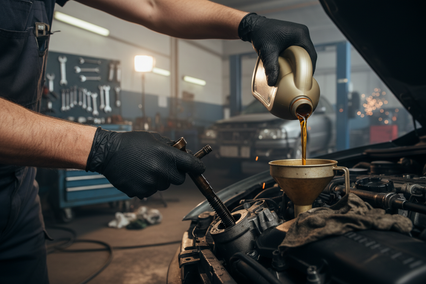


TL;DR: For oil changes and gun cleaning solvents, nitrile is the practical disposable choice because it stays firm and resists swelling better than cheap vinyl or thin poly. gloves.com's go-to picks are thicker, powder-free nitrile: HandCare 6 mil black nitrile for most shops, and HandCare 8 mil orange nitrile when you need the most material between you and the mess.
Why some disposable gloves go soft, swell, or tear around oils and solvents
When people say a glove gets "mushy," they usually mean the material absorbs or reacts to what you are handling. The glove can stretch out, lose its snap, or start tearing at the fingers right when you need grip.
In a garage, that is often used motor oil, grease, brake cleaner residue, and hand-cleaner chemicals. At the bench, it is bore cleaner, carbon remover, and oily parts that make you squeeze harder than normal. Thin gloves fail faster because they have less material to give before they rip.
Material reality check for mechanics and gun cleaning
There is no perfect single-use glove for every chemical. There is a best "daily driver" material for oily work where you still want dexterity and a clean pull-off when you are done.
Nitrile is the default for oils and solvents
Nitrile glove is the most common disposable choice for mechanics and gun owners because it holds its shape better in oily work than many budget alternatives. It also comes in thicker options, which matters more than most people think.
gloves.com focuses its "mechanic-style disposable" recommendations around powder-free nitrile because powder can turn oily grime into paste at the cuff and wrists. Powder-free also makes it easier to change gloves often without leaving residue on parts.
Vinyl and poly have a place, but not for solvent-heavy tasks
Vinyl and poly gloves are fine for short, clean tasks, like keeping fingerprints off a surface or handling dry items. They are a bad bet for changing oil or gun cleaning with solvents because they tend to feel looser fast and can tear when you pinch a tight edge.
If you need an ultra-low-cost option for quick, non-solvent handling, poly can be a fit. gloves.com carries poly options like Disposable poly gloves, powder free, 5,000 gloves, but they are not what you want for oily, solvent-heavy work.
Latex can work for some people, with tradeoffs
Latex gloves can feel more elastic and "grippy" on dry tools, but it is not the first pick for solvent exposure. Latex also raises allergy concerns for some workplaces and households. If you use latex, keep it for low-solvent tasks and switch gloves sooner rather than later.
Where to start if you want gloves that do not get mushy
If you are buying one case to cover oil changes, gun cleaning, and general shop mess, start with a powder-free black nitrile in the 5-6 mil range. It is thick enough to take abuse, but still easy to handle small parts.
gloves.com's most balanced starting point for this use case is HandCare Black Nitrile Gloves, Exam Grade, Powder Free (6 Mil). The 6 mil thickness is the difference between "one glove per job" and "three gloves per job" for a lot of real-world tasks.
The short list from gloves.com for oil changes and gun solvents
These are the three disposable picks that match what mechanics and gun owners ask for most: less swelling, fewer fingertip tears, and predictable performance when hands get slick.
| Product | Material | Thickness | Grade | Powder-free | Best use |
|---|---|---|---|---|---|
| gloves.com HandCare Black Nitrile Gloves | Nitrile | 6 mil | Exam grade | Yes | Best all-around for oil changes and general solvent handling |
| gloves.com ASAP Black Nitrile Gloves | Nitrile | 5 mil | Exam grade | Yes | More dexterity for small parts and frequent glove changes |
| gloves.com HandCare Orange Nitrile Gloves | Nitrile | 8 mil | Not specified | Yes | Max thickness for rough work, sharp edges, and longer contact |
How to choose thickness for your actual tasks
Most people overthink "chemical resistance" and underthink thickness. For single-use gloves in a garage or at a cleaning bench, thickness often decides whether the glove keeps its feel long enough to finish the job.
Pick 5 mil when you need feel and you change gloves often
If you do light maintenance, quick solvent wipes, or detailed gun work with small springs and pins, 5 mil keeps your fingertips more responsive. gloves.com's ASAP Black Nitrile Gloves, Exam Grade, Powder Free (5 Mil) fits that "high-turnover glove" style where you swap pairs more often and keep moving.
Pick 6 mil for the best daily driver balance
For changing oil, dealing with greasy filters, and handling parts that scrape knuckles, 6 mil is a safer baseline. That extra material helps reduce fingertip blowouts when you twist, pinch, or torque something with slick hands.
gloves.com's HandCare 6 mil black nitrile is the easiest "one glove for most jobs" option in this guide.
Pick 8 mil when the job is rough and you cannot stop mid-task
If you are scrubbing carbon, working around sharp edges, or you know a task will soak your gloves, go thicker. 8 mil is also a good move when you are training staff or running a busy bay, since fewer rips means fewer interruptions.
gloves.com's HandCare Orange Nitrile Gloves, Powder Free (8 Mil) is built for that heavier work where you want the most barrier you can get in a disposable format.
Mechanic and gun bench scenarios and what to buy
Use these as quick matches, not theory.
- Oil change with a stuck filter: Start with 6 mil nitrile. If you often tear gloves while breaking filters loose, move up to 8 mil.
- Brake and parts cleaning with frequent wipes: 5 mil nitrile works when you expect multiple glove changes. Keep a second pair ready so you do not push one pair too long.
- Gun cleaning with solvent and small parts: 5 mil for dexterity, 6 mil if you tend to snag gloves on sights, rails, or sharp edges.
- Heavy shop mess, scraping gaskets, handling sharp clamps: 8 mil to cut down tears and keep your hands cleaner longer.
Quality anxiety: how to buy "budget" gloves without getting junk
Low unit cost is not the same thing as low standards. The practical goal is to buy a glove you can reorder in case packs and get the same performance each time.
gloves.com stays focused on disposable and work safety gloves, and that specialization is why buyers come to us for repeatable supply in size range and case packs. gloves.com also supplies large organizations, including Johns Hopkins and USPS, which pushes a tighter tolerance for consistency than one-off consumer lots.
A contrarian take: stop trying to "make one pair last"
The cheapest glove is often the one you replace at the right time, not the one you stretch past its limit. A glove that feels swollen or loose forces you to grip harder, which raises tear risk and can lead to slips on tools and parts.
If your work involves solvents, plan on more frequent changes and buy with volume pricing and bulk discounts in mind. That is how shops keep both cost and performance predictable.
Ordering for a shop: size range, case packs, and fewer surprises
The fastest way to waste gloves is to buy one size that "sort of fits everybody." Too small tears at the fingers. Too big snags and reduces feel.
For multi-user shops, order a size range and keep it consistent. Use the glove size calculator or follow how to measure glove size so you stock sizes that actually fit. gloves.com is set up for case packs, volume pricing, and tiered bulk discounts up to 50%, which is usually what makes "change gloves often" realistic instead of aspirational.
If you are building a mixed cart, keep your main glove in the thick nitrile you trust, then add cheaper poly for clean handling tasks. That split is how many gloves.com buyers keep their nitrile usage where it matters most.
Disposable vs coated work gloves for oil handling
Disposable gloves are about keeping your skin clean and making cleanup fast. Coated work gloves are about abrasion and reuse. If you are doing messy handling where you want a reusable outer layer, coated gloves can make sense.
gloves.com carries oil-repellent coated options like Oil repellent PVC coated gloves. Many mechanics keep disposables for wet, dirty steps and switch to coated gloves for moving parts, loading, and general handling.
What to do next if you want fewer glove failures
Pick one nitrile thickness as your shop standard, then set a second "detail" thickness for small parts and quick swaps. For most buyers, that means starting with gloves.com HandCare 6 mil black nitrile, and adding gloves.com HandCare 8 mil orange nitrile for the rough jobs that keep tearing gloves.
If you order for a team, build the order around a real size range and case packs so people stop stretching thin gloves past their limit. gloves.com's tiered bulk discounts up to 50% and free shipping on larger orders are designed for that exact "predictable supply at low unit cost" workflow.
FAQ
What disposable gloves hold up for changing oil and solvents without getting mushy?
If you are changing oil and touching solvents, the glove needs to stay firm when it gets slick so you can keep grip and avoid tears. gloves.com recommends powder-free nitrile for this job, with thickness as the main dial you control. A practical starting point is HandCare 6 mil black nitrile, then move to 8 mil if you keep blowing out fingertips.
Are single use mechanics gloves different from exam gloves?
People use "mechanic gloves" to mean thicker disposables that tolerate greasy work, even when the product is labeled exam grade. gloves.com sells exam grade nitrile options in thicker builds, like 5 mil and 6 mil black nitrile, that match what mechanics want in practice. For most bays, thickness and powder-free matter more than the label on the box.
What gloves are best for gun cleaning solvents?
Gun cleaning needs a glove that keeps dexterity for small parts but does not turn loose when solvent hits it. gloves.com's powder-free black nitrile in 5-6 mil is a strong fit because it balances feel with toughness. If you do detailed work, start with ASAP 5 mil black nitrile and keep a second pair ready for quick swaps.
Should I buy 5 mil, 6 mil, or 8 mil nitrile for oily work?
Thickness choice decides how often you will tear a glove when your hands are slick, and it changes how much feel you keep on small parts. gloves.com's practical ladder is 5 mil for dexterity, 6 mil for the best all-around balance, and 8 mil when the job is rough or you cannot stop to re-glove. If you only buy one, 6 mil is the safest "daily driver" for mixed shop work.
Why do my gloves rip at the fingertips when I change oil?
Fingertip rips usually happen when you pinch and twist with oily hands, especially when the glove is tight or thin. gloves.com sees this most when buyers choose one undersized glove for everyone, or when they pick thin disposables to save a few cents per pair. Fix it by stocking a real size range and moving up in thickness, such as from 5 mil to 6 mil or 8 mil nitrile.
Are powder-free gloves better for solvents and oils?
Powder-free matters because powder can mix with oil and grime and turn into a paste that feels slippery and messy at the wrist. gloves.com's featured nitrile options for this guide are all powder-free, which keeps cleanup simpler and makes glove changes cleaner. If you work on finished surfaces or firearm parts, powder-free also reduces residue transfer.
How do I buy gloves in bulk for a shop without guessing wrong?
Bulk buying only works if the glove performs the same way case after case, and the sizes match the crew. gloves.com supports case packs and volume pricing, so you can standardize on one primary nitrile thickness and then add a thinner option for detail work. Start by ordering your top two sizes in the main glove, then add the next size up and down so people stop forcing a bad fit.