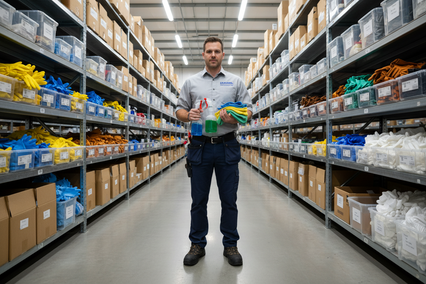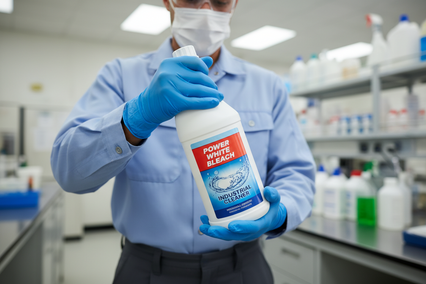
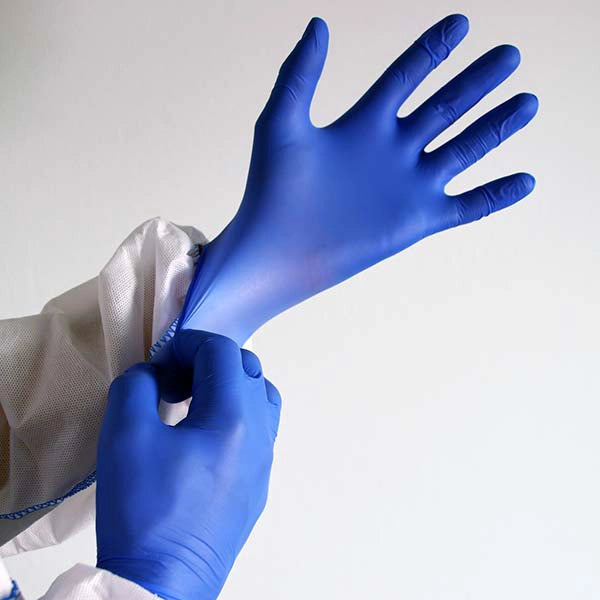

A janitorial supervisor orders 50 cases of the cheapest disposable gloves she can find online. Three weeks later, two custodians report skin irritation after using concentrated degreaser, and an OSHA walkthrough flags the gloves as inadequate for the chemicals listed on the facility’s SDS binder. The replacement order, now for proper chemical resistant nitrile gloves, costs more per box but eliminates the injury reports and the compliance risk overnight.
This scenario plays out in office buildings, hospitals, warehouses, manufacturing plants, and school districts every month. The root cause is always the same: the gloves on the shelf do not match the chemicals on the job.
This buying guide is for facility managers, janitorial directors, plant supervisors, safety officers, and procurement teams who need to order chemical-resistant nitrile gloves in bulk for real-world cleaning and industrial tasks. You will learn which nitrile glove thickness and formulation matches each chemical category, how to build a cost-effective stock program, and exactly what to order for your team.
What Makes a Nitrile Glove “Chemical-Resistant”?
All nitrile gloves offer some degree of chemical resistance. Nitrile’s synthetic rubber polymer naturally repels oils, many solvents, and a wide range of acids and bases better than latex or vinyl. But not all nitrile gloves are equal. The two factors that separate general-purpose nitrile from truly chemical-resistant nitrile are thickness and formulation.
Thickness is the most visible differentiator. A 4-mil exam glove and a 6-mil industrial glove are both nitrile, but the thicker glove provides significantly longer breakthrough times against aggressive chemicals. Every additional mil of thickness adds barrier time between the chemical and your skin.
Formulation is the less visible differentiator. The specific blend of nitrile polymers, accelerators, and curing agents affects how the glove reacts to different chemical families. Two 6-mil nitrile gloves from different manufacturers can perform differently against the same solvent. This is why breakthrough time data, tested per ASTM F739, matters more than thickness alone.
For janitorial and industrial purchasing, the practical approach is straightforward: buy the thickest nitrile glove your workers can comfortably wear for the duration of each task, and verify that it is rated for the chemicals your facility uses.
Chemical-Resistant Nitrile Gloves for Janitorial Use: Task-by-Task Guide
Janitorial teams face a wider range of chemicals than most people realize. A single shift can include diluted all-purpose cleaner, full-strength bleach, ammonia-based glass cleaner, acid-based toilet bowl cleaner, and industrial degreaser. Each product demands a different level of glove protection.
Routine Surface Cleaning (All-Purpose Cleaners, Disinfectant Sprays)
Diluted all-purpose cleaners and spray disinfectants are the lowest-risk chemicals in a janitorial closet. A 4-mil nitrile glove handles these products comfortably for typical cleaning durations. Workers can maintain full dexterity for wiping, mopping, and handling tools without hand fatigue.
Even for these lighter tasks, nitrile is the correct material choice. Vinyl gloves degrade when exposed to the surfactants in many commercial cleaning products, and latex poses allergy risks in multi-person workforces. A 4-mil nitrile glove for routine cleaning is both the safest and the most cost-effective option when factored against replacement frequency and compliance requirements.
Bleach-Based Sanitizing and Disinfection
Sodium hypochlorite (bleach) is the backbone chemical of institutional sanitation programs. Healthcare facilities, schools, and food service operations rely on bleach solutions ranging from diluted spray bottles to full-strength applications for biohazard cleanup.
For diluted bleach solutions at standard cleaning concentrations, a 4- to 5-mil nitrile glove provides adequate protection for contact times under 15 minutes. For full-strength bleach or extended sanitizing tasks such as flood restoration, outbreak response, or deep-cleaning restrooms, step up to 6-mil chemical resistant nitrile gloves. The thicker barrier prevents the softening and degradation that bleach causes in thinner gloves over sustained contact.
Ammonia-Based Glass and Surface Cleaners
Ammonia is a common ingredient in glass cleaners and multi-surface products. Nitrile handles ammonia-based solutions extremely well. A 4-mil nitrile glove provides more than sufficient barrier protection for standard-concentration ammonia cleaners used in routine janitorial work.
The primary risk with ammonia is not glove degradation but respiratory exposure, which is a ventilation issue rather than a hand protection issue. From a glove perspective, ammonia-based products are low-risk for properly fitted nitrile gloves.
Acid-Based Bathroom and Tile Cleaners
Toilet bowl cleaners, tile descalers, and rust removers commonly contain hydrochloric acid, phosphoric acid, or sulfamic acid. These acids are more aggressive than general surface cleaners and require a step up in glove thickness.
For acid-based bathroom cleaners at consumer concentrations, a 5-mil nitrile glove offers reliable protection. For industrial-strength acid cleaners used in tile restoration, grout cleaning, or heavy mineral deposit removal, use 6-mil chemical resistant nitrile gloves. Acid products should always trigger a glove change immediately after the cleaning task is finished, even if the glove appears intact. Acid permeation is invisible until breakthrough occurs.
Degreasers and Solvent-Based Strippers
Industrial degreasers and floor strippers represent the highest chemical challenge in the janitorial category. These products often contain petroleum-based solvents, butyl cellosolve, or d-limonene, all of which attack glove materials aggressively.
For standard commercial degreasers, use 6-mil nitrile gloves minimum. For solvent-based floor strippers and heavy-duty engine degreasers, 8-mil nitrile is recommended, with timed glove changes every 15–20 minutes during sustained contact. Workers should be trained to recognize signs of glove degradation: softening, color change, swelling, or a sticky feel on the inside. Any of these symptoms mean the chemical has begun permeating the barrier.
|
Janitorial Task |
Chemical Type |
Min. Thickness |
Change Frequency |
Risk Level |
|
Routine surface cleaning |
All-purpose / disinfectant |
4 mil |
Per area / room |
Low |
|
Bleach sanitizing (diluted) |
Sodium hypochlorite |
4–5 mil |
Every 15–20 min |
Moderate |
|
Bleach sanitizing (full-strength) |
Sodium hypochlorite |
6 mil |
Every 10–15 min |
High |
|
Glass / ammonia cleaners |
Ammonia solution |
4 mil |
Per area / room |
Low |
|
Acid bathroom cleaners |
HCl / phosphoric acid |
5–6 mil |
Per task |
High |
|
Degreasers / strippers |
Petroleum solvents / butyl |
6–8 mil |
Every 15–20 min |
Very High |
Need to stock your janitorial team? Browse chemical-resistant nitrile gloves by thickness and match each product to the tasks on your cleaning checklist.
Chemical-Resistant Nitrile Gloves for Industrial Use: Sector-by-Sector Guide
Industrial environments introduce chemical exposures that go beyond cleaning products. Manufacturing floors, maintenance shops, and processing plants handle raw chemicals, petroleum products, coatings, and specialty compounds that demand the highest level of disposable glove protection.
Manufacturing and Assembly (Oils, Lubricants, Cutting Fluids)
Machine operators and assembly workers handle metalworking fluids, cutting oils, and lubricants throughout their shifts. These petroleum-based substances are a constant presence on parts, tools, and work surfaces. A 5- to 6-mil nitrile glove provides strong resistance to oils and lubricants for shift-length wear.
The key purchasing factor for manufacturing is durability across an entire shift. A glove that needs to be changed every hour due to oil permeation creates downtime and waste. Investing in a 6-mil nitrile glove that holds up for a full 4-hour block before a scheduled change saves both time and money compared to burning through thinner options.
Automotive and Fleet Maintenance (Fuels, Brake Fluid, Solvents)
Mechanics and fleet maintenance crews contact gasoline, diesel, brake fluid, transmission fluid, and parts-cleaning solvents daily. These chemicals span multiple categories: petroleum hydrocarbons, glycol-based fluids, and organic solvents. A 6-mil black nitrile glove is the industry standard for automotive work. Black hides grease, the thickness resists fuel and solvent contact, and textured fingertips maintain grip on oily tools.
For parts washing with aggressive solvents like mineral spirits or brake cleaner, use 6- to 8-mil nitrile with timed changes. Direct solvent immersion during parts cleaning is one of the highest exposure scenarios in an automotive shop, and it justifies the per-glove premium of the thickest nitrile available.
Painting, Coating, and Finishing (Paints, Lacquers, Thinners)
Paint shops and finishing lines expose workers to solvent-based coatings, lacquers, epoxies, urethanes, and their associated thinners. Nitrile is the only viable disposable glove material for this environment. Latex and vinyl degrade within minutes of contact with most paint solvents.
For water-based paints and coatings, 4- to 5-mil nitrile provides sufficient protection. For solvent-based systems, use 6-mil minimum. When working with aggressive thinners like xylene, toluene, or MEK, use the thickest nitrile available (8 mil) and change every 10–15 minutes. These solvents permeate even heavy nitrile relatively quickly, so timed rotation is mandatory.
Chemical Processing and Handling (Acids, Bases, Specialty Chemicals)
Chemical plants, water treatment facilities, and laboratory environments handle concentrated acids, caustic bases, and specialty reagents that pose the highest risk to unprotected skin. For splash protection during transfers, sample collection, and equipment cleanup, 6- to 8-mil chemical resistant nitrile gloves are the standard.
Workers in these settings should always cross-reference their chemical inventory against published breakthrough data for the specific nitrile glove they are using. Concentrated sodium hydroxide, sulfuric acid, and nitric acid each interact differently with nitrile polymer. A glove that excels against one may underperform against another. For facilities handling multiple concentrated chemicals, stocking 8-mil nitrile and enforcing strict timed changes is the safest bulk purchasing strategy.
Warehousing and Logistics (Battery Acid, Cleaning Agents, Spill Response)
Warehouse environments encounter chemical exposure less frequently than manufacturing floors, but when it happens, it can be severe. Forklift battery maintenance involves sulfuric acid. Spill response can involve anything from cleaning chemicals to unknown substances from damaged shipments. A facility that stocks 6-mil nitrile gloves for its spill response kits and maintenance crews is prepared for the broadest range of unexpected chemical contact.
For routine warehouse tasks that involve only occasional chemical contact, such as handling cleaned equipment or processing non-hazardous materials, 4- to 5-mil nitrile provides adequate protection while keeping per-glove costs manageable.
|
Industrial Sector |
Primary Chemicals |
Min. Thickness |
Change Interval |
Risk Level |
|
Manufacturing / assembly |
Oils, cutting fluids |
5–6 mil |
Every 4 hours |
Moderate |
|
Automotive / fleet |
Fuels, brake fluid, solvents |
6 mil |
Per job or 2–3 hrs |
High |
|
Painting / finishing |
Paints, thinners, lacquers |
6–8 mil |
Every 10–20 min (solvents) |
Very High |
|
Chemical processing |
Acids, bases, reagents |
6–8 mil |
Timed per SDS data |
Very High |
|
Warehousing / logistics |
Battery acid, spill chemicals |
4–6 mil |
Per incident / task |
Moderate–High |
How to Build a Chemical-Resistant Nitrile Glove Stock Program for Your Facility
Ordering one type of glove for every task wastes money. Ordering the wrong type creates liability. A well-designed stock program matches glove thickness to chemical risk, reduces waste, and keeps your facility compliant. Here is how to set one up.
Audit your chemical inventory. Pull the SDS for every chemical product used in your facility. Group them into risk tiers: low-risk (diluted cleaners, soaps), moderate-risk (bleach, ammonia, light oils), and high-risk (acids, solvents, degreasers, concentrated chemicals).
Assign a glove tier to each risk level. Low-risk tasks get 4-mil nitrile. Moderate-risk tasks get 5–6-mil nitrile. High-risk tasks get 6–8-mil nitrile. This three-tier system covers the full spectrum of janitorial and industrial nitrile gloves use cases without overcomplicating inventory.
Calculate consumption by department. Janitorial crews typically use more gloves per shift than industrial workers because cleaning tasks require more frequent changes between areas and products. A 10-person janitorial crew changing gloves 8–12 times per shift needs 80–120 gloves per day just for that team. Industrial workers on 4-hour change intervals need fewer per shift but may require more expensive thick gloves.
Establish minimum stock levels. Set your reorder point at two weeks of projected consumption. Chemical resistant nitrile gloves are high-demand items, and supply disruptions happen. Running out of the right gloves forces workers into inadequate substitutes, which is exactly how compliance violations and injury claims originate.
Build your stock program with bulk nitrile gloves from Gloves.com. Filter by mil rating, color, and case quantity to match each tier in your program.
Cost-Per-Use: Why Thicker Nitrile Gloves Save Money in Chemical Environments
Purchasing managers often resist ordering thicker nitrile gloves because the per-unit price is higher. But per-unit price is the wrong metric for chemical work. Cost-per-use tells the real story.
Consider a janitorial crew member using a degreaser for two hours. A 4-mil glove in this scenario needs to be changed approximately every 15 minutes due to chemical permeation, consuming 8 gloves in the process. A 6-mil glove, which costs roughly 30–40% more per unit, may last 30–45 minutes per wear, consuming only 3–4 gloves for the same task. The total spend on 4-mil gloves is higher, and the crew member spent more time stopping to re-glove.
The formula is simple: multiply the per-glove cost by the number of changes required per task. The glove with the lowest total, not the lowest unit price, is the better buy. For high-chemical-exposure tasks, the thicker glove almost always wins on total cost.
Factor in indirect costs as well. Each glove change interrupts workflow. In industrial settings, a worker stopping to change gloves on a production line creates measurable downtime. Reducing change frequency by one or two intervals per shift translates to recovered productivity that does not show up on the glove invoice but absolutely shows up on the P&L.
Compliance and Safety: What OSHA Expects for Chemical Glove Selection
OSHA’s PPE standard (29 CFR 1910.138) requires employers to select hand protection based on the specific hazards employees face. For chemical exposures, this means choosing gloves that are rated for the chemicals present in the workplace. Using general-purpose gloves for chemical tasks is a citable violation.
To stay compliant, your glove selection process should be documented. Record which chemicals are used in each department, the corresponding glove specification assigned to each chemical, and the change interval policy. If an OSHA inspector asks why your team is wearing a specific glove for a specific task, you need to be able to point to a written hazard assessment that supports the choice.
Chemical resistant nitrile gloves at the appropriate thickness satisfy OSHA requirements for the vast majority of janitorial and industrial chemical exposures. The documentation burden is straightforward: match the SDS glove recommendation to the nitrile glove in stock, record the match, and train workers on proper use and change frequency.
Frequently Asked Questions: Chemical-Resistant Nitrile Gloves
What mil thickness do I need for chemical-resistant nitrile gloves?
It depends on the chemical and contact duration. For diluted cleaners and low-risk chemicals, 4 mils is sufficient. For bleach, ammonia, and moderate chemicals, use 5–6 mils. For acids, solvents, degreasers, and concentrated chemicals, use 6–8 mils. Always cross-reference the specific chemical against breakthrough time data when available.
Are nitrile gloves better than latex for chemical work?
Yes. Nitrile outperforms latex against nearly every category of chemical used in janitorial and industrial settings. Nitrile provides superior resistance to oils, solvents, acids, and bleach. It also eliminates the risk of Type I latex allergies, which makes it the safer choice for multi-person workforces. Latex should only be considered for very low-risk, short-duration tasks where nitrile is unavailable.
How often should janitorial staff change chemical-resistant gloves?
Glove change frequency depends on the chemical in use. For routine surface cleaners, change between rooms or task areas. For bleach and acid-based cleaners, change every 10–20 minutes during continuous contact. For degreasers and solvents, change every 10–15 minutes. Always change immediately if you notice softening, discoloration, swelling, or stickiness.
Can I use the same nitrile gloves for janitorial and industrial tasks?
You can use the same material (nitrile), but you should stock different thicknesses. Janitorial tasks involving diluted cleaners need 4–5-mil nitrile. Industrial tasks involving oils, fuels, and solvents need 6–8-mil nitrile. A two-tier or three-tier stock program organized by mil rating ensures every department has the right protection without overspending.
Is it more cost-effective to buy chemical-resistant nitrile gloves in bulk?
Absolutely. Chemical tasks demand frequent glove changes, which means high consumption rates. Bulk purchasing in 1,000-count cases significantly reduces cost-per-glove. Facilities with both janitorial and industrial teams benefit from ordering multiple thicknesses in bulk, keeping per-unit costs low across every risk tier. Gloves.com offers bulk pricing on all chemical-resistant nitrile gloves with filtering by mil rating, case size, and color.
What color nitrile gloves are best for janitorial and industrial use?
Blue nitrile is the standard for janitorial work because it is easy to distinguish from food, surfaces, and other materials. Black nitrile is preferred in automotive and industrial environments because it hides grease and oil stains, maintaining a cleaner appearance throughout a shift. Orange and green high-visibility nitrile gloves are used in some industrial settings for safety visibility. Color does not affect chemical resistance. Choose based on your operational environment and any facility color-coding protocols.
Order the Right Chemical-Resistant Nitrile Gloves for Your Facility Today
Chemical resistance is not a feature you can compromise on. Every janitorial closet and industrial supply room needs nitrile gloves matched to the chemicals your team actually handles. Use the task-by-task tables and the three-tier stock program framework in this guide to build a glove order that protects every worker, satisfies OSHA requirements, and controls your per-use costs.
The fastest path from reading this guide to protecting your team is a single bulk order built around your chemical inventory. Thinner nitrile for light tasks, thicker nitrile for aggressive chemicals, and enough stock to maintain a two-week supply buffer.
Ready to build your stock program? Shop chemical-resistant nitrile gloves at Gloves.com — filter by mil rating, color, and case quantity. Bulk pricing on every product.