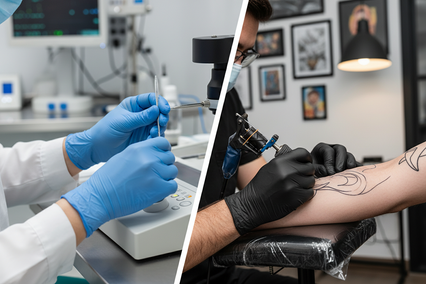
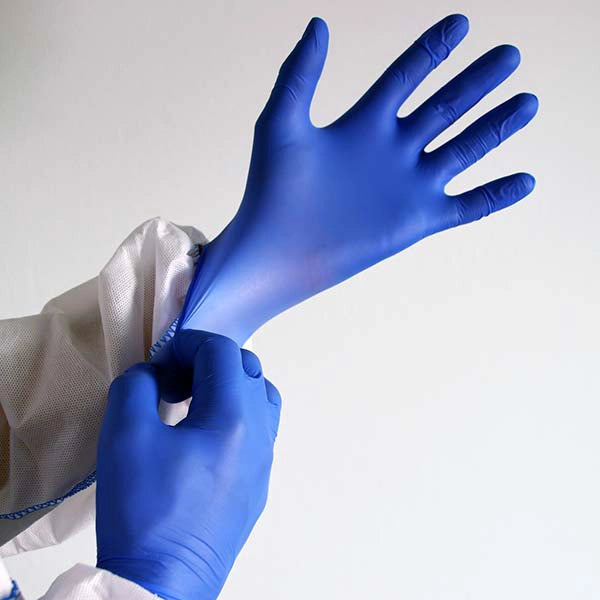

A cleaning crew member sprays full-strength bleach on a bathroom tile, and within three minutes the latex glove on their hand starts feeling sticky and soft. That sticky feeling means the chemical is eating through the barrier. Now their skin is exposed to sodium hypochlorite, and by tomorrow morning they have a chemical burn that puts them off the job for a week. This happens more often than it should, and it happens because the wrong gloves were used for the chemical at hand.
If you work with bleach, acids, or solvents, choosing the right gloves for bleach and other harsh chemicals is not a preference. It is a safety requirement. The wrong glove material breaks down on contact, giving you a false sense of protection that is worse than wearing nothing at all, because at least without gloves you would know to avoid contact.
This guide is built for purchasing managers, facility supervisors, cleaning crews, lab technicians, and industrial workers who need to buy the right chemical-resistant disposable gloves in bulk. You will learn which glove materials resist which chemicals, how to read breakthrough time data, and exactly which gloves to order for bleach, acid, and solvent tasks at your facility.
Why Glove Material Matters More Than Thickness for Chemical Work
Thickness adds time before a chemical breaks through, but material determines whether the chemical breaks through at all. A thick vinyl glove exposed to acetone will degrade faster than a thin nitrile glove exposed to the same solvent. That is because nitrile’s molecular structure resists organic solvents while vinyl’s does not.
For chemical work, you need to evaluate three factors in this order: material compatibility first, thickness second, and cost third. Getting the first factor wrong makes the other two irrelevant.
The three disposable glove materials you will find on the market are nitrile, latex, and vinyl. Each has a distinct chemical resistance profile, and understanding these differences is the fastest path to placing the right bulk order for your operation.
Nitrile vs. Latex vs. Vinyl: Chemical Resistance Comparison
The table below gives you a direct comparison of how each glove material performs against the three most common categories of harsh chemicals. Use it as a purchasing shortcut.
|
Chemical Type |
Nitrile |
Latex |
Vinyl |
Best Choice |
|
Bleach (sodium hypochlorite) |
Excellent |
Good |
Fair |
Nitrile |
|
Hydrochloric acid (muriatic) |
Excellent |
Good |
Poor |
Nitrile |
|
Sulfuric acid (dilute) |
Excellent |
Good |
Poor |
Nitrile |
|
Citric / acetic acid |
Excellent |
Good |
Fair |
Nitrile or Latex |
|
Acetone |
Good |
Poor |
Poor |
Nitrile |
|
Isopropyl alcohol (IPA) |
Excellent |
Fair |
Poor |
Nitrile |
|
Toluene / xylene |
Fair–Good |
Poor |
Poor |
Nitrile (thick) |
|
MEK (methyl ethyl ketone) |
Fair |
Poor |
Poor |
Nitrile (thick) |
|
Mineral spirits / paint thinner |
Good |
Poor |
Poor |
Nitrile |
|
Ammonia-based cleaners |
Excellent |
Good |
Fair |
Nitrile |
The pattern is clear. Nitrile dominates chemical resistance across nearly every category. Latex offers decent protection against water-based chemicals and mild acids but fails against most organic solvents. Vinyl is the weakest performer and should be reserved for light-duty, short-contact tasks that do not involve aggressive chemicals.
Best Gloves for Bleach: What Actually Resists Sodium Hypochlorite
Bleach, or sodium hypochlorite, is the most commonly used harsh chemical in commercial and residential cleaning. It is also one of the most aggressive chemicals on disposable glove materials when used at full strength or in high concentrations.
Why Nitrile Is the Best Glove for Bleach
Nitrile gloves offer the strongest resistance to sodium hypochlorite among disposable options. A 5-mil or thicker nitrile glove can withstand repeated contact with standard-concentration bleach (around 5–6% sodium hypochlorite) for meaningful working periods before breakthrough. For diluted bleach solutions used in routine surface cleaning, even a 4-mil nitrile glove provides adequate protection for short-duration tasks.
The key advantage of nitrile for bleach work is structural stability. Unlike latex, which softens and becomes tacky when exposed to bleach, nitrile maintains its integrity. You will not feel the glove degrading on your hand, which means the barrier stays consistent throughout the task.
Can You Use Latex Gloves With Bleach?
Latex gloves provides moderate resistance to diluted bleach for short contact times. If you are doing a quick wipe-down with a diluted bleach solution and changing gloves frequently, latex will hold up. However, latex breaks down noticeably under extended contact with full-strength bleach. The glove becomes soft, discolored, and prone to tearing. For any task involving concentrated bleach or contact lasting more than a few minutes, latex is not the right choice.
Latex also carries allergy risks. An estimated 4–17% of healthcare workers have latex sensitivities, and many facilities have moved to latex-free policies entirely. If your workplace uses bleach regularly for sanitation, nitrile eliminates both the chemical resistance concern and the allergy liability.
Why Vinyl Fails With Bleach
Vinyl gloves have the weakest chemical resistance of the three materials. With full-strength bleach, vinyl begins permeating quickly, often within minutes. Even with diluted bleach, vinyl provides only minimal and unreliable protection. If you are currently using vinyl gloves for any bleach-based cleaning task, you should switch to nitrile immediately. The cost savings of vinyl are erased by the safety risk and the need for far more frequent changes.
|
✓ Best Gloves for Bleach — Quick Decision Choose nitrile, 5 mil or thicker, for any task involving bleach at standard or full concentration. For diluted bleach solutions used in quick wipe-downs, 4-mil nitrile is acceptable. Avoid vinyl entirely. Use latex only for brief, diluted-bleach tasks if nitrile is unavailable. |
Best Gloves for Acids: Choosing Protection by Acid Type and Concentration
Acids are not a single category. The best gloves for acids depend on whether you are handling a weak organic acid like citric acid, a moderate inorganic acid like dilute hydrochloric acid, or a concentrated strong acid like sulfuric acid. Each scenario requires a different level of protection.
Gloves for Mild and Moderate Acids
For mild acids like citric acid, acetic acid (vinegar), and dilute phosphoric acid, nitrile gloves at 4–5 mils provide reliable protection. Latex also performs well against these mild acids. These chemicals appear frequently in food processing, descaling applications, and laboratory work. At these concentrations, both nitrile and latex maintain structural integrity for extended working periods.
Dilute hydrochloric acid (muriatic acid), commonly used in pool maintenance, masonry cleaning, and metal etching, requires nitrile at 5 mils or thicker. Latex provides moderate resistance but begins degrading faster than nitrile under sustained exposure. Vinyl should be avoided entirely for any acid work beyond brief contact with heavily diluted solutions.
Gloves for Strong and Concentrated Acids
Concentrated sulfuric acid, nitric acid, and hydrochloric acid at working concentrations demand the thickest disposable nitrile gloves available, typically 6–8 mils. Even with thick nitrile, these gloves should be treated as splash protection, not sustained immersion barriers. If your task involves submerging hands in concentrated acid baths, disposable gloves alone are insufficient. You need reusable chemical-resistant gloves rated for that specific chemical.
For splash protection during transfers, brief handling, and cleanup of acid spills, heavy-duty disposable nitrile is the standard. Change gloves immediately after any splash contact and inspect for discoloration or texture changes before continuing.
|
✓ Best Gloves for Acids — Quick Decision Mild acids (citric, acetic): 4–5 mil nitrile or latex. Moderate acids (dilute HCl, dilute H2SO4): 5–6 mil nitrile. Strong/concentrated acids: 6–8 mil nitrile for splash protection only. Vinyl is not recommended for any acid work. |
Best Gloves for Solvents: Organic Chemicals, Degreasers, and Paint Thinners
Solvents are where glove selection gets most critical, because organic solvents attack nearly every disposable glove material to some degree. The question is not whether breakthrough will occur, but how long you have before it does.
Gloves for Alcohols and Light Solvents
Isopropyl alcohol (IPA), ethanol, and similar light solvents are common in medical settings, electronics cleaning, and surface prep. Nitrile gloves at 4–5 mils handle these solvents effectively for typical task durations. Latex offers marginal protection against alcohols and should not be relied on for sustained contact. Vinyl is not suitable.
If your facility uses alcohol-based sanitizers or IPA wipes throughout the day, nitrile is the only disposable material worth stocking. Workers going through frequent glove changes with alcohol-based products need a glove that will not start breaking down between changes.
Gloves for Acetone, MEK, and Ketone Solvents
Acetone and methyl ethyl ketone (MEK) are aggressive solvents that challenge even nitrile. A standard 4-mil nitrile glove offers limited breakthrough time against acetone. For tasks involving direct acetone contact, such as nail salons, fiberglass repair, or parts cleaning, you need 6-mil or thicker nitrile and must plan for frequent glove changes on a timed schedule.
Neither latex nor vinyl provides meaningful protection against ketone solvents. Both materials degrade rapidly, often within just a few minutes of contact. If your operation uses acetone or MEK regularly, stock only thick nitrile and establish a mandatory glove-change interval of every 10–15 minutes during direct contact tasks.
Gloves for Toluene, Xylene, and Aromatic Solvents
Aromatic solvents such as toluene and xylene are found in paints, lacquers, adhesives, and industrial degreasers. These chemicals penetrate most disposable glove materials relatively quickly. Nitrile is still the best disposable option, but even thick nitrile (6–8 mil) provides only limited breakthrough times against aromatics.
For tasks involving sustained contact with aromatic solvents, disposable nitrile gloves should be used as a first layer of splash protection with frequent changes. Any task requiring more than 15–20 minutes of continuous contact with toluene or xylene should use reusable butyl or laminate chemical gloves instead.
Gloves for Mineral Spirits, Paint Thinner, and Petroleum Solvents
Mineral spirits and paint thinners are petroleum-based solvents used in painting, finishing, and general degreasing. Nitrile gloves at 5–6 mils offer good resistance for typical work durations. Painters and finishers can work comfortably through a coat application or brush cleanup without breakthrough, provided gloves are changed between sessions.
Latex and vinyl both fail against petroleum-based solvents. Latex softens and weakens, while vinyl permeates almost immediately. Automotive shops, paint contractors, and refinishing operations should stock exclusively nitrile for any task involving mineral spirits or paint thinner.
|
✓ Best Gloves for Solvents — Quick Decision Alcohols/light solvents: 4–5 mil nitrile. Acetone/MEK: 6+ mil nitrile with timed changes every 10–15 min. Toluene/xylene: 6–8 mil nitrile for splash protection; consider reusable gloves for sustained contact. Mineral spirits: 5–6 mil nitrile. Never use latex or vinyl for solvent work. |
Understanding Breakthrough Time: The Number That Determines Glove Safety
Breakthrough time is the measured duration, in minutes, that a chemical takes to permeate through a glove material under controlled test conditions (per ASTM F739 or EN 374). This number is the single most important specification when selecting gloves for chemical work.
A glove with a 30-minute breakthrough time against a specific chemical will protect you for approximately 30 minutes of continuous contact under test conditions. In real-world use, factors like stretching, hand heat, and physical abrasion reduce that number. As a general safety practice, plan to change gloves at 50–75% of the rated breakthrough time.
Not all manufacturers publish breakthrough data for every chemical. When published data is unavailable, default to the thickest nitrile option available and change gloves frequently. Keep contact time as short as possible and never assume a glove is protecting you just because it looks intact. Chemical permeation is invisible.
How to Buy the Right Chemical-Resistant Gloves in Bulk
Ordering chemical-resistant gloves in bulk requires more planning than ordering general-purpose exam gloves. Follow this buying framework to get it right.
Step 1: List every chemical your team handles. Include cleaning products, solvents, acids, and any specialty chemicals. Note the concentration of each product as listed on its Safety Data Sheet (SDS).
Step 2: Match each chemical to the right glove material and thickness. Use the comparison tables in this guide as a starting point. For chemicals not listed, check manufacturer breakthrough data or default to 6-mil nitrile.
Step 3: Calculate your consumption rate. Factor in glove change frequency for each task. Chemical tasks require more frequent changes than general-purpose tasks. A crew of 10 using bleach for 6 hours per day, changing gloves every 20 minutes, needs approximately 180 gloves per day for that task alone.
Step 4: Order by thickness category, not one-size-fits-all. Stock 4–5 mil nitrile for light chemical tasks and 6–8 mil for heavy chemical work. This dual-stock approach prevents overspending on thick gloves for tasks that don’t need them while ensuring maximum protection where it counts.
Step 5: Place your bulk order. Shop nitrile, latex, and vinyl gloves at Gloves.com with bulk pricing available across all thicknesses and materials. Filter by mil rating and use case to find the exact match for your chemical tasks.
Five Mistakes to Avoid When Choosing Gloves for Chemical Work
Mistake 1: Choosing gloves by price instead of chemical compatibility. Vinyl gloves cost less per unit, but they provide almost no chemical protection. Buying cheap gloves for acid or solvent work leads to exposure incidents that cost far more than the price difference between vinyl and nitrile.
Mistake 2: Assuming thicker always means safer. A thick vinyl glove is still a vinyl glove. Material compatibility comes first. An 8-mil vinyl glove will fail against acetone faster than a 4-mil nitrile glove.
Mistake 3: Not changing gloves on a timed schedule. Breakthrough time is not infinite, even for nitrile. Chemical permeation is invisible, and a glove that looks fine may already be compromised. Set timed change intervals based on published breakthrough data.
Mistake 4: Reusing disposable gloves after chemical contact. Disposable gloves are single-use by design. Once a chemical has contacted the glove surface, permeation has begun. Rinsing and reusing does not reset the breakthrough clock.
Mistake 5: Ignoring the SDS glove recommendations. Safety Data Sheets specify the recommended glove material for each chemical product. These recommendations exist because the manufacturer has tested compatibility. Read them before placing your next glove order.
Frequently Asked Questions: Gloves for Bleach, Acids, and Solvents
What are the best gloves for cleaning with bleach?
Nitrile gloves rated at 5 mils or thicker are the best choice for cleaning with bleach. Nitrile resists sodium hypochlorite without softening, tackiness, or rapid degradation. For diluted bleach solutions used in routine cleaning, 4-mil nitrile provides adequate short-term protection. Avoid vinyl for any bleach task.
Can nitrile gloves withstand acid exposure?
Yes. Nitrile is the best disposable glove material for acid resistance. It handles mild acids like citric and acetic acid at 4–5 mils, moderate acids like dilute hydrochloric at 5–6 mils, and provides splash protection against concentrated acids at 6–8 mils. Always check breakthrough time data for the specific acid and concentration you are using.
Do nitrile gloves protect against solvents like acetone?
Nitrile provides better protection against acetone than latex or vinyl, but breakthrough times are limited even with thick nitrile. Use 6-mil or thicker nitrile and change gloves every 10–15 minutes during direct acetone contact. For sustained solvent immersion, consider reusable chemical gloves rated for ketone solvents.
Are latex gloves safe for use with chemicals?
Latex gloves offer moderate resistance to water-based chemicals, mild acids, and diluted bleach. However, latex fails quickly against organic solvents, petroleum products, and concentrated acids. Latex also poses allergy risks for many workers. For chemical safety and allergy prevention, nitrile is the recommended alternative in most chemical-handling environments.
How often should I change gloves when working with chemicals?
Change chemical-resistant gloves at 50–75% of the published breakthrough time for the specific chemical. If no breakthrough data is available, change every 15–20 minutes during continuous chemical contact. Always change immediately after a splash, visible degradation, or a tear. For aggressive solvents like acetone and toluene, change every 10–15 minutes regardless of glove appearance.
Is it cheaper to buy chemical-resistant gloves in bulk?
Yes. Chemical tasks require frequent glove changes, which drives up consumption rates significantly compared to general-purpose use. Buying nitrile gloves in bulk cases of 1,000 or more reduces your cost-per-glove and ensures you never run short during a shift. Gloves.com offers bulk pricing on all nitrile, latex, and vinyl gloves with options sorted by mil rating for easy chemical-task matching.
Protect Your Team With the Right Chemical-Resistant Gloves
Every chemical on your facility’s shelf demands a specific glove response. Bleach needs nitrile. Acids need nitrile. Solvents need nitrile. The pattern is consistent: nitrile disposable gloves are the safest, most versatile choice for chemical work, and matching thickness to chemical severity keeps your team protected without overspending.
Stop relying on one glove for every task. Audit your chemical inventory, match each product to the right mil rating using the tables and decision boxes in this guide, and place a bulk order that covers every scenario your team faces.
Ready to upgrade your chemical protection? Shop chemical-resistant disposable gloves at Gloves.com and filter by material, thickness, and use case. Bulk pricing available on every product.