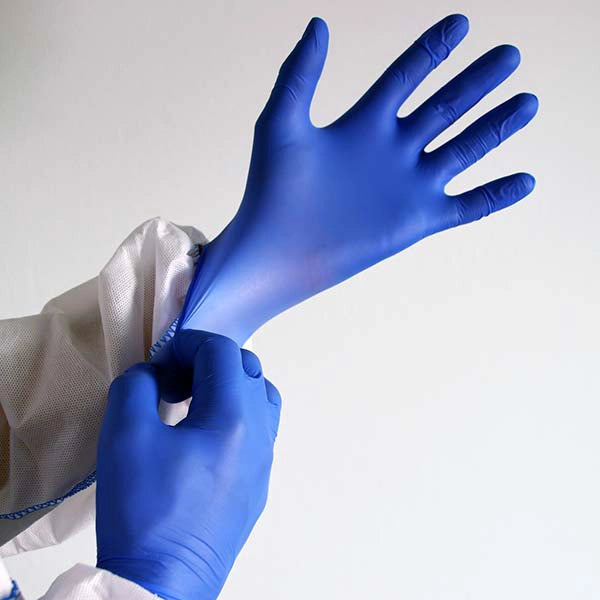

You pull on a pair of nitrile gloves, start working, and within minutes the fingertip tears. Or worse, you bought a 1,000-count case of thick, 8-mil gloves for a job that only needed 4 mils, and now you've overspent by hundreds of dollars. Choosing nitrile gloves by task is the single most important decision you can make before placing an order, and most buyers get it wrong because they guess instead of matching glove thickness to actual job demands.
This guide is for anyone who uses disposable nitrile gloves: healthcare workers, food service managers, automotive technicians, janitorial crews, tattoo artists, and bulk buyers purchasing for an entire facility. You'll learn exactly which nitrile glove thickness fits each task, why thickness matters more than brand, and how to avoid wasting money on gloves that are either too thin or too thick for the job.
By the end, you'll have a clear decision framework you can use the next time you shop for nitrile gloves in bulk.
What Does Nitrile Glove Thickness Actually Mean?
Nitrile glove thickness is measured in mils. One mil equals one-thousandth of an inch (0.001"). Disposable nitrile gloves typically range from 3 mils on the low end to 8 mils or higher for heavy-duty applications. The thickness determines three things: puncture resistance, chemical protection, and tactile sensitivity.
A thinner glove (3–4 mil) gives you better dexterity and touch sensitivity, which is critical for tasks like medical exams or food plating. A thicker glove (5–8 mil) provides more barrier protection against chemicals, sharp objects, and extended exposure to hazardous materials. Neither is universally “better.” The right choice depends entirely on the task.
For a deeper breakdown of what mil ratings mean in practice, see our full guide: Mil Thickness Explained.
Nitrile Gloves by Task: Quick-Reference Thickness Chart
Use this chart to find the right nitrile glove thickness for your specific task. This is the fastest way to match nitrile gloves to real-world use cases without overthinking it.
|
Task / Industry |
Thickness |
Key Requirement |
Change Freq. |
Bulk Priority |
|
Medical exams |
3–4 mil |
Tactile sensitivity |
Per patient |
High |
|
Food handling |
3–4 mil |
FDA compliance |
Per task |
High |
|
Dental procedures |
4–5 mil |
Puncture resistance |
Per patient |
High |
|
Tattoo / piercing |
4–6 mil |
Bloodborne pathogen barrier |
Per client |
Medium |
|
Janitorial / cleaning |
4–6 mil |
Chemical splash protection |
Per area/room |
High |
|
Automotive / mechanical |
5–8 mil |
Oil / solvent resistance |
Per job |
Medium |
|
Chemical handling |
6–8 mil |
Extended chemical contact |
Timed intervals |
Medium |
|
Industrial / manufacturing |
5–8 mil |
Abrasion + puncture |
Per shift or break |
High |
|
Painting / finishing |
4–6 mil |
Solvent resistance |
Per coat/session |
Medium |
|
Lab / research |
4–6 mil |
Chemical + biohazard barrier |
Per experiment |
Medium |
Want a printable version with more detail? Check out our nitrile glove thickness chart for a side-by-side visual comparison.
Medical and Healthcare Nitrile Gloves: What Thickness Do You Need?
Exam Gloves (3–4 Mil)
Standard medical exam gloves sit at 3 to 4 mils. At this thickness, healthcare professionals can feel veins for blood draws, handle small instruments, and palpate tissue without the glove getting in the way. Most clinics, urgent care centers, and hospitals burn through thousands of these per week, which makes cost-per-glove a critical factor.
Exam-grade nitrile gloves must meet ASTM D6319 standards and provide a reliable barrier against bloodborne pathogens. When you're going through high volumes, buying in bulk cases of 1,000 counts directly impacts your bottom line. Even a one-cent difference per glove adds up to hundreds of dollars over a quarter.
Surgical and Dental Applications (4–5 Mil)
Dental hygienists and surgical assistants often need slightly more puncture resistance than a standard exam glove provides. Instruments like scalers, suture needles, and burs create puncture risks that a 3-mil glove may not handle during longer procedures. A 4- to 5-mil nitrile glove balances puncture protection with enough dexterity for precision work.
For dental and surgical environments, double-gloving is also common. In that case, a thinner 3-mil inner glove paired with a 4-mil outer glove can achieve excellent barrier protection without sacrificing hand mobility.
Food Service and Food Handling: Choosing Nitrile Gloves for Kitchen Tasks
Food-safe nitrile gloves need to meet FDA 21 CFR 177 standards. For most food handling tasks, including prep, plating, and serving, a 3- to 4-mil glove works perfectly. The thinner profile lets line cooks handle garnishes, feel the texture of dough, and work quickly without hand fatigue during a full shift.
The critical factor in food service isn't just thickness; it's change frequency. Health codes typically require glove changes between tasks (raw meat to vegetables, for example), which means a kitchen crew can go through hundreds of gloves in a single day. Buying in bulk at lower cost-per-unit is not optional for food service operations. It's a budget necessity.
Blue and black nitrile gloves are preferred in food environments because they're easy to spot if a piece tears off into food, unlike clear or white options. This is a practical safety feature that many first-time buyers overlook.
Cleaning, Janitorial, and Sanitation: Which Nitrile Gloves Hold Up?
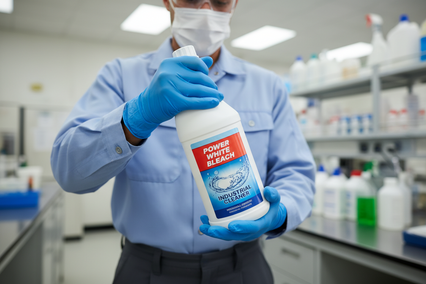
Janitorial crews face a unique challenge: they need enough chemical resistance to handle cleaning agents like bleach, ammonia, and degreasers, but they also need to change gloves frequently as they move between areas. A 4- to 6-mil nitrile glove hits the sweet spot for most cleaning tasks.
For general surface cleaning with diluted solutions, 4-mil nitrile gloves provide adequate splash protection. When working with concentrated chemicals or performing restroom sanitation, stepping up to 5 or 6 mils gives the extra barrier time needed before breakthrough occurs. Breakthrough time is the duration a glove can resist a specific chemical before it permeates through. Thicker gloves buy more time.
Facility managers purchasing for janitorial teams should stock both a mid-range (4-mil) option for routine cleaning and a thicker (6-mil) option for heavy-duty tasks. This dual-stock approach prevents overspending on thick gloves for light tasks while ensuring staff protection when handling harsh chemicals.
Automotive, Mechanical, and Industrial Nitrile Gloves by Task
Automotive and Mechanical Work (5–8 Mil)
Mechanics deal with motor oil, brake fluid, transmission fluid, and solvents on a daily basis. These substances degrade thinner gloves quickly. A 5- to 8-mil nitrile glove stands up to prolonged contact with petroleum-based products and provides enough tear resistance to handle hose clamps, sharp metal edges, and abrasive parts.
The most popular choice in auto shops is a 6-mil black nitrile glove. It hides grease stains (keeping the glove looking clean longer), offers solid chemical resistance, and provides enough grip for tools. Textured fingertip versions improve wet-grip performance, which matters when handling oily bolts and fasteners.
Industrial and Manufacturing (5–8 Mil)
Factory floors, warehouses, and manufacturing lines require gloves that resist abrasion, puncture, and sometimes chemical exposure simultaneously. A 5- to 8-mil industrial-grade nitrile glove handles tasks from assembly work to parts washing. For workers who wear gloves for an entire shift, the thicker options reduce hand fatigue through better structural support.
Industrial buyers should focus on total cost of ownership rather than per-glove price alone. A 6-mil glove that lasts through an entire shift costs less over time than a 4-mil glove that needs to be replaced three times during the same period.
Chemical Handling and Hazmat (6–8+ Mil)
Extended chemical contact requires the thickest disposable nitrile options available. Laboratories, chemical plants, and hazmat cleanup crews need 6- to 8-mil gloves (or higher) to ensure adequate breakthrough times. At these thicknesses, nitrile provides excellent resistance to a wide range of chemicals including many solvents, acids, and bases.
For chemical handling, always verify breakthrough time data for the specific chemicals you work with. Thickness is a strong indicator, but formulation also matters. Not all 6-mil nitrile gloves perform identically against the same chemical.
Thin vs. Thick Nitrile Gloves: How to Decide
The thin-vs-thick decision comes down to a simple tradeoff: dexterity versus protection. Every mil you add increases chemical resistance and puncture protection but decreases tactile sensitivity and increases hand fatigue over extended wear.
|
Factor |
Thin (3–4 Mil) |
Thick (5–8 Mil) |
|
Tactile sensitivity |
Excellent |
Reduced |
|
Puncture resistance |
Lower |
Higher |
|
Chemical breakthrough time |
Shorter |
Longer |
|
Hand fatigue |
Minimal |
Noticeable over hours |
|
Cost per glove |
Lower |
Higher |
|
Best for |
Medical, food, light tasks |
Auto, chemical, industrial |
For a detailed comparison with specific product recommendations, read our breakdown of thin vs. thick nitrile gloves.
How to Choose the Right Nitrile Gloves by Task: A Step-by-Step Decision Framework
Follow these four steps to match nitrile gloves to any task without guesswork.
Step 1: Identify your primary hazard. Are you protecting against biological materials, chemicals, physical abrasion, or general contamination? Biological and contamination tasks lean toward thinner gloves. Chemical and abrasion tasks demand thicker options.
Step 2: Determine the required contact time. Quick tasks (under 10 minutes of continuous contact) allow thinner gloves. Sustained exposure to chemicals or harsh environments for 30 minutes or more calls for 5 mils at minimum.
Step 3: Factor in dexterity needs. If the task requires fine motor control (suturing, plating food, assembling small components), don't go above 4 mils unless the hazard demands it. Loss of dexterity leads to slower work and higher error rates.
Step 4: Calculate cost-per-use, not cost-per-glove. A thicker glove that lasts through a full task costs less than two thin gloves that tear halfway through. Multiply glove cost by estimated changes per shift to find your true daily expense.
When to Replace Your Nitrile Gloves: Task-Based Guidelines
Knowing when to swap gloves matters as much as choosing the right thickness. Wearing a compromised glove provides a false sense of protection.
Replace immediately if: you notice a tear, puncture, or discoloration; you've switched between tasks involving different materials (raw protein to produce, for example); the glove has been in continuous contact with chemicals beyond its rated breakthrough time; or you've been wearing the same pair for more than 2–4 hours during physical work.
Healthcare settings: Change gloves between every patient contact, after touching contaminated surfaces, and before handling sterile instruments. This is non-negotiable per CDC and OSHA guidelines.
Food service: Change gloves between handling different food types, after touching non-food surfaces (phones, door handles), and at least every 4 hours during continuous use per FDA Food Code recommendations.
Proper glove replacement schedules increase your consumption rate, which is exactly why buying in bulk makes financial sense. Facilities that enforce correct replacement protocols often go through 2–3x more gloves than those that don't, but they also see fewer contamination incidents and compliance violations.
Buying Nitrile Gloves in Bulk: Why Thickness-Task Matching Saves Money
Matching nitrile gloves to tasks before placing a bulk order prevents two expensive mistakes: buying gloves that are too thin (leading to excessive tears and replacements) and buying gloves that are too thick (overpaying per unit for protection you don't need).
A facility that uses 4-mil gloves for exam rooms and 6-mil gloves for cleaning crews spends less overall than one that buys a single 6-mil glove for all tasks. The exam rooms burn through gloves faster due to patient-change protocols, so the cost savings from using a thinner glove for that specific task compounds rapidly.
When you're ready to stock up, browse our full nitrile gloves collection organized by thickness and use case. Bulk pricing is available across all product lines.
Nitrile Gloves Use Cases: Best Options by Industry
Healthcare: 3–4 mil exam gloves for routine care. 4–5 mil for dental and minor surgical assist. Blue or purple for visibility.
Food Service: 3–4 mil food-safe gloves. Blue or black for fragment detection. High-volume bulk orders recommended.
Automotive: 5–8 mil black nitrile. Textured fingertips for tool grip. Resistant to oils, fuels, and solvents.
Cleaning and Janitorial: 4–6 mil. Dual-stock approach: lighter for routine, heavier for chemical tasks.
Lab and Research: 4–6 mil. Verify chemical compatibility. Double-gloving for high-risk substances.
Tattoo and Body Art: 4–6 mil black nitrile. Must meet bloodborne pathogen standards. Change between clients.
Painting and Finishing: 4–6 mil. Solvent-resistant. Replace when contact exceeds breakthrough rating.
Industrial and Manufacturing: 5–8 mil. Focus on shift-length durability and total cost of ownership.
Frequently Asked Questions About Nitrile Gloves by Task
What thickness of nitrile gloves do I need for medical use?
For standard medical exams, 3- to 4-mil nitrile gloves offer the best balance of barrier protection and tactile sensitivity. Dental and minor surgical procedures may require 4–5 mils for added puncture resistance. Always confirm that gloves meet ASTM D6319 exam-grade standards.
Are nitrile gloves safe for food handling?
Yes, nitrile gloves are safe for food handling when they meet FDA 21 CFR 177 standards. Use 3- to 4-mil food-grade nitrile gloves for prep, cooking, and serving tasks. Choose blue or black colors so torn fragments are easy to spot in food.
How do I choose nitrile gloves for automotive work?
Select 5- to 8-mil nitrile gloves for automotive tasks. This thickness resists motor oil, brake fluid, and common solvents. Black nitrile is the shop standard because it hides grease stains and maintains a professional appearance. Look for textured fingertip options for better tool grip.
Can I use the same nitrile gloves for cleaning and food prep?
You should not reuse gloves between cleaning and food prep tasks. While both tasks may use a similar thickness (3–5 mil), you must change gloves to prevent cross-contamination. Stock separate boxes for each work area and enforce glove-change protocols.
What is the most cost-effective way to buy nitrile gloves in bulk?
Match the glove thickness to each task before ordering. Use thinner (3–4 mil) gloves for high-turnover tasks like medical exams and food handling, and thicker (5–8 mil) gloves for jobs that demand durability. This task-matched approach reduces waste and lowers cost-per-use. Visit Gloves.com for bulk pricing across all thicknesses.
How often should I change nitrile gloves during work?
Replace nitrile gloves whenever you see visible damage, switch between tasks, or reach the 2- to 4-hour mark during continuous wear. In healthcare, change between every patient. In food service, change between handling different food types. Proper replacement schedules protect safety and maintain compliance with health regulations.
Find the Right Nitrile Gloves for Every Task at Your Facility
Choosing nitrile gloves by task is the most reliable way to protect your team, stay compliant, and keep costs under control. Thickness is the deciding factor: thinner gloves for dexterity-driven work, thicker gloves for chemical and physical protection, and the right match for everything in between.
Stop guessing. Use the thickness chart and decision framework in this guide to build a glove order that matches every task at your workplace. When you need both precision and protection, stocking the right nitrile glove for each application eliminates waste and keeps your people safe.
Ready to stock up? Shop our full nitrile gloves collection and find the right thickness for every task at your facility. Bulk pricing available on all sizes and mil ratings.