
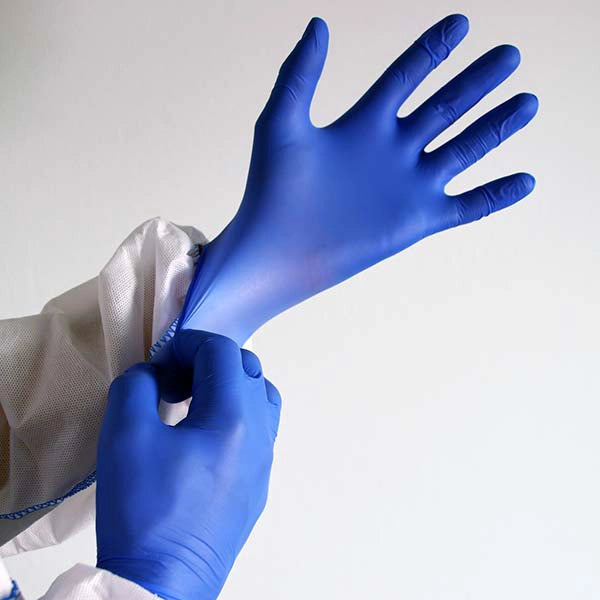

Running a small practice means every supply decision hits your bottom line directly. Unlike large hospital systems with dedicated procurement teams and group-purchasing contracts, you are choosing vendors, comparing prices, and managing inventory on your own. And disposable gloves—one of your highest-volume consumables—are where the wrong choice costs you the most.
If you are shopping for medical gloves for small clinics, this guide gives you everything you need to make a confident bulk purchase.
You will learn which glove material fits each clinical task, how to right-size your inventory without overstocking, where the real cost savings hide, and how to stay compliant with FDA and OSHA standards. Whether you run a solo family practice, a two-provider urgent care, or a small specialty office, this is the buying playbook built for your scale.
Types of Medical Gloves: Which Material Belongs in Your Practice?
There are three primary disposable glove materials used in clinical settings. Each has distinct advantages, limitations, and price points. Choosing the right one for each task in your practice is the first step toward controlling costs without compromising care.
Nitrile Exam Gloves: The All-Purpose Standard
Nitrile is the most widely used exam glove in healthcare today. It is synthetic, latex-free, and offers strong resistance to punctures, chemicals, and bloodborne pathogens. For a small practice stocking a single glove type, nitrile is the safest and most versatile default.
- Best for: patient exams, blood draws, injections, wound care, minor procedures
- Thickness: 3–4 mil for general exams, 4–5 mil for higher-risk tasks
- Allergy safe: 100% latex-free; eliminates Type I allergy risk for staff and patients
- Cost range: $0.07–$0.18 per glove in bulk
Latex Exam Gloves: Superior Fit, Limited Applicability
Latex delivers the best tactile sensitivity and elastic fit of any disposable glove material. Providers who perform detailed palpation or fine-motor procedures may prefer latex for its second-skin feel. However, latex allergy prevalence among healthcare workers (8–12%) and the risk of patient reactions have led most practices to move away from it.
- Best for: practices that have confirmed no latex sensitivities among staff and patient population
- Thickness: 3–4 mil
- Limitation: allergy risk; many facilities have adopted latex-free policies
- Cost range: $0.06–$0.15 per glove in bulk
Vinyl Exam Gloves: Budget Option for Low-Risk Tasks
Vinyl is the most affordable disposable glove. It provides basic barrier protection and is suitable for short-duration, low-risk tasks. However, it has lower puncture resistance and a looser fit compared to nitrile and latex, which limits its usefulness in clinical settings.
- Best for: front-desk tasks, patient intake, light cleaning, non-hazardous administrative duties
- Thickness: 3–4 mil
- Limitation: not recommended for procedures involving sharps, blood, or chemical exposure
- Cost range: $0.04–$0.10 per glove in bulk
Medical Glove Material Comparison at a Glance
|
Feature |
Nitrile |
Latex |
Vinyl |
|
Puncture Resistance |
High |
Moderate–High |
Low |
|
Chemical Resistance |
High |
Moderate |
Low |
|
Tactile Sensitivity |
Good |
Excellent |
Fair |
|
Latex-Free |
Yes |
No |
Yes |
|
Fit & Comfort |
Form-fitting |
Second-skin |
Loose |
|
FDA Exam Grade |
Yes |
Yes |
Yes (limited use) |
|
Cost Per Glove |
$0.07–$0.18 |
$0.06–$0.15 |
$0.04–$0.10 |
|
Best Clinical Role |
Primary exam glove |
Specialty/preference |
Low-risk admin tasks |
Compare and shop nitrile, latex, and vinyl exam gloves at gloves.com with bulk pricing available on all materials.
How to Choose Medical Gloves by Practice Type
The best medical gloves for doctors depend on the type of medicine being practiced. A family-medicine office has different requirements than a dermatology clinic or a small surgical center. Here is a breakdown by common small-practice specialties.
Family Medicine and Internal Medicine
These practices handle the highest volume of routine exams, immunizations, blood draws, and chronic-disease management appointments. Glove usage is frequent but mostly low-risk. A 3-mil nitrile exam glove is the workhorse here—affordable, comfortable for all-day wear, and protective enough for standard patient contact.
- Primary glove: 3-mil nitrile (blue), bulk cases
- Secondary glove: vinyl for front-desk and non-clinical tasks
- Monthly volume estimate: 2,000–5,000 gloves (1–3 providers)
Dermatology and Aesthetic Clinics
Dermatology practices perform biopsies, cryotherapy, excisions, and cosmetic procedures that involve sharps and chemical agents. These tasks require higher puncture resistance and chemical compatibility than a standard exam.
- Primary glove: 4-mil nitrile (blue or white)
- Secondary glove: sterile gloves for excisions and surgical procedures only
- Monthly volume estimate: 3,000–7,000 gloves (2–4 providers)
Pediatrics
Pediatric practices need gloves for routine well-child exams, vaccinations, and occasional wound care. Volume tends to be moderate. The most important consideration is ensuring a latex-free environment, since pediatric patients may not yet know their allergy status.
- Primary glove: 3-mil nitrile (blue or purple); latex-free is mandatory
- Monthly volume estimate: 1,500–4,000 gloves (1–3 providers)
Urgent Care and Walk-In Clinics
Urgent care sees unpredictable case mixes—lacerations, fractures, abscesses, infections, and minor surgical procedures. Glove use is heavy, and staff need quick access to reliable, durable gloves without fumbling through multiple SKUs.
- Primary glove: 4-mil nitrile (blue); the thicker mil covers a wider range of tasks
- Secondary glove: sterile surgical gloves for laceration repair and incision/drainage
- Monthly volume estimate: 4,000–12,000 gloves (2–5 providers)
Chiropractic, Physical Therapy, and Rehabilitation
These practices use gloves less frequently than medical offices but still need them for wound care, dry needling, cupping, and infection-control protocols. A smaller inventory with fewer SKUs keeps things simple and cost-effective.
- Primary glove: 3-mil nitrile (blue)
- Monthly volume estimate: 500–2,000 gloves per provider
|
Quick Decision: What Should Your Small Practice Stock?
|
Compliance Essentials: FDA, OSHA, and Glove Standards
Even the smallest practice must meet federal and state requirements for personal protective equipment. Choosing hospital gloves for small business operations means understanding what regulators expect.
FDA Exam-Grade Clearance
Any glove used for patient examination or contact with blood and body fluids must be FDA 510(k) cleared as a medical examination glove. This is non-negotiable. General-purpose or industrial-grade gloves are not approved for clinical use and expose your practice to liability. When ordering, confirm the product listing states “exam grade” or “medical grade.”
OSHA Bloodborne Pathogen Standard (29 CFR 1910.1030)
OSHA requires employers to provide appropriate PPE, including gloves, for any task involving potential exposure to blood or other potentially infectious materials. Gloves must be replaced as soon as they are torn, punctured, or contaminated. Your practice must also maintain an Exposure Control Plan that documents glove use protocols.
Sterile vs. Non-Sterile: Where the Line Falls
Non-sterile exam gloves are appropriate for the vast majority of tasks in a small practice: exams, blood draws, injections, wound assessments, and vital signs. Sterile gloves are required only for invasive surgical procedures that penetrate the skin barrier under aseptic conditions. Misusing sterile gloves for routine exams inflates costs by 10x to 50x per pair with zero compliance benefit.
|
Compliance Reminder for Small Practices
|
How Small Practices Can Cut Glove Costs Without Cutting Corners
Gloves are a recurring expense that never goes away. For a small practice, the difference between smart purchasing and default purchasing can mean $2,000 to $8,000 per year in unnecessary spending. Here is how to get that money back.
Buy in Cases, Not Boxes
A single box of 100 nitrile gloves costs $8 to $18 depending on brand and thickness. A case of 1,000 (10 boxes) from the same supplier typically costs $60 to $120—a 15% to 30% per-glove savings just by changing your order size. For a practice using 3,000 gloves per month, this adds up to $500 to $1,500 in annual savings on this single change alone.
Eliminate Sterile Gloves from Non-Surgical Tasks
This is the single highest-impact cost move for most small practices. A pair of sterile surgical gloves costs $2.00 to $5.00. A pair of non-sterile nitrile exam gloves costs $0.14 to $0.36. If your staff is using sterile gloves for routine exams or blood draws, switching those tasks to non-sterile saves 85% to 95% per pair.
Annual Cost Comparison by Purchasing Strategy
|
Strategy |
Cost / Glove |
Monthly (3K) |
Annual |
|
Single boxes, mixed sterile |
$0.15–$0.50 |
$450–$1,500 |
$5,400–$18,000 |
|
Bulk cases, non-sterile nitrile |
$0.07–$0.12 |
$210–$360 |
$2,520–$4,320 |
|
Optimized (bulk + vinyl for admin) |
$0.06–$0.10 |
$180–$300 |
$2,160–$3,600 |
Potential annual savings by optimizing: $3,000 to $14,000+ depending on current purchasing habits.
Right-Size Your Thickness
A 3-mil nitrile glove is 20% to 30% cheaper per unit than a 5-mil glove. For standard patient exams, 3 mil provides adequate barrier protection and superior comfort. Reserve 4-mil and 5-mil gloves for procedures involving sharps, chemical agents, or extended wear. Stocking two thickness tiers instead of one prevents overspending on lighter tasks.
Stock the Right Sizes to Reduce Waste
Gloves that do not fit properly rip during use and get discarded before they serve their purpose. A torn glove is a wasted glove. Survey your staff’s hand sizes and stock accordingly. Most small practices need small, medium, and large. Add extra-small or extra-large if any team members fall outside that range. Proper sizing alone can reduce glove waste by 15% to 20%.
Set Up Recurring Orders
Emergency or last-minute orders almost always cost more due to expedited shipping and smaller quantities. Establish a standing monthly order based on your average consumption plus a 10% buffer. Many suppliers, including
Many suppliers, including gloves.com, offer consistent bulk pricing on recurring case orders so you never run short and never overpay.
How to Build a Glove Inventory for a Small Practice
Small practices do not need a complex inventory system. A straightforward two-tier or three-tier approach covers every clinical and non-clinical scenario.
Tier 1: Primary Exam Glove (80–90% of usage)
- Material: Nitrile
- Thickness: 3–4 mil
- Color: Blue (standard for healthcare)
- Grade: FDA 510(k) exam-grade, powder-free
- Purchase unit: Cases of 1,000 in S, M, L (and XL if needed)
This is the glove every exam room, lab station, and treatment area should have. It covers patient exams, blood draws, vaccinations, wound care, and all routine clinical contact.
Tier 2: Budget Non-Clinical Glove (5–15% of usage)
- Material: Vinyl
- Thickness: 3 mil
- Color: Clear
- Grade: General-purpose or exam-grade
- Purchase unit: Cases of 1,000 in M and L
Vinyl gloves are the cost-effective choice for front-desk operations, filing, intake forms, light janitorial tasks, and any non-clinical task where basic barrier protection is sufficient.
Tier 3: Sterile Surgical Glove (1–5% of usage)
- Material: Sterile nitrile or latex
- Thickness: 5–7 mil
- Packaging: Individually sealed pairs
- Purchase unit: Boxes of 50 pairs in provider sizes
Only practices that perform invasive surgical procedures need sterile gloves. If your practice does not perform surgery, you can eliminate this tier entirely and redirect that budget to higher-quality exam gloves.
Sample Monthly Inventory for a 3-Provider Practice
|
Glove Type |
Qty / Month |
Cost / Glove |
Monthly Cost |
Annual Cost |
|
Nitrile exam (3 mil) |
4,000 |
$0.09 |
$360 |
$4,320 |
|
Vinyl (non-clinical) |
600 |
$0.05 |
$30 |
$360 |
|
Sterile surgical |
100 pairs |
$2.50/pair |
$250 |
$3,000 |
|
TOTAL |
~4,700 |
— |
$640 |
$7,680 |
Note: If your practice does not perform surgery, removing the sterile tier drops your annual glove budget to approximately $4,680—a 39% reduction.
When to Change Gloves in a Clinical Setting
Proper glove-change protocols keep your patients safe and your practice compliant. Replace gloves at these points without exception.
- Between every patient interaction, even brief ones
- After touching contaminated surfaces, equipment, or waste
- Before handling sterile instruments or clean supplies
- Immediately if a glove tears, punctures, or visibly degrades
- Before and after breaks, meals, or restroom use
- After removing gloves, always wash hands with soap and water or use alcohol-based sanitizer
Frequent changes are a cost of care. The goal is not to use fewer gloves—it is to avoid paying more per glove than the task requires.
Frequently Asked Questions: Medical Gloves for Small Practices
What type of medical gloves should a small clinic buy?
Non-sterile nitrile exam gloves should be the primary glove for any small clinic. They are latex-free, FDA exam-grade, chemically resistant, and cost-effective in bulk. Add vinyl gloves for non-clinical admin tasks and sterile surgical gloves only if your practice performs invasive procedures.
How many gloves does a small medical practice use per month?
A solo-provider practice typically uses 1,500 to 3,000 gloves per month. A two-to-three-provider practice uses 3,000 to 8,000. Volume depends on patient load, procedure mix, and staff size. Tracking usage for 30 days gives the most accurate baseline for ordering.
Do small clinics need to buy FDA-approved gloves?
Yes. Any glove used for patient examination or contact with blood and body fluids must be FDA 510(k) cleared as a medical examination glove. Using industrial-grade or food-service gloves for clinical tasks violates federal standards and creates significant liability.
Can I use vinyl gloves for patient exams?
Vinyl exam gloves are FDA-cleared for patient examination, but they offer lower puncture and chemical resistance than nitrile. Most clinical guidelines recommend nitrile as the primary exam glove. Vinyl is better reserved for low-risk, non-clinical tasks to save costs.
How do I store medical gloves properly?
Store gloves in their original packaging in a cool, dry location away from direct sunlight, heat sources, and fluorescent lighting. Nitrile gloves have a shelf life of three to five years when stored correctly. Rotate stock using a first-in, first-out system to prevent expiration.
What is the difference between exam-grade and industrial-grade gloves?
Exam-grade gloves are FDA 510(k) cleared for medical use and must meet specific standards for barrier protection and quality testing (AQL of 1.5 or lower). Industrial-grade gloves are not FDA-cleared for patient contact and have a higher acceptable defect rate. Never substitute industrial gloves for exam gloves in a clinical environment.
Stock Smarter. Spend Less. Stay Compliant.
A small practice cannot afford to waste money on the wrong gloves—and it cannot afford to compromise on safety. The solution is straightforward: stock FDA-cleared nitrile exam gloves as your primary line, add vinyl for non-clinical tasks, and reserve sterile gloves exclusively for surgical procedures. Buy in cases, not boxes. Stock the right sizes. Set up recurring orders so you never scramble.
Every dollar you save on smarter glove purchasing is a dollar you can reinvest in patient care, equipment, or your team. It starts with one well-planned order.
|
Ready to Stock Your Practice? Shop FDA-cleared nitrile, latex, and vinyl exam gloves at bulk pricing built for small practices. |

