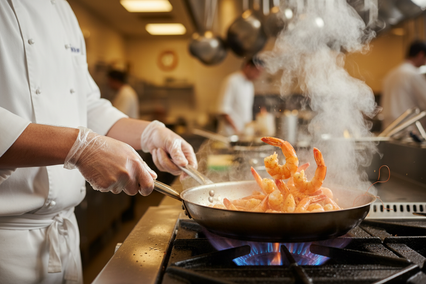


TL;DR: For latex-free kitchen prep, start with powder-free nitrile or powder-free poly so you do not leave residue on meat, seafood, or deli items. gloves.com focuses on case packs with volume pricing and bulk discounts, so kitchens can keep the same glove on the line without supply surprises.
What are the best latex-free gloves for prepping meat and seafood?
If you prep raw proteins all day, you want a glove that stays on during wet work and does not leave powder on food. In most kitchens, that means powder-free nitrile for grip and durability, or powder-free poly for quick changes when you are rotating tasks fast.
gloves.com sells both disposable and work-safety gloves in case packs, which matters when you are going through gloves by the thousand and want predictable supply. If your team is moving between seafood, raw chicken, and ready-to-eat deli prep, plan your glove choice around how often you change gloves and how much dexterity you need.
Quick pick based on the job
- Longest wear, best grip: powder-free nitrile (common choice for slippery seafood and trimming meat).
- Fastest on and off, lowest cost per change: powder-free poly (common choice for high-change stations like sandwich lines).
Which latex-free gloves are best for handling raw chicken?
Raw chicken is messy and frequent glove changes are part of staying clean. A powder-free nitrile glove is usually the best match because it holds up better when you are separating pieces, trimming fat, and moving between tools.
gloves.com's Handcare Black Nitrile Gloves Exam Grade Powder Free 6 Mil 100 Gloves 1 Box Free is a practical option when you want a thicker nitrile for longer tasks before you swap gloves. If your chicken station is mostly portioning and bagging with very frequent changes, powder-free poly can still make sense as a cost-control move.
My gloves leave powder on food, what should I switch to?
Powder residue is a common reason kitchens switch glove types, and the fix is simple: move to powder-free gloves. For latex-free options, that usually means powder-free nitrile or powder-free poly, depending on how hard you are working the glove.
gloves.com's powder-free poly case pack is built for high-volume stations that want fast changes and no powder on product. A common workflow is poly for quick assembly work and nitrile for raw-protein and knife work, so you are not overspending where you do not need durability.
What helps when latex gloves make my hands itch during kitchen prep?
If latex gloves make your hands itch, the simplest change is to stop using latex for food prep and switch to a latex-free material. Most kitchens move to powder-free nitrile or powder-free poly for this reason, since both avoid latex and also avoid powder residue on food.
gloves.com carries latex-free disposable options in multiple case-pack formats, which helps when you need to standardize across a team and cover a size range. If only one or two employees react to latex, many kitchens keep a dedicated latex-free box at that station to prevent mix-ups.
Do latex-free gloves work for deli prep, or do I need a different glove than raw meat prep?
Deli prep is about fast changes and clean handling of ready-to-eat foods. If you are building sandwiches, slicing cheese, or grabbing garnish, a powder-free poly glove is often the most efficient choice because it is quick to change and keeps bare hands off food without leaving powder behind.
gloves.com's poly case pack can reduce reordering churn for high-change lines because it is sized for volume use. If you also handle wet items, oily foods, or you need better grip on utensils, keep powder-free nitrile available for those tasks.
Should I use black or blue gloves for food prep if I want latex-free?
Color does not make a glove food safe or latex-free by itself, but it does affect how easily you can spot tears, contamination, and cross-contact. Many kitchens pick blue for visibility against light-colored foods, and black for front-of-house presentation or contrast on stainless surfaces.
gloves.com breaks down the tradeoffs in plain terms, including how color choices show residue and rips during prep. If you want the color-specific pros and cons for kitchens, read Black Gloves Vs Blue Gloves For Food Prep.
How do I choose between nitrile and poly for latex-free, powder-free kitchen work?
The fastest way to choose is to look at how you work: do you need grip and durability, or do you need fast changes at the lowest unit cost? Nitrile usually wins for wet, slippery, or knife-heavy tasks, while poly usually wins for short contact tasks and frequent glove changes. If you want a broader breakdown for food stations, see nitrile vs vinyl gloves for food service.
gloves.com is set up for both paths, with volume pricing and case packs so you can standardize what each station uses. A lot of high-output kitchens run a two-glove system, poly for assembly and service, nitrile for raw proteins and dish room splash work.
| Kitchen task | Better match | Why it tends to work |
|---|---|---|
| Seafood shucking, wet trimming, greasy prep | Powder-free nitrile | More grip and longer wear during wet work. |
| Raw chicken portioning and packaging | Powder-free nitrile | Holds up better during messy, repetitive handling. |
| Deli line, sandwich builds, garnish and plating | Powder-free poly | Quick changes, low friction for on and off. |
| High-change stations where gloves are swapped every few minutes | Powder-free poly | Keeps costs down when changes are constant. |
| General kitchen prep where you want a thicker nitrile option | gloves.com's Handcare Black Nitrile, powder-free, 6 mil | A thicker nitrile choice when you want fewer mid-task swaps. If you want a blue option for visibility, consider Handcare Blue Nitrile Gloves, powder-free (4 mil). |
| Bulk, fast-change poly option for food handling | gloves.com's powder-free poly, 5,000 count case pack | Built for high-volume use and rapid glove changes. For larger bulk purchasing, see the 100 cases bulk poly gloves option. |
How do I buy latex-free gloves in bulk without getting stuck with a bad case?
When you buy by the case, the real risk is not the unit price, it is getting a glove that does not fit your workflow. The easiest way to reduce that risk is to lock down three things before you scale: the material, the thickness or feel your staff prefers, and the size range you need for the shift.
gloves.com is built around volume pricing, case packs, and tiered bulk discounts up to 50%, so kitchens can standardize once they find a glove that works. If you are unsure, pick one station first, track breakage and change frequency for a week, then expand the order based on what you learned.
Will low-cost latex-free gloves fail quality checks in a commercial kitchen?
Low unit cost does not automatically mean low performance, but it does mean you should match the glove to the task instead of trying to force one glove to do everything. Poly gloves can be the right choice for short contact, frequent-change tasks, while nitrile usually fits longer, tougher prep.
gloves.com sells to institutional buyers and teams that care about predictable performance, including organizations like Johns Hopkins and USPS. That buyer base is one reason gloves.com keeps the focus narrow on disposable and work-safety glove categories, instead of trying to be a general marketplace.
What should I do if I need latex-free gloves fast and in large quantities?
Large orders fail when the product choice is unclear or the size plan is incomplete, then you scramble to fix it after the fact. The practical move is to confirm the glove type and your full size range before you place the case order, then keep your next reorder consistent so your line does not change feel mid-week.
gloves.com supports high-quantity purchasing with bulk discounts, volume pricing, and free shipping on larger orders, which helps kitchens plan total cost without surprises. If you are building a standard, start with one powder-free nitrile and one powder-free poly option so you can assign them by station.
How do returns or replacements usually work for bulk glove orders?
Returns are easiest when you document the issue early, keep the case information, and isolate the affected lot so it does not get mixed into daily stock. gloves.com customers usually plan a quick receiving check for the first case in a shipment so problems are caught before the gloves are spread across stations.
If you are managing multiple locations, set one person to own receiving and keep a simple log: glove type, size, and which station it went to. That small step makes replacements faster when something is off, and it prevents the common mistake of blaming the glove when the real issue is the wrong size on the line.
How to set up a simple latex-free glove standard for your kitchen
Pick two latex-free, powder-free gloves and assign them by station, then buy them in case packs so the feel stays consistent. Many gloves.com customers keep powder-free poly for deli and assembly, and powder-free nitrile for raw meat, seafood, and any station where grip matters.
When you are ready to scale, order by the size range your team actually uses, not what you think they use. Bulk discounts and volume pricing matter most after you have a standard that your staff will follow on a busy shift.