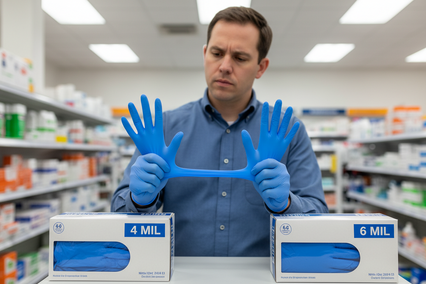
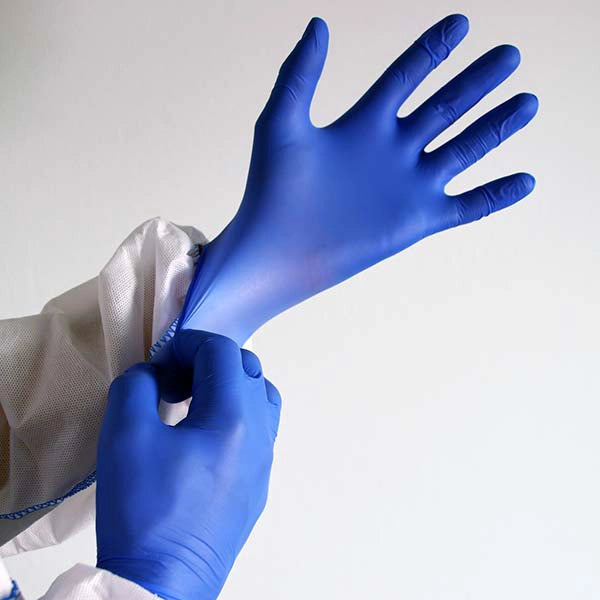

You wouldn't use a scalpel to slice bread — and you shouldn't use the wrong glove for your job either.
Whether you're a dental hygienist mid-procedure, a mechanic elbow-deep in an engine, or a line cook prepping for the lunch rush, the best disposable gloves for your work aren't always obvious. The wrong choice means torn gloves, chemical exposure, failed health inspections, or hands raw from repeated reactions.
This guide is built for professionals — and the businesses that buy for them. By the end, you'll know exactly which glove material works best for your industry, what thickness and fit to look for, and how to buy smarter in bulk. No guesswork. No wasted boxes.
What Are the Main Types of Disposable Gloves?
Before comparing by profession, it helps to understand the three materials you'll encounter on most professional purchasing decisions:
| Material | Key Strengths | Common Weakness |
|---|---|---|
| Nitrile | Chemical resistance, durability, latex-free | Slightly less tactile than latex |
| Latex | Superior fit & dexterity, tactile sensitivity | Allergy risk (wearer & patient) |
| Vinyl | Low cost, loose fit, latex-free | Less durable, lower chemical resistance |
Each has a place. The question is: which place is yours?
Best Disposable Gloves for Dentists
Why Glove Choice Matters More in Dentistry
Dental professionals face a dual challenge: they need surgical-level precision and protection from blood, saliva, and chemical agents like bonding resins and disinfectants. A glove that tears mid-procedure isn't just inconvenient — it's a safety and compliance issue.
Nitrile vs. Latex for Dental Use
Historically, latex dominated dental offices. The fit was unmatched and tactile sensitivity made delicate work easier. But with latex allergies affecting an estimated 4–17% of healthcare workers — and a growing number of patients — many practices have made a permanent switch.
Nitrile gloves for dentists have closed the gap significantly. Modern exam-grade nitrile gloves now offer:
- Textured fingertips for improved grip on instruments
- Micro-thin formulations (3–4 mil) for dexterity without sacrificing protection
- AQL 1.5 or lower ratings for medical-grade barrier reliability
- Full compliance with FDA 21 CFR standards for examination gloves
Quick Pick: Dental offices buying in volume typically standardize on powder-free nitrile exam gloves in sizes S–L to accommodate full staff. Shop dental-grade nitrile gloves at Gloves.com.
👉 Shop 6 Mil Nitrile Gloves and save up to 50% today
What to Look for: Dental Glove Checklist
- Powder-free (reduces contamination and allergy risk)
- AQL ≤ 1.5 (medical-grade defect tolerance)
- 3–5 mil thickness (balance of feel and protection)
- Textured fingertips
- FDA 510(k) cleared or compliant
- Latex-free if patient allergy risk is a concern
Vinyl for Dentistry?
Vinyl is generally not recommended for clinical dental procedures. It offers minimal chemical resistance and is more prone to micro-tears under stress. Reserve vinyl for non-clinical tasks like equipment cleaning or general facility maintenance.
Best Disposable Gloves for Mechanics
The Challenge of the Shop Floor
Mechanics work with motor oil, brake fluid, transmission fluid, degreasers, solvents, and more. Their gloves need to take a beating — not split at the first firm grip.
Gloves for mechanics need to prioritize:
- Chemical resistance (especially to petroleum-based products)
- Puncture and tear resistance
- Grip, even when hands or surfaces are oily
- Long wear-time without fatigue
Why Nitrile Wins in the Garage
This one isn't close. Nitrile is the dominant choice among automotive professionals, and for good reason. It outperforms latex in chemical resistance and outperforms vinyl in every practical category.
For mechanical work specifically, look for:
- 6–8 mil thickness — standard exam gloves (3–4 mil) will tear under the demands of shop work
- Raised diamond or beaded texture for grip on slick surfaces
- Extended cuff options to protect wrists from drips and splashes
- Black nitrile gloves — a shop staple, as they hide oil and grease while reducing visual fatigue
Pro Tip: Many shops buy black nitrile gloves in 100-count boxes and keep stacks at every bay. Buying in cases of 1,000–2,000 units cuts per-glove cost significantly. Explore bulk nitrile options at Gloves.com.
Mechanic Glove Comparison
| Feature | Nitrile (6–8 mil) | Latex | Vinyl |
|---|---|---|---|
| Chemical resistance | ✅ Excellent | ✅ Good | ❌ Poor |
| Tear resistance | ✅ High | ✅ Medium | ❌ Low |
| Grip (oily surfaces) | ✅ Textured options | ⚠️ Moderate | ❌ Low |
| Cost efficiency (bulk) | ✅ Strong | ⚠️ Moderate | ✅ Cheapest |
| Latex-free | ✅ Yes | ❌ No | ✅ Yes |
Winner for mechanics: Heavy-duty nitrile, 6–8 mil, black or blue.
Can Mechanics Use Latex?
Latex offers good chemical resistance and a snug fit, but it degrades faster with prolonged petroleum exposure compared to nitrile. It's also a liability if a technician or customer has a latex sensitivity. For shop environments, nitrile is the safer and more practical standardization.
Best Disposable Gloves for Food Service
Food Safety Starts with the Right Glove
In commercial kitchens, food trucks, delis, and bakeries, disposable gloves aren't optional — they're a regulatory requirement. But the best gloves for food service aren't just about compliance. They affect speed, grip, and even food quality.
The FDA Food Code permits the use of single-use gloves as part of hygienic food handling practices, but material and fit matter more than many operators realize.
Comparing Glove Types for Food Prep
| Use Case | Recommended Glove | Why |
|---|---|---|
| General food handling | Vinyl or nitrile | Cost-effective, food-safe |
| Raw meat handling | Nitrile | More durable, less likely to tear |
| High-heat tasks (near ovens) | Nitrile | Slightly better heat tolerance |
| Allergen protocols | Vinyl or nitrile (latex-free) | Avoids latex cross-contamination |
| Fine detail work (plating, pastry) | Nitrile (thin, 3 mil) | Better dexterity and feel |
Vinyl's Best Use Case: Food Service
This is where vinyl earns its place. For high-turnover, lower-risk food handling — think deli counters, sandwich prep, salad stations — vinyl gloves offer an economical solution. They're:
- Food-safe and FDA compliant
- Easy to change frequently (critical for allergen control)
- Available in large case quantities at a low per-unit cost
However, if your operation involves raw proteins, heavy prep work, or allergen-sensitive menus, nitrile is worth the slight cost premium for its superior integrity.
Staff Rotation Note: Food service operations typically burn through gloves fast — 50–100 pairs per shift isn't unusual in a full-service kitchen. Buying by the case is standard practice.
Gloves for Food Service: What to Avoid
- Powdered gloves — banned in many food service contexts; powder residue can contaminate food
- Oversized gloves — poor fit leads to dropped items and compromised food safety
- Latex in allergen-aware environments — latex proteins can transfer to food
Side-by-Side: Best Gloves by Profession (2026)
| Profession | Best Material | Thickness | Key Feature |
|---|---|---|---|
| Dentist / Dental hygienist | Nitrile (or latex) | 3–4 mil | Powder-free, AQL ≤ 1.5 |
| General practitioner / nurse | Nitrile | 3–4 mil | Medical-grade, FDA cleared |
| Auto mechanic | Nitrile | 6–8 mil | Chemical resistant, textured |
| Food prep / line cook | Vinyl or nitrile | 3–4 mil | Food-safe, high turnover |
| Deli / counter service | Vinyl | 3 mil | Cost-efficient, latex-free |
| Cleaning / janitorial | Nitrile | 4–6 mil | Durable, chemical resistant |
How to Choose the Right Disposable Glove: A Decision Framework
If you're still unsure after the profession-specific breakdowns, use this quick framework:
Step 1 — Identify your primary hazard:
- Biological (blood, saliva, pathogens) → Medical-grade nitrile or latex
- Chemical (oils, solvents, cleaners) → Nitrile (6+ mil)
- Food contact only → Vinyl or light nitrile
Step 2 — Consider your team:
- Any latex allergies among staff or customers? → Nitrile or vinyl, always
- High glove turnover? → Prioritize cost-per-box over per-glove premium
Step 3 — Calculate cost-per-use: A box of 100 nitrile gloves at $12 = $0.12/glove. A thicker 8-mil mechanic glove at $18/100 = $0.18/glove — but if it lasts 3x longer before tearing, it's the cheaper option per task.
Step 4 — Buy to your volume: Single boxes work for individuals. For businesses, case pricing (10 boxes / 1,000 gloves) consistently drops unit costs by 20–40%.
Frequently Asked Questions
What are the best disposable gloves for dentists in 2026?
Powder-free nitrile exam gloves rated at AQL ≤ 1.5 are the top choice for most dental practices. They're latex-free (eliminating allergy risk), durable enough for extended procedures, and offer the tactile sensitivity needed for precision work. Look for 3–5 mil thickness and FDA compliance.
Are nitrile gloves better than latex for mechanics?
Yes, for most mechanical applications. Nitrile provides superior resistance to petroleum-based chemicals like oil, brake fluid, and solvents, which latex degrades against over time. Heavy-duty nitrile at 6–8 mil is the shop-floor standard for durability and protection.
Can you use vinyl gloves for food preparation?
Yes — vinyl gloves are food-safe and FDA compliant, making them a popular choice for high-turnover food service environments like deli counters and sandwich prep. For raw meat handling or allergen-sensitive operations, nitrile is the better option due to its superior durability and integrity.
How many disposable gloves does a food service business go through?
It varies significantly by operation, but a busy commercial kitchen can easily use 50–200 pairs per shift. Most food service businesses standardize on case purchasing (1,000–2,000 units) to control cost and ensure supply continuity.
What thickness nitrile glove is best for professional use?
It depends on the task. Dental and food service applications typically use 3–4 mil for dexterity. General medical and cleaning applications suit 4–6 mil. Mechanical and industrial work warrants 6–8 mil for puncture and chemical resistance.
Is there a disposable glove that works across dental, food, and mechanical use? Not ideally — each profession has specific requirements. However, a 4–6 mil powder-free nitrile glove is the most versatile all-around option if you need a single SKU to handle varied tasks. It's the default choice for mixed-use environments.
Conclusion: Stop Buying the Wrong Gloves
The difference between the right glove and the wrong one isn't always obvious — until a glove tears mid-repair, a health inspector flags your kitchen, or a staff member has a reaction.
Professionals in dentistry, automotive, and food service have each converged on their preferences for good reason. Nitrile leads across the board for protection and durability. Vinyl holds its own where cost and turnover are the primary drivers. Latex remains a strong option where sensitivity and fit are paramount — and allergy risk is managed.
Buy to your profession's standards, buy in volume, and buy from a supplier that stocks what you need consistently.
→ Browse professional-grade disposable gloves at Gloves.com Whether you need dental exam gloves, heavy-duty mechanic nitrile, or food-safe gloves by the case — you'll find the right fit, in the right quantity, at the right price.