
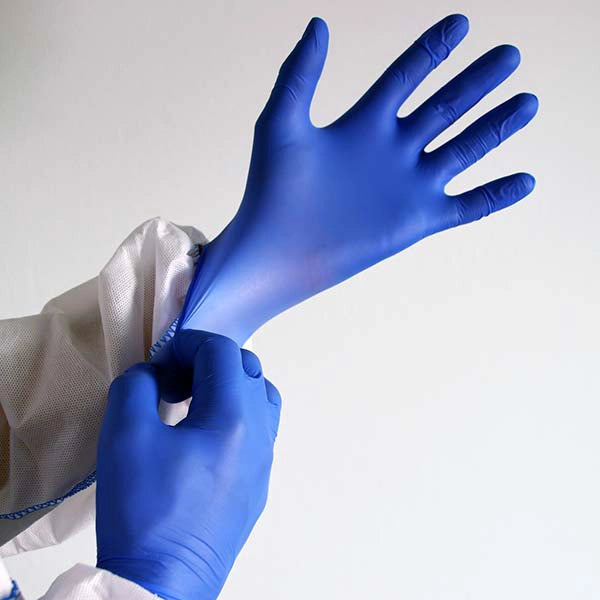

Most people don't think about their gloves — until they can't stand wearing them.
Maybe the fit is too tight and your hands ache after an hour. Maybe the gloves are so thick they make fine work feel clumsy. Or maybe they're so thin they split before the job is done. Whatever the frustration, the pattern is the same: the wrong glove slows you down, wears you out, and quietly adds up in wasted boxes.
Gloves for comfort aren't a luxury — they're a productivity factor. When gloves feel right, people actually wear them consistently, change them when needed, and stay protected without thinking about it. When gloves feel wrong, people push through too long, skip changes, or take them off entirely.
This guide is for anyone trying to figure out where nitrile gloves fall on the comfort-to-durability spectrum — and how to find the sweet spot for their specific situation. Whether you're outfitting a glove for medical practice, a kitchen, a cleaning crew, or your own home workshop, you'll walk away knowing what to look for and what to ignore.
What Makes a Disposable Glove "Comfortable"?
Comfort in a disposable glove isn't just about softness. It's a combination of four factors that work together — and if any one of them is off, the whole experience suffers.
1. Fit and Sizing
A glove that's too large creates bunching at the fingertips, reducing dexterity and tactile feedback. Too small and it restricts circulation, causes hand fatigue, and increases the chance of tearing. Proper fit is the single biggest comfort variable — and it's often overlooked because gloves are frequently bought in one-size-fits-most scenarios.
Most quality nitrile gloves are sized XS through XL or 2XL. For teams or households with mixed hand sizes, stocking two or three sizes is worth the minor added cost.
2. Thickness (Mil Rating)
Nitrile gloves are measured in mils (one mil = 0.001 inch). Thickness directly affects both feel and protection:
| Thickness | Feel | Best For |
|---|---|---|
| 2–3 mil | Very thin, high sensitivity | Exam gloves, short tasks |
| 4–5 mil | Balanced feel and protection | General purpose, food service, medical |
| 6–8 mil | Heavier, more protected | Industrial, mechanical, chemical handling |
| 8+ mil | Thick and stiff | Heavy chemical exposure, extended tasks |
Thinner gloves feel better during wear but offer less protection. Thicker gloves protect more but can cause hand fatigue during long shifts. Most professionals land in the 4–6 mil range as the practical sweet spot.
3. Powder-Free vs. Powdered
Powdered gloves use cornstarch to help with donning — they slide on more easily, which sounds like a comfort win. But the powder itself causes skin irritation in many users over repeated use, and it's been banned in medical settings by the FDA since 2016. Powder can also contaminate food and interfere with adhesives.
Powder-free nitrile is now the default for almost every professional environment, and for good reason. While they may feel slightly snugger going on, the inside lining of quality powder-free gloves is chlorinated or polymer-coated to reduce friction and improve donning without the residue.
4. Interior Lining and Material Formulation
Not all nitrile is the same. Lower-grade nitrile can feel stiff, rubbery, and unpleasant against the skin — especially after 30–60 minutes of wear. Higher-quality nitrile formulations are softer, more flexible, and conform to the hand's natural shape rather than fighting it.
Look for terms like "soft nitrile," "micro-foamed," or "textured grip formulation" when reading product descriptions. These signal better-quality compound processing, not just marketing language.
What Makes a Nitrile Glove "Durable"?
Durability in nitrile gloves means resistance to three things: tearing, puncturing, and chemical degradation.
Tear and Puncture Resistance
Tear resistance is largely a function of thickness and nitrile quality. A 3-mil glove from a reputable manufacturer will often outperform a 5-mil glove from a low-quality supplier — because compound quality matters as much as physical thickness.
Key markers of tear and puncture durability:
- AQL (Acceptable Quality Level): A lower AQL means fewer defective gloves per batch. AQL 1.5 is medical-grade. AQL 4.0 is acceptable for general industrial use.
- Tensile strength ratings: Measured in MPa; higher ratings mean the glove resists tearing under stress.
- Elongation percentage: How much the glove can stretch before breaking — good nitrile typically stretches 400–500% before failure.
Chemical Resistance
Nitrile's biggest advantage over latex and vinyl is its resistance to oils, fuels, solvents, and many industrial chemicals. This isn't just about safety — it also affects durability in use. A glove that degrades on contact with your work environment is effectively a single-use item regardless of its thickness.
For general cleaning and food service, chemical resistance is a secondary concern. For mechanics, lab workers, and industrial teams, it's the primary one.
Nitrile gloves naturally resist petroleum-based chemicals, dilute acids, alcohols, and many common cleaning agents. For concentrated solvents or highly caustic chemicals, always check a chemical compatibility chart before assuming protection.
Comfort vs. Durability: Does Choosing One Mean Sacrificing the Other?
This is the core question — and the honest answer is: sometimes yes, but less than you'd think.
The comfort-durability tradeoff is real at the extremes. A 2-mil micro-thin exam glove feels like a second skin but won't survive aggressive mechanical work. A thick 8-mil industrial glove will outlast almost anything but makes detailed tasks feel like wearing oven mitts.
But in the 4–6 mil middle range — where most everyday professional use lives — the tradeoff becomes surprisingly small. Modern nitrile formulations have improved to the point where a well-made 4-mil glove can be:
- Soft and flexible enough for extended wear
- Dexterous enough for detail work
- Durable enough to survive a full work shift without changing every 20 minutes
- Chemical-resistant enough for cleaning and food prep
The real variable isn't thickness vs. comfort — it's glove quality. A cheap 5-mil glove will feel stiffer and tear more easily than a well-made 4-mil glove. Buying better gloves often means getting both attributes, not fewer of each.
Top Nitrile Glove Profiles: Which Type Fits Which Need?
The Everyday Exam Glove (3–4 mil)
Best for: Medical and dental professionals, light lab work, personal use
This is the most common glove profile in the world. It prioritizes sensitivity and compliance over long-term durability. Powder-free, lightly textured, thin enough to feel almost like bare hands. Not built for heavy task loads, but ideal where hygiene and touch sensitivity come first.
Comfort rating: ★★★★★ Durability rating: ★★★☆☆
The General-Purpose Workhorse (4–6 mil)
Best for: Food service, cleaning crews, janitorial, general trades
This is the sweet spot for mixed-use environments. Thick enough to resist everyday wear and mild chemical contact, flexible enough to wear for full shifts without significant fatigue. The most versatile glove in the nitrile range.
Shop 6 Mil Nitrile Gloves and save up to 50% today
Comfort rating: ★★★★☆ Durability rating: ★★★★☆
Looking for a reliable general-purpose option? Browse top-rated nitrile gloves at Gloves.com — available in single boxes and bulk cases.
The Heavy-Duty Industrial Glove (6–8 mil)
Best for: Automotive mechanics, industrial maintenance, chemical handling
Built for environments where gloves are exposed to real punishment. Thicker walls, reinforced fingertips, and a grip texture designed for oily or wet surfaces. Less comfortable for extended fine-motor work, but the right tool when protection is non-negotiable.
Comfort rating: ★★☆☆☆ Durability rating: ★★★★★
The Extended-Cuff Nitrile Glove (4–8 mil, 12"+ cuff)
Best for: Lab work, food processing, chemical handling, cleaning
Standard nitrile gloves end at the wrist. Extended-cuff gloves reach mid-forearm, protecting against splashes and drips that a standard glove leaves exposed. The extra material adds a small amount of stiffness but dramatically expands protection for tasks involving liquids.
Comfort rating: ★★★☆☆ Durability rating: ★★★★☆
Use-Case Guide: Which Nitrile Glove Fits Your Life?
| Situation | Recommended Profile | Thickness | Priority |
|---|---|---|---|
| Dental / medical exam | Exam-grade nitrile | 3–4 mil | Sensitivity + compliance |
| Home cleaning | General-purpose | 4–5 mil | Comfort + mild chemical resistance |
| Food prep / kitchen | General-purpose, food-safe | 3–4 mil | Dexterity + hygiene |
| Automotive / garage | Heavy-duty | 6–8 mil | Chemical resistance + durability |
| Salon / beauty services | Exam or general-purpose | 3–5 mil | Fit + chemical exposure |
| Lab / scientific work | Extended-cuff | 4–6 mil | Coverage + chemical resistance |
| Janitorial / facilities | General-purpose | 4–6 mil | Durability + comfort across shift |
5 Things to Check Before Buying Nitrile Gloves
If you're new to buying nitrile gloves or switching brands, this checklist will save you a wasted order:
- Mil thickness matches your task — don't buy industrial thickness for exam work, or exam thickness for shop work
- Powder-free unless you have a specific reason otherwise
- AQL rating is listed — if a supplier doesn't publish it, ask or look elsewhere
- Sizing options cover your team — stocking XS/S/M/L/XL avoids the "one size fits nobody well" problem
- Bulk pricing is available — if you go through more than 2 boxes per month, you should be buying by the case
Gloves.com stocks nitrile gloves across all thickness profiles with case pricing for individuals and businesses — all with clear sizing and specification listings.
A Word on Cost: Comfort Isn't Always Expensive
One of the biggest misconceptions in glove buying is that comfort costs significantly more. In most cases, the price gap between budget nitrile and quality nitrile narrows considerably when you buy in volume.
A box of 100 budget nitrile gloves might cost $8. A higher-quality box might be $12–14. That's $0.08 vs. $0.12–0.14 per glove — a difference of pennies per use.
The cost calculus changes further when you factor in:
- Fewer mid-task replacements due to tearing (durability savings)
- Less hand fatigue and skin irritation (fewer lost work hours and consumable costs like lotions and skin treatments)
- Higher consistent usage — people wear gloves they find comfortable, which is the whole point
Buying comfort-optimized gloves in bulk often costs less per effective use than buying cheap gloves that staff rush through or avoid wearing.
Frequently Asked Questions
What are the most comfortable nitrile gloves for long shifts?
For extended wear, look for powder-free nitrile gloves with a soft or "micro-foamed" formulation in the 4–5 mil range. A proper fit is equally important — gloves that are too tight cause hand fatigue faster than the material itself. Brands that publish comfort ratings or offer lightly textured, ambidextrous designs tend to wear better over a full shift.
Do thicker nitrile gloves feel less comfortable?
Generally yes — up to a point. The comfort drop-off becomes noticeable above 6 mil for most users doing detail-oriented work. However, thickness alone doesn't determine comfort: a 6-mil glove from a quality manufacturer can feel better than a 4-mil glove from a low-grade supplier. Always factor in compound quality alongside mil rating.
Are powder-free nitrile gloves harder to put on?
They can be slightly less "slippery" than powdered gloves when first donning, but quality powder-free nitrile gloves use chlorination or polymer lining on the interior to reduce friction. Once you're used to them, most users prefer powder-free for long-term wear because they don't leave residue on hands or work surfaces.
How do I know if nitrile gloves are good quality?
Look for a published AQL rating (1.5 for medical, 4.0 for industrial), documented tensile strength and elongation specs, FDA compliance for medical or food-contact use, and clear thickness listings. Reputable suppliers publish these specifications openly.
Can I use the same nitrile gloves for cleaning and food prep?
Yes — a food-safe, powder-free nitrile glove in the 3–5 mil range is appropriate for both applications. Just ensure the gloves are FDA food-contact compliant (this should be listed on the box or product page). Avoid using gloves that have been exposed to harsh chemicals for subsequent food handling.
How often should disposable nitrile gloves be changed?
For medical or food service contexts, gloves should be changed between tasks, after touching potentially contaminated surfaces, and after breaks. For general use like cleaning, change when the glove is visibly compromised or after roughly 2–4 hours of continuous use. Never push a compromised glove past the point of visible damage.
Conclusion: The Best Nitrile Glove Is the One You'll Actually Wear
Comfort and durability aren't opposites — they're both requirements. A glove that protects but exhausts the wearer gets removed too early. A glove that feels great but falls apart mid-task defeats the purpose entirely.
The right nitrile glove hits both marks for your specific context: the right thickness, the right fit, the right formulation for the chemicals or conditions involved. For most people, that's a powder-free 4–5 mil general-purpose glove. For medical and dental use, it's a precision exam glove. For heavy trades, it's thick, chemical-resistant, and textured.
Whatever your use case, the most expensive mistake is buying the wrong glove repeatedly.
→ Explore the full range of nitrile gloves at Gloves.com Single boxes or bulk cases — find the thickness, size, and formulation that actually fits your work. No guesswork, no wasted orders.