
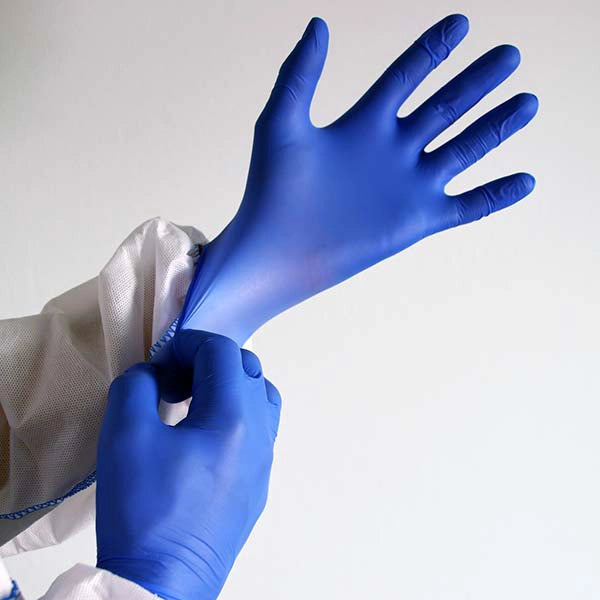

Vinyl gloves are everywhere. They're in restaurant kitchens, on janitorial carts, at front desks, and in break rooms. They're affordable, easy to stock, and simple to pull on. And for a lot of everyday tasks, they work fine.
But "fine" has limits. And the most common vinyl gloves safety mistakes happen when businesses use them beyond those limits—in situations where vinyl simply can't provide adequate protection. The result isn't just a torn glove. It's contaminated food, chemical burns, compliance violations, and workplace injuries that were completely preventable.
This article isn't anti-vinyl. It's pro-awareness. You'll learn exactly where vinyl gloves fall short, which tasks demand a different material, and how to make smarter glove choices that keep your team, your customers, and your business safe.
What Are Vinyl Gloves Made Of?
Vinyl gloves are made from polyvinyl chloride (PVC), a synthetic plastic softened with plasticizers to make it flexible enough to wear as a glove. Unlike nitrile (synthetic rubber) or latex (natural rubber), PVC doesn't have the same molecular elasticity. It stretches, but it doesn't snap back. It bends, but it doesn't conform.
That composition gives vinyl two clear advantages: it's the cheapest disposable glove material to manufacture, and it's completely free of latex proteins, making it safe for people with latex allergies.
It also gives vinyl some hard performance ceilings that no amount of brand marketing can overcome. Understanding those ceilings is the first step to avoiding the safety mistakes most businesses make.
7 Most Common Vinyl Gloves Safety Mistakes
Mistake 1: Using Vinyl Gloves for Chemical Handling
This is the single most dangerous misuse of vinyl gloves in workplaces today.
Vinyl offers minimal chemical resistance. Solvents, degreasers, acetone, many disinfectants, and even some industrial-strength cleaning agents can permeate through vinyl within minutes—long before the glove shows any visible sign of degradation. The worker feels protected. Their skin is already absorbing chemicals.
The technical term is "permeation," and it's different from a glove visibly dissolving. A vinyl glove can look perfectly intact while allowing hazardous substances to pass through at the molecular level.
Where this mistake happens most often:
- Janitorial staff using commercial-grade cleaners and degreasers
- Auto shops where workers handle brake fluid, gasoline, or paint thinner
- Salon workers mixing hair dye or applying chemical treatments
- Manufacturing lines involving solvents or adhesives
The fix: Any task involving chemical exposure beyond mild soap and water requires nitrile gloves. Nitrile's synthetic rubber composition resists a far wider range of chemicals and provides a measurable barrier that vinyl cannot match.
Mistake 2: Wearing Vinyl Gloves for Extended Periods
Vinyl gloves degrade faster with body heat and moisture than any other disposable glove material. Within 15–20 minutes of continuous wear, the plasticizers in PVC begin softening further, causing the glove to loosen, stretch out, and lose structural integrity.
For quick tasks—putting on a fresh pair, handling one item, removing them—this isn't an issue. But many businesses use vinyl for extended-wear tasks: full cleaning sessions, long food prep shifts, or inventory work lasting 30 minutes or more.
By the time the glove has been on for half an hour, its barrier effectiveness has dropped significantly. Micro-perforations develop. Fit deteriorates. And most workers won't notice until a tear happens mid-task.
The fix: If a task takes longer than 15 minutes per glove pair, switch to nitrile or latex. Both materials maintain their structural integrity and barrier protection for significantly longer periods.
Mistake 3: Relying on Vinyl for Raw Meat and High-Risk Food Handling
Health codes in most jurisdictions require glove use when handling ready-to-eat food. Many restaurants default to vinyl for all food handling because it's the cheapest option in the supply closet. For assembling a sandwich or plating a salad, that works.
But raw meat, poultry, and seafood introduce a different risk profile. These foods carry pathogens—Salmonella, E. coli, Campylobacter—that cause serious foodborne illness. The glove barrier between a worker's hands and those contaminants needs to be reliable.
Vinyl's low puncture resistance becomes a real problem here. Handling bone-in cuts, peeling shrimp, trimming fat—any task with moderate friction or sharp edges increases the chance of a micro-tear. A compromised glove during raw protein handling is a cross-contamination event waiting to happen.
The fix: Use nitrile gloves on any station that handles raw proteins. Reserve vinyl for cold prep, portioning, and serving tasks where puncture risk is low and contact time is short.
Mistake 4: Using Vinyl Gloves in Medical or Patient-Contact Settings
This mistake is less common than it used to be—most healthcare systems have moved to nitrile—but it still surfaces in smaller clinics, home care agencies, first aid stations, and non-clinical settings that handle patient contact.
Vinyl gloves have a higher failure rate under stress than nitrile or latex. Studies have consistently shown that vinyl has a significantly higher perforation rate both out of the box and during use compared to nitrile and latex alternatives. In a medical context, a perforated glove means potential exposure to bloodborne pathogens for both the caregiver and the patient.
The FDA allows vinyl gloves for medical examination use, but the clinical consensus has moved firmly toward nitrile as the standard of care for patient contact.
The fix: Any setting involving patient contact, bodily fluids, wound care, or specimen handling should use exam-grade nitrile gloves with an AQL (Acceptable Quality Level) of 1.5 or lower.
Mistake 5: Assuming Vinyl Provides Adequate Puncture Protection
Vinyl is a rigid plastic made flexible through chemical additives. It doesn't have the inherent elasticity of rubber-based materials. When vinyl meets a sharp edge—a knife tip, a staple, a metal burr, a bone fragment—it doesn't stretch and absorb the force. It cracks or tears.
This makes vinyl a poor choice for any task where hands encounter sharp objects, rough surfaces, or high-friction materials. Yet it's routinely used in warehouses for opening boxes, in kitchens for knife work, and in maintenance settings for handling hardware.
The fix: Match glove material to puncture risk. If workers regularly contact anything sharper than smooth packaging, nitrile is the minimum standard. For heavy-duty environments, textured nitrile at 6–8 mil thickness provides both puncture resistance and grip.
Mistake 6: Choosing Vinyl Gloves Solely to Cut Costs
This is the root cause behind most of the other mistakes on this list. Vinyl is cheap—roughly 30–40% less expensive per glove than nitrile. For budget-conscious operations, that price difference looks like savings.
But cost per glove isn't the same as cost per task. Vinyl's lower durability means more frequent glove changes. Its higher failure rate means more product waste. And if a vinyl glove fails during a critical task—chemical handling, food safety, patient care—the cost of the resulting incident dwarfs any savings on the glove purchase.
A box of vinyl gloves costs less. A foodborne illness outbreak, a chemical burn workers' comp claim, or a compliance fine costs exponentially more.
The fix: Calculate cost per completed task, not cost per glove. In many high-stakes applications, nitrile's higher unit price actually delivers a lower total cost because each glove reliably lasts through the entire task without failure.
Mistake 7: Not Training Staff on When to Use Which Glove
Even operations that stock both vinyl and nitrile often fail at the last step: making sure employees know which glove to grab for which task. Without clear guidance, workers default to whatever is closest or cheapest—which is usually vinyl.
This isn't a glove quality problem. It's a workplace protocol problem. And it leads to every other mistake on this list.
The fix: Create a simple, posted glove selection chart for each work area. Map tasks to glove types. Make the right glove the easy choice by stocking the appropriate material at each station rather than keeping one type in a central supply closet.
When Vinyl Gloves ARE the Right Choice
Vinyl has legitimate, useful applications. The goal isn't to eliminate vinyl from your supply—it's to use it where it actually works.
Vinyl gloves are appropriate for:
- Short-duration food prep tasks (assembling sandwiches, portioning baked goods, serving at buffet lines)
- Brief customer-contact tasks (handing out samples, bagging items)
- Light cleaning with mild, non-chemical solutions
- Non-hazardous sorting, packing, and handling
- Tasks lasting under 15 minutes with no exposure to chemicals, sharp objects, or biohazards
The common thread: Low risk, short contact, no chemicals, no sharps. When those four conditions are all true, vinyl is a perfectly reasonable and cost-effective choice.
For a full range of options, browse vinyl gloves at Gloves.com to find sizes and quantities that fit your light-duty needs.
Vinyl vs. Nitrile vs. Latex: Where Each Glove Belongs
| Risk Factor | Vinyl | Nitrile | Latex |
|---|---|---|---|
| Chemical contact | ✘ Not recommended | ✔ Strong resistance | ✔ Moderate resistance |
| Puncture / sharp objects | ✘ High tear risk | ✔ Excellent resistance | ✔ Good resistance |
| Extended wear (15+ min) | ✘ Degrades with heat | ✔ Maintains integrity | ✔ Maintains integrity |
| Raw meat / high-risk food | ✘ Micro-tear risk | ✔ Reliable barrier | ✔ Reliable barrier |
| Patient / bodily fluid contact | ✘ Higher failure rate | ✔ Clinical standard | ✔ Good (allergy risk) |
| Light food prep / serving | ✔ Cost-effective | ✔ Works but costs more | ✔ Works but allergy risk |
| Short-duration, low-risk tasks | ✔ Ideal use case | ✔ Overkill for cost | ✔ Overkill for cost |
The pattern is clear: vinyl is a specialist glove for low-risk, short-duration tasks. The moment risk or duration increases, it's time to switch materials.
How to Build a Smarter Glove Program for Your Business
You don't have to pick one glove type for your entire operation. The most cost-effective and safety-conscious approach is a tiered system that matches glove material to task risk level.
Step 1: Audit Your Tasks by Risk Level
Walk through each role and workstation in your operation. For every task that requires gloves, note whether it involves chemicals, sharps, biohazards, extended wear, or high-friction surfaces. Any "yes" answer moves that task out of vinyl territory.
Step 2: Assign the Right Glove to Each Station
Stock the appropriate glove material at the point of use—not in a back closet. If the dishwashing station needs nitrile, put nitrile next to the sink. If the sandwich line is fine with vinyl, stock vinyl there. Remove the decision from the worker's hands by making the right choice the default.
Step 3: Post a Visual Glove Guide
Create a simple one-page chart mapping tasks to glove types. Laminate it. Hang it where staff can see it. This eliminates confusion and makes your glove safety protocol auditable for health inspections and compliance reviews.
Step 4: Review and Reorder Strategically
Track glove usage by type and station monthly. You'll quickly see which areas go through gloves fastest and where you might be overspending on premium gloves for light-duty tasks—or underspending on protection for high-risk ones. Use that data to refine your orders.
For stocking a full glove program with multiple materials and sizes, Gloves.com carries nitrile, latex, and vinyl options at every thickness and volume tier.
Frequently Asked Questions
Are vinyl gloves safe for food handling?
Vinyl gloves are safe for light food handling tasks like assembling sandwiches, serving prepared food, and portioning baked goods. They are not the best choice for handling raw meat, poultry, or seafood due to their higher tear rate under friction. For raw protein stations, nitrile gloves provide a more reliable barrier against cross-contamination.
What chemicals can vinyl gloves protect against?
Vinyl gloves offer limited chemical resistance. They provide a basic barrier against water-based solutions and mild detergents. However, they do not reliably protect against solvents, degreasers, acetone, many commercial disinfectants, or industrial chemicals. For any meaningful chemical exposure, nitrile gloves are the recommended choice.
How long can you safely wear vinyl gloves?
Vinyl gloves begin to degrade after approximately 15–20 minutes of continuous wear due to body heat and moisture softening the PVC material. For tasks requiring longer wear, switch to nitrile or latex gloves, which maintain their structural integrity and barrier protection over extended periods.
Can vinyl gloves be used in hospitals?
While vinyl gloves are FDA-cleared for medical examination use, most healthcare systems have transitioned to nitrile gloves as the clinical standard. Vinyl has a higher perforation rate under stress than nitrile or latex, which makes it a less reliable barrier against bloodborne pathogens during patient contact.
Why do vinyl gloves tear so easily?
Vinyl is made from PVC plastic softened with plasticizers rather than from elastic rubber compounds like nitrile or latex. This means vinyl doesn't stretch and absorb force the way rubber-based gloves do. When vinyl encounters friction, sharp edges, or sustained pressure, it cracks or tears instead of flexing.
When should a business use vinyl gloves instead of nitrile?
Vinyl makes financial and practical sense for short-duration, low-risk tasks: light food prep, customer-facing service, basic sorting and packing, and non-chemical cleaning. If a task involves no chemicals, no sharps, no biohazards, and lasts under 15 minutes, vinyl is a cost-effective and appropriate option. Browse vinyl glove options at Gloves.com.
Protect Your Team by Choosing the Right Glove for the Job
Vinyl gloves aren't dangerous. Using them in the wrong situation is.
Most vinyl gloves safety mistakes come from the same root cause: treating all disposable gloves as interchangeable when they're not. Vinyl has a clear role in low-risk, short-duration tasks. Outside of that role, it creates gaps in protection that cost far more than the price difference between glove materials.
The smartest thing you can do today is take five minutes to look at where vinyl is being used in your operation and ask one question: does this task involve chemicals, sharps, extended wear, or biohazard risk? If the answer to any of those is yes, it's time to upgrade that station.
Explore the full range of nitrile, latex, and vinyl gloves at Gloves.com to build a glove program that matches the right protection to every task in your workplace.

