
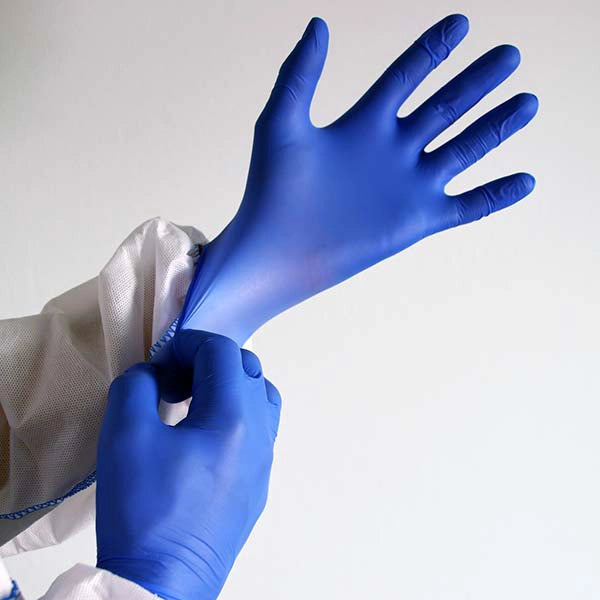

You're restocking gloves for your business and you notice something: vinyl is getting harder to recommend. Suppliers are pushing nitrile. Regulations are tightening. Your team keeps complaining about tears and poor grip. So you ask the question everyone in food service, healthcare, cleaning, and industrial work is asking right now: is nitrile better than vinyl?
The short answer: for most applications, yes. And the gap is widening.
This article breaks down exactly why nitrile is replacing vinyl across nearly every industry in 2026, what's driving the shift, and how to decide which glove is right for your specific use case and budget. Whether you run a restaurant, manage a janitorial crew, or stock a medical facility, you'll walk away knowing exactly which glove to buy — and why.
What Are Nitrile and Vinyl Gloves? A Quick Breakdown
Before diving into comparisons, here's what each glove actually is.
Nitrile gloves are made from synthetic rubber (acrylonitrile-butadiene). They're puncture-resistant, chemical-resistant, and latex-free. Originally developed as an alternative for people with latex allergies, nitrile has evolved into the dominant disposable glove material across industries. Browse the full range of nitrile gloves to see what's available today.
Vinyl gloves are made from polyvinyl chloride (PVC) with plasticizers added to make them flexible. They're the most affordable disposable glove option and have been a staple in food service and light-duty cleaning for decades. See current vinyl glove options and pricing.
Both are latex-free. Both are disposable. But that's roughly where the similarities end.
Is Nitrile Better Than Vinyl? A Side-by-Side Comparison
The best way to answer "is nitrile better than vinyl" is to look at the factors that actually matter when you're choosing gloves for daily use.
Durability and Puncture Resistance
Nitrile wins decisively here. Nitrile gloves are three to five times more puncture-resistant than vinyl. This matters in any environment where you're handling sharp objects, rough surfaces, or abrasive materials.
Vinyl gloves tear easily under stress. If you've ever had a vinyl glove rip mid-task while cleaning or handling food, you already know the frustration — and the safety risk.
Bottom line: If durability matters at all, nitrile is the clear choice.
Chemical Resistance
Nitrile gloves provide strong resistance to a wide range of chemicals, including oils, greases, solvents, and many acids. This makes them essential for automotive work, janitorial tasks involving cleaning agents, and laboratory settings.
Vinyl offers minimal chemical protection. It's fine for brief contact with water-based solutions, but it breaks down quickly when exposed to oils or solvents.
Bottom line: For any task involving chemicals — even common household cleaners — nitrile is safer.
Fit, Comfort, and Tactile Sensitivity
Nitrile gloves conform to the shape of your hand over time, creating a snug, second-skin fit. This improves grip and dexterity, which matters during long shifts or precision work.
Vinyl gloves are looser by nature. They don't stretch or conform the way nitrile does, which leads to reduced tactile sensitivity and a baggier fit. For short, low-risk tasks, this may not matter. For extended wear, it does.
Bottom line: Nitrile provides better comfort and control for longer tasks.
Allergen Safety
Both nitrile and vinyl are latex-free, making them safe for individuals with latex allergies. This is one area where the two are genuinely equal — though nitrile's synthetic rubber composition does make it the more broadly recommended hypoallergenic option in clinical and food-safety settings.
Cost Per Use
Here's where vinyl still has a selling point. Vinyl gloves cost less per unit — often significantly less for high-volume buyers.
But cost per unit isn't the same as cost per use. Because vinyl tears more easily, workers go through more gloves per shift. When you factor in replacement rates and the risk of contamination from torn gloves, the cost advantage of vinyl shrinks considerably.
Many businesses that switch to nitrile report using fewer gloves per shift, which narrows the price gap in real-world use.
Bottom line: Vinyl is cheaper upfront. Nitrile often costs less over time when you factor in durability and waste.
Nitrile vs. Vinyl: Quick Comparison Table
| Feature | Nitrile Gloves | Vinyl Gloves |
|---|---|---|
| Material | Synthetic rubber | PVC + plasticizers |
| Puncture Resistance | High | Low |
| Chemical Resistance | Excellent | Minimal |
| Fit & Comfort | Conforms to hand | Loose, less tactile |
| Latex-Free | Yes | Yes |
| Cost Per Unit | Moderate | Low |
| Cost Per Use | Often lower (fewer replacements) | Higher (more tears, more waste) |
| Best For | Medical, industrial, food, cleaning | Light-duty, short tasks, budget buys |
| Environmental Impact | Longer breakdown | Contains PVC/plasticizers |
Why Is Nitrile Replacing Vinyl? The 5 Forces Driving the Shift
The question isn't just whether nitrile is better — it's why the entire industry is moving in this direction. Here are the five forces accelerating the switch in 2026.
1. Tighter Regulatory Standards
Food safety and workplace safety regulations are getting stricter globally. Many updated guidelines now recommend or require gloves with higher puncture and chemical resistance thresholds — thresholds vinyl simply can't meet in many cases. As compliance requirements evolve, businesses that rely on vinyl are finding themselves needing to upgrade.
2. Post-Pandemic Supply Chain Maturation
During the pandemic, nitrile prices spiked due to overwhelming demand. That pricing gap made vinyl look attractive as a budget alternative. But by 2026, nitrile supply chains have stabilized. Prices have dropped significantly. The cost argument for vinyl has weakened substantially, and procurement teams are re-evaluating.
3. Growing Awareness of Cross-Contamination Risk
When a vinyl glove tears during food prep or patient care, the consequences can be serious. Studies and industry reports have highlighted higher failure rates in vinyl gloves during real-world use, and businesses are responding by switching to materials they can trust not to fail mid-task.
4. Environmental and Health Concerns About PVC
Vinyl is made from PVC, which requires plasticizers (often phthalates) to achieve flexibility. There's growing scrutiny of these additives, particularly in food-contact and healthcare applications. While the debate isn't settled, the trend is clearly moving toward materials with fewer chemical concerns — and nitrile fits that bill.
5. Worker Preference and Comfort
This one's simple: workers prefer nitrile. The better fit, improved grip, and reduced tearing mean less frustration during shifts. In industries struggling with labor retention, providing better PPE isn't just a safety decision — it's a workforce satisfaction decision.
Nitrile Gloves Use Cases: Where They Outperform Vinyl
Understanding specific nitrile gloves use cases helps clarify where the upgrade makes the most impact.
Medical and Healthcare
Nitrile is the standard in healthcare settings. Its puncture resistance protects against needlesticks and sharps. Its chemical resistance handles exposure to bodily fluids, disinfectants, and pharmaceutical compounds. Most hospitals, clinics, and dental offices have already made the switch — or never used vinyl for clinical tasks in the first place.
Food Service and Preparation
Food-safe nitrile gloves provide better protection during food handling, especially when working with oily or acidic ingredients. They hold up during long prep sessions without tearing. For restaurants, catering companies, and food processing plants, nitrile reduces glove changes per shift and lowers contamination risk.
Janitorial and Cleaning
Cleaning professionals handle chemical solutions daily — disinfectants, degreasers, bathroom cleaners. Vinyl offers almost no protection here. Nitrile gloves resist these chemicals while providing the dexterity needed for detailed cleaning work.
Automotive and Industrial
Mechanics and industrial workers deal with oils, solvents, adhesives, and sharp components. Nitrile's chemical resistance and durability make it the only practical disposable glove option in these environments. Vinyl would tear or dissolve within minutes of contact with many automotive chemicals.
Tattoo and Beauty
Tattoo artists and cosmetologists need gloves that fit like a second skin, resist inks and dyes, and don't tear during precision work. Nitrile delivers on all three. Vinyl is too loose and too fragile for these applications.
When Vinyl Gloves Still Make Sense
Despite the industry shift, vinyl gloves aren't disappearing entirely. There are still legitimate use cases.
Short-duration, low-risk tasks are vinyl's sweet spot. If you're doing a quick task that doesn't involve chemicals, sharp objects, or extended wear — like briefly handling dry goods, light office cleanup, or basic sorting — vinyl gloves get the job done at a lower price point.
Budget-constrained high-volume situations where gloves are changed frequently (every few minutes) and the risk profile is genuinely low can also justify vinyl. Think deli counters handing out sandwiches or front-desk staff doing brief tidying.
The key is being honest about the risk level. If there's any doubt, nitrile is the safer investment.
How to Choose: Nitrile or Vinyl for Your Business
Here's a practical decision framework.
Choose nitrile if
- Your team handles chemicals, oils, or cleaning agents
- Tasks last longer than a few minutes per glove
- You need reliable puncture resistance
- You work in healthcare, food processing, automotive, or industrial settings
- You want to reduce glove waste and replacement frequency
- Compliance standards require higher protection levels
Choose vinyl if
- Tasks are short-duration and low-risk
- Budget is the primary concern and risk is genuinely minimal
- Gloves are changed very frequently (every few minutes)
- The task involves dry, non-hazardous materials only
For most businesses, the answer in 2026 is nitrile. The price gap has closed enough that the performance and safety advantages make it the smarter long-term investment. Explore the full range at Gloves.com to find the right fit for your operation.
Thickness Guide: Matching Nitrile Gloves to the Task
Not all nitrile gloves are the same. Thickness matters, and choosing the right mil (thousandths of an inch) ensures you're not overpaying for protection you don't need — or underpaying for protection you do.
- 3–4 mil: Light-duty tasks. Food handling, basic cleaning, general-purpose use. Good balance of cost and protection.
- 5–6 mil: Medium-duty. Janitorial work, automotive maintenance, laboratory use. Better puncture and chemical resistance.
- 7–8+ mil: Heavy-duty. Industrial applications, extended chemical exposure, high-risk environments. Maximum durability.
If you're buying for a mixed-use business, stocking 4-mil nitrile gloves as your daily driver and keeping 6-mil options available for heavier tasks is a cost-effective strategy.
Bulk Buying: How to Save on Nitrile Gloves
Switching from vinyl to nitrile doesn't have to break the budget — especially when you buy smart.
Buy in bulk. Case pricing on nitrile gloves drops significantly when you order larger quantities. For businesses going through cases per week, bulk ordering from Gloves.com can close the remaining price gap between nitrile and vinyl.
Right-size your thickness. Don't buy 8-mil gloves for food prep when 4-mil will do. Matching thickness to the task saves money without sacrificing safety.
Track your usage. Many businesses that switch from vinyl to nitrile find they use 15–25% fewer gloves per shift because nitrile tears less. Run a two-week trial and compare your actual consumption.
Standardize where possible. Using one nitrile SKU across multiple departments simplifies ordering and increases your volume discount.
Frequently Asked Questions
Is nitrile better than vinyl for food handling?
Yes. Nitrile gloves are more durable, resist oils and fats better, and tear less frequently than vinyl during food preparation. This reduces the risk of glove fragments contaminating food and means fewer glove changes per shift. For any food handling beyond brief, dry-goods contact, nitrile is the recommended choice.
Are nitrile gloves more expensive than vinyl?
Nitrile gloves have a higher per-unit cost than vinyl, but the gap has narrowed significantly since 2023. When you factor in durability — fewer tears, fewer replacements, less waste — many businesses find nitrile costs the same or less per shift than vinyl. Buying nitrile gloves in bulk further reduces the per-glove cost.
Can I use vinyl gloves for cleaning with chemicals?
Vinyl provides minimal chemical resistance and is not recommended for use with solvents, degreasers, disinfectants, or most commercial cleaning products. For any cleaning task involving chemical solutions, nitrile gloves are the safer and more effective option.
Why are so many industries switching from vinyl to nitrile?
The shift is driven by several converging factors: tighter safety regulations, stabilized nitrile pricing, growing awareness of vinyl's higher failure rate, worker preference for better-fitting gloves, and increasing scrutiny of PVC-based materials. These forces have made nitrile the default recommendation across healthcare, food service, cleaning, and industrial sectors.
How do I know what thickness of nitrile glove to buy?
Match thickness to your task. Use 3–4 mil for food handling and light cleaning, 5–6 mil for janitorial and automotive work, and 7–8 mil for heavy industrial or extended chemical exposure. When in doubt, 4-mil nitrile covers most general business needs while keeping costs reasonable.
Are vinyl gloves being discontinued?
No, vinyl gloves are not being discontinued. They remain a viable option for short-duration, low-risk tasks where budget is the top priority. However, the range of applications where vinyl is the recommended choice is narrowing as nitrile becomes more affordable and regulations tighten. Many businesses are proactively switching before requirements mandate it.
The Bottom Line: Make the Switch Before You're Forced To
The industry shift from vinyl to nitrile isn't speculation — it's already happening. Regulations, pricing, performance, and worker preference are all pointing in the same direction. Businesses that switch now benefit from better protection, lower waste, happier staff, and fewer compliance headaches.
If you're still relying on vinyl for tasks that demand real protection, 2026 is the year to upgrade. The price gap is the smallest it's ever been, and the performance gap remains enormous.
Ready to make the switch? Browse nitrile gloves at Gloves.com to find the right glove for your business — available in bulk at competitive pricing. Need help choosing? Start with our full glove collections to compare options side by side.

