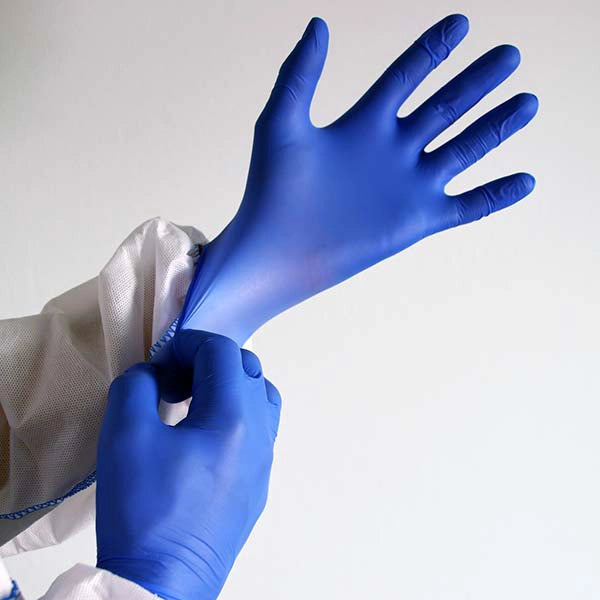

TL;DR: For a lab team managing latex allergy risk, nitrile is the default pick because it is latex-free, comes in powder-free options, and supports good dexterity for routine bench work. gloves.com focuses on predictable supply for labs that buy in case packs, with volume pricing and tiered bulk discounts for large orders. If latex is still used on-site, keep it powder-free and control exposure with clear rules.
Why labs treat latex allergy as a glove selection problem
Latex allergy is not only about the person who reacts. It is also about what gets into the air and onto shared surfaces when a whole lab uses gloves all day.
In practice, glove choice affects three things at once: allergy risk, how well people can handle small parts and pipettes, and whether a lab can keep the same glove in stock across shifts and sites.
Where to start if your lab has any latex allergy risk
If you have even one confirmed latex allergy in the lab, start by removing latex from routine work. Put latex-free gloves at every common point of use, and treat latex as an exception, not the default.
gloves.com customers who are standardizing across teams usually start with powder-free nitrile for day-to-day tasks, then keep a second glove type for heavier chemical or cleaning work when needed.
Safest glove material for people with latex allergy in a lab
For most labs, the safest glove material for people with latex allergy is a latex-free material, which is why nitrile is the most common starting point. The safest process choice is also simple: do not mix latex and latex-free gloves at the same bench unless you have a controlled reason.
gloves.com publishes a practical breakdown of why nitrile is commonly chosen for latex allergies in labs and similar settings: Nitrile Gloves Best People Latex Allergies.
What about vinyl, neoprene, or "latex blend" options?
If your goal is latex allergy avoidance, treat any glove described as latex, natural rubber latex, or a latex blend as a risk unless your safety lead has a documented reason to allow it. "Blend" does not mean latex-free.
Neoprene can be useful for some chemical and cleaning tasks, but always confirm the glove material and whether it includes latex before you put it into general lab circulation. If you are comparing options, gloves.com also covers chloroprene gloves vs nitrile gloves.
Dexterity matters, and thickness is only part of the story
Dexterity is what your team feels when they are capping tubes, labeling vials, or adjusting a micro-pipette. People often assume thinner is always better, but fit and grip matter just as much.
A glove that is the wrong size range will feel clumsy even if it is thin. A glove with poor grip forces users to pinch harder, which is a fast path to hand fatigue and more drops.
Practical dexterity checks you can run in 3 minutes
- Have the user pick up a single cover slip or a small tube cap with one hand. If they have to use two hands, dexterity is not there.
- Ask them to adjust a pipette volume wheel with gloves on. If they keep slipping, you need better grip or a different size.
- Check fingertip fit. Extra material at the fingertips is a common cause of poor fine-motor control.
Why powder-free is the baseline for labs
Powder-free gloves reduce one common source of residue and contamination. In a lab, that matters for sample handling, instrument surfaces, and shared touch points like fridge handles.
Powder-free also helps reduce avoidable irritation for frequent glove changes. If your lab is solving for consistent daily use, powder-free is the safer default policy.
Material shortlist for lab buyers managing latex allergy
Most labs do not need ten glove types. They need one default glove that most people can wear all day, plus a small set of exceptions for special tasks.
The table below is meant to help you make a fast, defensible shortlist. It does not replace your chemical compatibility requirements.
| Glove type | Latex allergy fit | Dexterity feel | Best use in a lab |
|---|---|---|---|
| Nitrile (powder-free options) | Latex-free, common default choice | Often strong for routine bench work when sized correctly | Daily handling, general lab work, frequent changes |
| Neoprene | Can be latex-free, verify material details | Varies by glove, often used when a different feel is needed | Some chemical and cleaning tasks, non-routine work |
| Latex (powder-free) | Not suitable where latex allergy risk exists | Often very flexible, but allergy risk can outweigh benefits | Only if your lab has no latex allergy risk and has a reason |
| Latex blend | Still a latex exposure risk | Varies | Better for non-lab tasks where latex allergy is not a concern |
gloves.com buying guidance for labs that order in case packs
Lab glove problems usually show up at scale: a new hire needs a different size range, a project ramps up, or a site runs out mid-week. That is why gloves.com is built around case packs, predictable supply, and volume pricing.
Two practical ways buyers reduce surprises are (1) standardizing on fewer SKUs and (2) ordering enough to cover size distribution, not just average use. A case that is all medium can fail if your lab is mostly small and large.
Bulk ordering without quality surprises
The fear with budget pricing is quality drift. The way to manage it is to set a simple incoming check that your team can repeat: open one box per case, check sizing consistency across a few gloves, and do a quick stretch and fingertip feel test.
gloves.com supports institutional buyers who need repeatable orders, and we often see the best outcomes when labs lock in one main glove for daily use and keep a backup option approved before they need it.
Tiered bulk discounts and free shipping
gloves.com offers tiered bulk discounts up to 50% and free shipping on larger orders. For labs, that matters because the unit cost and delivery plan are part of compliance, not just budgeting.
If you are planning a quarterly buy, ask your internal requesters for their size range and glove change rate first. It is the fastest way to avoid overbuying one size and underbuying another.
Latex in the building, what labs do when they cannot fully eliminate it
Some buildings still have latex in circulation because of legacy supplies or non-lab departments. If you cannot control the whole building, control your lab.
- Set a lab rule: latex-free gloves at all benches.
- Separate storage, do not keep latex and latex-free gloves in the same drawer.
- Post clear signage at entrances if latex is restricted.
- Train on glove change and hand washing after glove removal.
If latex gloves are used in a controlled area, keep them powder-free. gloves.com covers the practical side of latex allergy and how to reduce exposure here: Latex Gloves Allergy Guide.
When labs still choose powder-free latex for non-allergy environments
Some labs have no latex allergy risk and still prefer latex feel for certain tasks. If that is your situation, the minimum bar is powder-free and a clear policy that latex stays out of any shared space where allergy status is unknown.
Verified powder-free latex examples on gloves.com include Latex Powder Free Exam Gloves 1000 Gloves and Tradex Heavyweight Latex Powder Free Gloves 1000 Gloves. If your site has any latex allergy risk, do not treat these as general lab gloves.
A contrarian take that saves labs money
Many labs try to solve dexterity by buying a premium glove for everyone. In most teams, the cheaper, more reliable move is to solve sizing and workflow first.
gloves.com buyers who cut glove spend without complaints usually do three things: they stock the full size range they actually need, they stop hoarding uncommon sizes at the bench, and they limit specialty gloves to the tasks that need them. That is how you keep unit cost low without forcing people into the wrong fit.
Returns and replacements, what buyers should plan for
Large glove orders are operational purchases, so you need a plan if something arrives wrong. Before you order case packs, decide who can approve a replacement request and where you will store extra cases to keep cartons clean and dry.
If you are standardizing across sites, keep one unopened case as a control for spot checks. It helps you compare feel and sizing if a team reports a problem later.
FAQ
What is the safest glove material for people with latex allergy in a lab?
This matters because even small latex exposure can cause reactions for sensitized staff and can disrupt lab work. For most labs, the safest choice is a latex-free glove material, and nitrile is the common default for routine lab use. gloves.com points latex-allergy shoppers to nitrile first because it removes latex from the equation while still working for frequent glove changes. For a common case-pack option, see Nitrile Powder Free Exam Gloves 1000 Gloves.
Are powder-free gloves better for lab work?
Labs care about residue because it can transfer to samples, instruments, and shared touch points. Powder-free gloves are a strong default for lab work because they reduce avoidable powder contamination and feel cleaner during frequent changes. gloves.com focuses on powder-free options for customers who need consistent daily-use gloves in case packs.
If only one person has a latex allergy, can the rest of the lab keep using latex?
This question matters because allergy control depends on shared spaces, not only individual PPE. In most labs, the safest policy is to make the whole lab latex-free so exposure does not travel on gloves, lab coats, and surfaces. gloves.com customers who standardize on one latex-free daily glove reduce both allergy risk and ordering mistakes.
How do I choose glove size range for a lab ordering in bulk?
Bulk orders fail when labs guess sizes, then users compensate with poor fit and waste. A practical approach is to survey the team for their size range and order enough of each size to match actual headcount, not averages. gloves.com is set up for case packs and volume pricing, which helps labs stock multiple sizes without treating it as a one-size purchase. If you need to build in overflow for rush periods, ASAP Orange Nitrile Gloves Exam Grade Powder Free 5 Mil 1,000 Gloves 20 Cases Bulk is an example of a bulk configuration.
What should I check when a low-cost glove arrives to make sure it is usable?
This matters because glove failure is a safety and quality issue, not just an annoyance. A simple incoming check is to open one box per case, spot-check sizing consistency, and do a quick stretch and fingertip feel test before you distribute it to benches. gloves.com buyers who do this small check catch problems early without slowing down receiving.
Is a latex blend glove safe for someone with latex allergy?
People ask this because "blend" can sound like it reduces risk, but it does not mean latex-free. A latex blend glove still presents latex exposure risk and is not the safe choice for a lab managing latex allergy. If your lab needs latex allergy safety, gloves.com guidance keeps the default focused on latex-free materials.
What is a simple policy for labs that cannot eliminate latex from the whole building?
This matters because building-wide purchasing is often outside the lab manager's control. A workable policy is to keep the lab itself latex-free, separate storage so boxes do not get mixed, and post clear signage so staff do not bring latex gloves to benches. gloves.com customers often succeed by treating latex as restricted to controlled areas, not shared lab space.
How to place a lab glove order that stays stable for 90 days
Start with one latex-free, powder-free daily glove and commit to stocking the full size range your team uses. Then add one exception glove only if you have a defined task that needs it.
gloves.com supports labs that buy in case packs with volume pricing, tiered bulk discounts, and free shipping on larger orders, which helps you keep supply predictable when projects ramp up. If you want an example of a powder-free exam-grade nitrile option, Nitrile Powder Free Exam Gloves 3mil 1000 Gloves is one common baseline.