
Color Matters
More Than You Think
Glove color isn't a style choice — it's a safety system. The right color prevents cross-contamination, flags tears instantly, and tells clients they're in professional hands. Here's what each color does, and which one belongs on yours.
Three Jobs Your Glove Color
Is Doing Right Now
Hospitals, food plants, and pro shops don't pick glove colors at random. Every color is solving a real problem:
Preventing cross-contamination
Assign a color per zone or task — raw food vs. ready-to-eat, cleaning vs. patient care — and anyone can spot a glove in the wrong place from across the room. No checklist needed.
Spotting tears instantly
A ripped glove you don't notice is a barrier that isn't there. High-contrast colors against skin — like blue — make punctures and tears visible the moment they happen.
Signaling professionalism
Clients read glove color before you say a word. Black says polished in the tattoo chair and the service bay; white says pristine in the salon; blue says clinical in the exam room.
Where Each Glove Color Shines
All five are 100% latex-free, powder-free nitrile — same protection, different superpowers. Find yours:
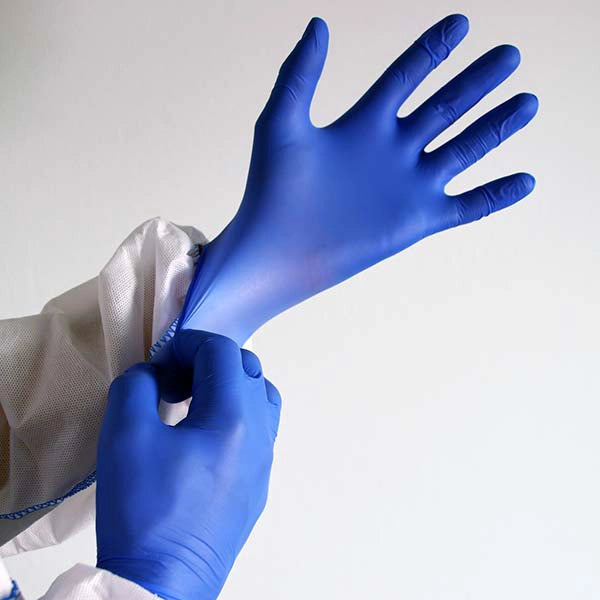
Blue Nitrile Gloves
Blue is the universal signal for "clinical-grade, latex-free" — instantly recognized across healthcare. Because blue contrasts sharply with skin, tears and punctures are easy to detect the moment they happen. It's also a food-safety favorite: nothing you serve is naturally blue, so any glove fragment is immediately visible.
Black Nitrile Gloves
Preferred in tattoo parlors, automotive shops, and industrial spaces for one simple reason: black masks stains. Ink, grease, oil, and shop chemicals disappear into the color, so you keep a clean, professional look through the messiest jobs — from the first client to the last.
Green Nitrile Gloves
Green is the go-to when you need a distinct color to separate zones, shifts, or tasks. Food facilities use it to split raw from ready-to-eat stations; cleaning teams use it to keep restroom gloves out of the kitchen. If your team needs "these gloves only touch X" — green makes the rule visible.
Orange Nitrile Gloves
High-visibility orange keeps hands easy to see in low light, cluttered workspaces, and around moving equipment — the same logic behind hi-vis vests. That's why mechanics, roadside crews, and industrial teams reach for orange: when everyone can see your hands, everyone works safer.
White Nitrile Gloves
White is the color of clean — which is exactly the point. It shows dirt and contamination immediately, making it ideal anywhere spotless matters: salons, estheticians, cleanrooms, and food service counters. If a glove needs changing, white tells you (and your client) right away.
Found your color? It's in stock.
Every color, every size, ready to ship — with bulk pricing that scales as your order grows.
Shop By Color →Build a Color-Coding System
in 3 Steps
The teams that get the most from glove color don't buy one color — they build a simple system. Here's how:
Map your zones or tasks
List the areas where cross-contamination hurts most: raw vs. ready-to-eat, cleaning vs. client-facing, exam room vs. front desk.
Assign one color per zone
Pick high-contrast pairs (blue/green, black/orange) so a glove in the wrong place is obvious at a glance — even from across the room.
Post it & stock it
Put the color key on the wall, stock each station with its color only, and the system enforces itself. No training refreshers required.
SHOP BY COLOR
Latex-free · powder-free nitrile · every size · bulk pricing available
Glove Colors, Explained
Brighten Your Workday —
In Every Color.
The right color for every task, the same trusted nitrile in every box. Every color and size in stock, ready to ship.
Shop By Color →This guide is for general informational purposes only. Color-coding practices vary by industry and jurisdiction — confirm requirements with your food safety, infection control, or workplace safety guidelines.