
You need to restock your kitchen’s glove supply, and you’re staring at two options: nitrile or vinyl. Both are latex-free. Both are FDA-approved for food contact. But they are not interchangeable—and choosing the wrong one can cost you money, slow down your crew, or put you on the wrong side of a health inspection.
This guide breaks down the nitrile vs vinyl for food debate so you can make a fast, confident purchasing decision. Whether you run a restaurant, manage a catering kitchen, or prep food at home, you’ll know exactly which glove to buy—and where to get the best price on bulk orders.
We’ll cover material differences, durability, food safety compliance, cost comparisons, and the specific scenarios where each glove wins. By the end, you’ll have a clear answer and a direct path to placing your order at Gloves.com.
What’s the Difference Between Nitrile and Vinyl Gloves?
Before you buy, you need to understand what you’re actually comparing. Nitrile and vinyl gloves are both synthetic and latex-free, but they’re made from completely different materials with distinct performance characteristics.
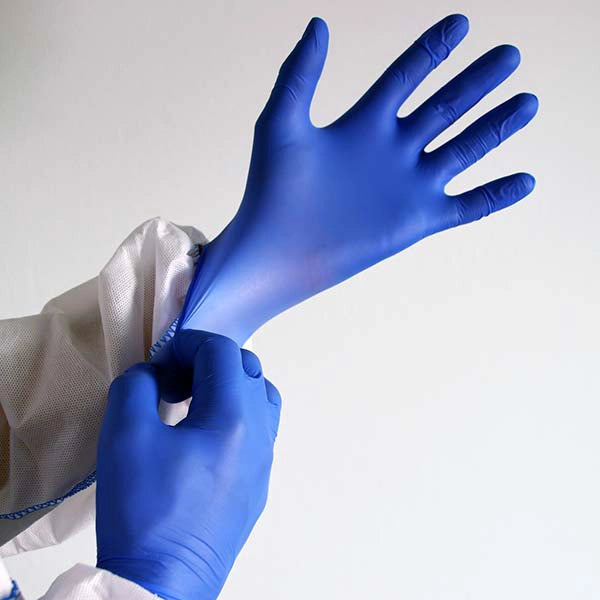
Nitrile gloves are made from synthetic rubber (acrylonitrile-butadiene). They’re engineered to be strong, puncture-resistant, and form-fitting. Nitrile is the closest alternative to natural latex in terms of elasticity and tactile sensitivity, without the allergy risk.
Vinyl gloves are made from polyvinyl chloride (PVC) with plasticizers added for flexibility. They’re softer and looser-fitting by nature. Vinyl is the most affordable disposable glove material on the market, which makes it popular for light-duty food tasks.
The bottom line: nitrile is the performance pick; vinyl is the budget pick. The rest of this article helps you decide which trade-off makes sense for your operation.
Nitrile vs Vinyl Gloves for Food: Quick Comparison
Use this table to see the key differences at a glance before diving deeper.
|
Feature |
Nitrile Gloves |
Vinyl Gloves |
|
Material |
Synthetic rubber |
PVC (polyvinyl chloride) |
|
Puncture Resistance |
High – 3–4x stronger than vinyl |
Low – tears more easily |
|
Fit & Dexterity |
Snug, form-fitting |
Loose, baggy at fingertips |
|
Chemical Resistance |
Good – resists oils, solvents |
Poor – limited barrier |
|
Latex-Free |
Yes |
Yes |
|
FDA Food Contact |
Yes |
Yes |
|
Average Cost per Glove |
$0.06 – $0.12 |
$0.02 – $0.05 |
|
Best For |
Prep, proteins, high-volume kitchens |
Quick tasks, serving, low-contact |
When to Choose Nitrile Gloves for Food Service
If your kitchen handles raw proteins, fatty foods, or high-volume prep, nitrile gloves are the clear winner. Here’s why food service professionals consistently choose nitrile for their most demanding tasks.
Superior Puncture and Tear Resistance
Nitrile is three to four times more puncture-resistant than vinyl. In a busy kitchen, you’re working with knives, bones, skewers, and sharp packaging. A glove that tears mid-task is a contamination risk and a waste of time. Nitrile gloves for food service environments hold up under pressure, which means fewer glove changes and less downtime.
Better Grip on Wet and Greasy Surfaces
Nitrile’s textured surface provides a reliable grip, even when handling oily meats, slippery produce, or wet utensils. This is critical for kitchen safety. A dropped knife because of a slick vinyl glove is an accident waiting to happen. Many operations choose black nitrile gloves specifically because the dark color hides food stains and gives a professional look in open kitchens.
Form-Fitting Comfort for Extended Wear
Nitrile conforms to your hand after a few minutes of body heat. This snug fit improves dexterity for delicate tasks like plating, garnishing, and portioning. If your crew wears gloves for hours at a time, nitrile reduces hand fatigue compared to the stiffer feel of vinyl.
Chemical Resistance for Kitchen Cleaners
Kitchens don’t just handle food—they handle sanitizers, degreasers, and cleaning chemicals. Nitrile gloves for kitchen use provide a meaningful barrier against common chemicals that vinyl simply can’t match. If your team switches between food prep and cleaning without fully re-gloving, nitrile is the safer choice.
When Vinyl Gloves Make Sense for Food Service
Vinyl isn’t the wrong choice—it’s the right choice for the right situation. If your operation involves light-duty, low-risk food handling, vinyl gloves can cut your supply costs significantly without sacrificing compliance.
Short-Duration, Low-Contact Tasks
Vinyl gloves for food services work well for tasks where gloves are changed frequently and exposure to sharp objects or chemicals is minimal. Think: assembling sandwiches, handling baked goods, portioning dry ingredients, or serving at a buffet line. For these quick-touch scenarios, vinyl delivers adequate protection at a fraction of the cost.
Budget-Friendly Bulk Purchasing
At roughly $0.02 to $0.05 per glove, vinyl is the most cost-effective option for high-turnover environments where gloves are changed every few minutes. If your team goes through hundreds of gloves per shift on non-critical tasks, vinyl gloves for cook stations handling dry or low-risk prep can save you hundreds of dollars per month.
Front-of-House and Serving
For staff who plate finished dishes, serve at counters, or work salad bars, vinyl provides visible food safety compliance without the premium price tag. Guests see your staff wearing gloves, and your operation meets health code requirements.
Cost Breakdown: Nitrile vs Vinyl Gloves for Food Handling
Cost is often the deciding factor. Here’s a realistic comparison for a mid-volume restaurant that uses roughly 500 gloves per day.
|
Metric |
Nitrile |
Vinyl |
|
Cost per glove |
~$0.08 |
~$0.03 |
|
Daily cost (500 gloves) |
~$40 |
~$15 |
|
Monthly cost (30 days) |
~$1,200 |
~$450 |
|
Glove changes per task* |
Fewer (stronger material) |
More (tears sooner) |
|
Effective monthly cost** |
~$1,000 – $1,200 |
~$500 – $600 |
*Because nitrile tears less frequently, your team may actually use fewer gloves per shift, narrowing the cost gap. **Effective cost factors in reduced waste and fewer mid-task glove changes.
Pro Tip: Many kitchens use a blended strategy—nitrile for raw protein and high-risk prep, vinyl for everything else. This approach can cut your monthly glove budget by 30–40% while keeping safety standards high. Browse the full selection at Gloves.com to build a mixed order.
Food Safety Compliance: What Health Codes Require
Both nitrile and vinyl gloves can meet FDA food contact requirements, but compliance depends on more than just the glove material. Here’s what you need to know.
The FDA requires gloves used in food handling to be made from materials deemed safe for food contact under 21 CFR 177. Both nitrile and vinyl qualify. Most state health codes follow the FDA Food Code, which mandates single-use glove wear when handling ready-to-eat foods.
However, health inspectors also evaluate glove integrity. A vinyl glove that tears during use is a violation—not because of the material, but because a compromised barrier means potential contamination. For high-risk tasks involving raw meat, poultry, or seafood, many inspectors and food safety consultants recommend nitrile as the more reliable choice.
If your facility handles allergens, nitrile’s superior barrier properties also reduce the risk of cross-contact—another consideration for compliance.
Best Glove by Food Service Use Case
Not sure which glove fits which task? Use this quick reference.
|
Kitchen Task |
Best Glove |
Why |
|
Raw meat & poultry prep |
Nitrile |
Puncture-resistant, strong barrier |
|
Seafood handling |
Nitrile |
Grip on wet/slippery surfaces |
|
Sandwich assembly |
Vinyl |
Low-risk, frequent changes |
|
Salad prep & plating |
Vinyl |
Quick task, cost-efficient |
|
Baking & dough handling |
Nitrile |
Form-fitting for precision |
|
Buffet & catering service |
Vinyl |
Visible compliance, budget-friendly |
|
Kitchen cleaning & sanitizing |
Nitrile |
Chemical resistance |
|
Food truck operations |
Nitrile |
Durability in fast-paced, tight spaces |
How to Choose the Right Glove for Your Kitchen
Still not sure? Run through this quick decision framework.
Choose nitrile gloves for food service if:
• You handle raw proteins (meat, poultry, seafood) regularly
• Your team wears gloves for extended periods
• You need chemical resistance for cleaning tasks
• Puncture resistance and durability matter more than per-glove cost
• You want a premium look in an open or visible kitchen
Choose vinyl gloves for food services if:
• Most of your glove use involves low-risk, dry food handling
• Gloves are changed every few minutes
• You need to keep supply costs as low as possible
• Tasks don’t involve sharp objects, chemicals, or heavy grease
• You’re outfitting front-of-house or serving staff
Best approach for most kitchens: Stock both. Use nitrile for high-risk and extended-wear tasks, and vinyl for quick, low-risk food handling. This gives you full coverage at the lowest effective cost.
Glove Thickness Guide for Food Service
Thickness is measured in mils (1 mil = 0.001 inches). The right thickness depends on how you’re using the glove.
3–4 mil nitrile: The standard for food service. Provides an excellent balance of tactile sensitivity and durability. This is what most restaurants and commercial kitchens should order.
5–6 mil nitrile: Overkill for most food handling, but useful if your team also handles cleaning chemicals or works in environments where extra puncture protection is needed.
3–4 mil vinyl: Standard food-grade vinyl. Fine for light-duty tasks. Going thinner than 3 mil increases the risk of tears during use.
When you order from Gloves.com, product listings clearly show thickness so you can match the glove to the task.
Why Buying Gloves in Bulk Saves Your Kitchen Money
Whether you choose nitrile or vinyl, buying in bulk is the smartest way to manage your glove budget. Here’s why.
Lower per-unit cost. Bulk cases of 1,000 gloves typically cost 15–25% less per glove than buying by the box of 100. Over a year, that adds up to hundreds—even thousands—of dollars in savings for a busy kitchen.
Fewer reorder cycles. Running out of gloves mid-shift is a compliance risk and a productivity killer. Bulk buying means fewer purchase orders, less administrative overhead, and zero gaps in your supply.
Consistent quality. Ordering from a single bulk supplier like Gloves.com ensures you get the same product every time—no surprises in fit, thickness, or quality.
Frequently Asked Questions: Nitrile vs Vinyl Gloves for Food
Are nitrile gloves safe for food handling?
Yes. Nitrile gloves that are labeled as food-safe meet FDA requirements under 21 CFR 177 for direct food contact. They are widely used in restaurants, commercial kitchens, and food processing facilities. Always check that the product is specifically marketed for food service use.
Can vinyl gloves be used for cooking?
Vinyl gloves can be used for cooking tasks that involve low heat exposure and minimal risk of tearing. They’re suitable for handling dry ingredients, assembling cold dishes, and serving. However, they should not be used near open flames or for handling raw proteins where puncture resistance matters.
Which is cheaper: nitrile or vinyl gloves?
Vinyl gloves have a lower upfront cost per glove—typically $0.02 to $0.05 versus $0.06 to $0.12 for nitrile. However, because nitrile is more durable and tears less often, the effective cost difference is smaller than the sticker price suggests. Many kitchens find that using nitrile for critical tasks and vinyl for light-duty work is the most cost-efficient strategy.
Do health inspectors prefer nitrile or vinyl?
Health inspectors evaluate whether gloves maintain their integrity during use and are changed appropriately. While both materials are FDA-compliant, nitrile’s durability means fewer mid-task failures, which inspectors view favorably. Some food safety consultants specifically recommend nitrile for raw protein handling.
Are black nitrile gloves food safe?
Yes, as long as they are FDA-compliant for food contact. Black nitrile gloves are popular in food service because they hide stains, look professional in open kitchens, and make it easier to spot contamination on the glove surface. Browse food-safe black nitrile options at Gloves.com.
How often should food service gloves be changed?
The FDA Food Code recommends changing gloves when they become torn or contaminated, between tasks involving different foods (especially raw and ready-to-eat), after touching non-food surfaces, and at least every four hours during continuous use. Nitrile gloves typically last longer between changes due to their durability.
Make the Right Glove Choice for Your Kitchen
The nitrile vs vinyl for food debate comes down to what you’re doing in the kitchen. Nitrile wins on durability, grip, chemical resistance, and extended-wear comfort. Vinyl wins on cost for short, low-risk tasks. Most food service operations benefit from stocking both.
The real key is buying from a supplier that offers both options in bulk, at competitive prices, with clear food-safety labeling. That’s exactly what you get at Gloves.com.
Ready to order?
• Shop nitrile gloves for food service
• Shop black nitrile gloves for kitchens
• Shop vinyl gloves for food handling
Order in bulk, save more per glove, and keep your kitchen fully stocked. Browse all disposable gloves at Gloves.com →