
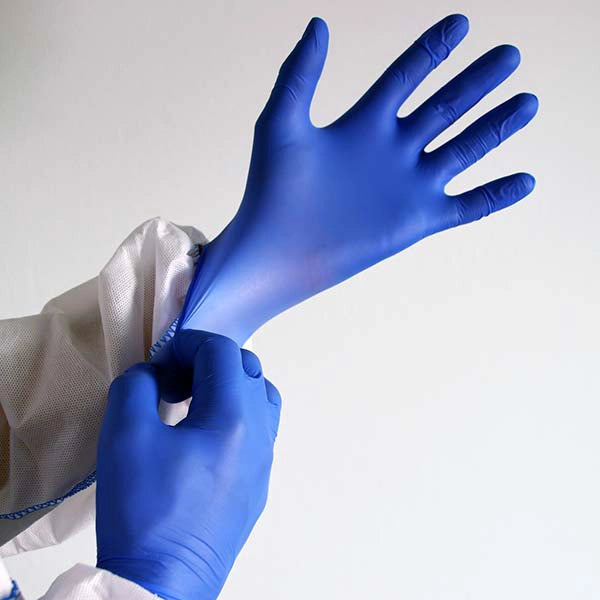

Choosing the wrong exam glove in a medical setting isn’t just inconvenient — it’s a compliance risk. If you’re stocking a hospital, outfitting a dental office, or managing supplies for a long-term care facility, the nitrile vs vinyl for medical debate comes down to one question: where does each glove actually belong in your workflow?
This guide is built for healthcare procurement teams, office managers, and clinic owners who need a clear, practical answer; not a chemistry lesson. You’ll learn exactly where nitrile outperforms vinyl, where vinyl makes financial sense, and how to build a smart glove strategy that covers every use case in your facility without overspending.
By the end, you’ll know which glove to stock for which task and where to buy them in bulk at the best price.
What Is the Difference Between Nitrile and Vinyl Medical Gloves?
At a basic level, nitrile gloves are made from synthetic rubber (acrylonitrile-butadiene), while vinyl gloves are made from PVC (polyvinyl chloride) with plasticizers that keep them flexible. That material difference drives every meaningful gap between the two — from puncture resistance to chemical protection to fit.
Nitrile gloves for medical use are the current industry standard in hospitals and high-acuity settings. They offer strong barrier protection, conform closely to the hand, and resist a wide range of chemicals and bloodborne pathogens.
Vinyl gloves for medical use serve a narrower role. They work well for short-duration, low-risk tasks where cost matters most and there’s minimal exposure to hazardous materials.
Understanding this distinction is the first step to building a smarter glove inventory.
Nitrile vs Vinyl for Medical Use: Full Comparison
Here’s a side-by-side breakdown covering the factors that actually drive purchasing decisions in healthcare environments.
|
Feature |
Nitrile Gloves |
Vinyl Gloves |
|
Material |
Synthetic rubber |
PVC (polyvinyl chloride) |
|
Puncture Resistance |
High — 3–5x stronger than vinyl |
Low — more prone to tears |
|
Chemical Resistance |
Excellent — resists solvents, chemo drugs, disinfectants |
Limited — poor against many chemicals |
|
Barrier Protection |
Superior — low micro-perforation rate |
Moderate — higher failure rate under stress |
|
Fit & Dexterity |
Snug, conforms to hand over time |
Looser fit, less tactile sensitivity |
|
Latex Allergy Safe |
Yes — 100% latex-free |
Yes — 100% latex-free |
|
Avg Cost Per Glove |
$0.06–$0.12 |
$0.03–$0.06 |
|
Best Medical Uses |
Exams, surgeries, blood draws, chemotherapy, emergency care |
Brief patient contact, vitals checks, non-invasive tasks |
|
FDA Exam Grade |
Yes |
Yes |
|
Extended Wear Comfort |
High — flexible, less hand fatigue |
Moderate — can feel stiff |
This comparison makes one thing clear: the decision isn’t about which glove is “better” in a vacuum. It’s about matching the glove to the risk level of the task.
When to Use Nitrile Gloves in Medical Settings
Nitrile is the go-to choice whenever the task involves meaningful exposure risk. Here’s where nitrile gloves for hospitals and clinics are non-negotiable.
Patient Examinations and Blood Draws
Any procedure where you contact mucous membranes, bodily fluids, or broken skin requires strong barrier integrity. Nitrile’s low micro-perforation rate makes it the safer choice for routine exams and phlebotomy.
Surgical and Emergency Use
In high-stress, high-stakes environments — ERs, operating rooms, trauma bays — you can’t afford a glove that tears. Nitrile handles the extended wear, sharp instrument contact, and fluid exposure that these settings demand.
Chemotherapy and Hazardous Drug Handling
Many vinyl gloves fail permeation testing for common chemotherapy agents. ASTM D6978-tested nitrile gloves are the standard for handling hazardous drugs, and most hospital pharmacy protocols require them. Check our chemotherapy gloves collection.
Lab Work and Diagnostics
From processing specimens to handling reagents, laboratory environments demand chemical resistance and puncture protection that vinyl simply doesn’t provide.
Bottom line: If the task involves blood, chemicals, sharp instruments, or sustained patient contact, stock nitrile gloves.
When to Use Vinyl Gloves in Medical Settings
Vinyl isn’t the wrong glove — it’s just the wrong glove for high-risk tasks. Used correctly, vinyl gloves for hospitals reduce costs without compromising patient safety.
Brief, Non-Invasive Patient Contact
Taking vitals, assisting with mobility, or conducting a basic wellness check? These low-risk touchpoints don’t require the puncture resistance of nitrile. Vinyl works and costs roughly half the price.
Food Handling in Healthcare Facilities
Hospital cafeterias, meal prep areas, and patient meal service are ideal vinyl use cases. The gloves provide adequate barrier protection for food contact and meet FDA food-handling requirements.
Housekeeping and General Cleaning
For tasks like wiping down surfaces, handling clean linens, or general facility tidying that doesn’t involve blood or chemical exposure, vinyl gloves offer practical protection at a fraction of the cost.
Administrative and Non-Clinical Tasks
Mailroom staff, front-desk workers handling shared equipment during flu season, or personnel sorting non-hazardous waste — these are all scenarios where vinyl provides adequate hand coverage.
Bottom line: Vinyl excels in low-risk, short-duration, high-volume tasks. If your facility goes through thousands of gloves a day on non-clinical work, vinyl gloves can cut your supply budget significantly.
How to Choose the Right Medical Glove: Decision Framework
Choosing between nitrile and vinyl doesn’t need to be complicated. Run each task through this three-question filter.
1. What’s the Exposure Risk?
High risk — contact with blood, bodily fluids, chemotherapy drugs, or sharp instruments → Nitrile.
Low risk — brief skin contact, food handling, non-hazardous materials → Vinyl.
2. How Long Will the Glove Be Worn?
Extended wear (15+ minutes of continuous use) → Nitrile. It conforms to the hand and resists fatigue.
Quick tasks (under 5 minutes) → Vinyl is sufficient and cost-effective.
3. What’s the Chemical Environment?
If staff handle disinfectants (glutaraldehyde, bleach solutions), chemotherapy agents, or solvents → Nitrile only. Vinyl permeates too quickly under chemical exposure.
Quick Decision Rule: If you’d feel uncomfortable performing the task bare-handed near an open wound, use nitrile. If the task feels routine and low-contact, vinyl is fine.
Nitrile Gloves for Hospitals: Why They’re the Standard
There’s a reason hospital purchasing departments have overwhelmingly shifted to nitrile over the past decade. It comes down to three factors.
Regulatory alignment. OSHA bloodborne pathogen standards and CDC infection-control guidelines both point toward gloves with higher barrier integrity for clinical tasks. Nitrile consistently meets or exceeds those standards.
Latex-free compliance. With latex allergies affecting an estimated 4–8% of healthcare workers, facilities need a non-latex glove that doesn’t sacrifice performance. Nitrile fills that role completely — delivering equivalent or better protection without the allergy risk.
Total cost of ownership. Yes, nitrile costs more per glove. But the cost of a glove failure — a needlestick exposure, a contamination incident, an OSHA citation — dwarfs the savings from using a cheaper glove in the wrong situation. When you calculate cost per protected procedure rather than cost per glove, nitrile is often the more economical choice in clinical settings.
For bulk hospital-grade nitrile at competitive pricing, browse the full nitrile collection at Gloves.com.
Vinyl Gloves for Hospitals: Where They Save Money
Dismissing vinyl entirely is a budgeting mistake. Smart facilities use a blended strategy — nitrile where it counts, vinyl where it’s appropriate.
Here’s the math. A 200-bed hospital might use 50,000 gloves per day. If even 30% of those are non-clinical tasks (food service, housekeeping, admin), that’s 15,000 gloves daily where vinyl can replace nitrile. At a savings of roughly $0.04 per glove, that’s $600 per day — or over $200,000 annually — in reduced supply costs without any change to clinical safety protocols.
The key is clear internal guidelines. Staff should never have to guess which glove to grab. Color-coding (blue nitrile for clinical, clear vinyl for non-clinical) is a simple, effective system many facilities already use.
Shop vinyl gloves in bulk to start building your blended inventory strategy.
Thickness and Sizing: What to Know for Medical Gloves
Thickness Matters More Than You Think
Medical nitrile gloves typically range from 3 mil to 8 mil thickness. Here’s a quick guide:
|
Thickness |
Best For |
Notes |
|
3–4 mil |
Standard exams, blood draws, general clinical |
Best balance of dexterity and protection |
|
5–6 mil |
Emergency rooms, dental, extended wear |
Enhanced barrier protection |
|
7–8 mil |
Chemo prep, surgical support, caustic chemicals |
Heavy-duty, maximum protection |
Medical vinyl gloves are typically available in 3–4 mil. That’s adequate for the low-risk tasks where vinyl belongs, but it also reinforces why vinyl isn’t the right pick for high-risk clinical work — there’s no heavy-duty option to fall back on.
Sizing for Compliance and Comfort
Poorly fitting gloves increase the risk of tears, reduce dexterity, and cause hand fatigue during long shifts. Most medical-grade nitrile and vinyl gloves come in sizes XS through XL. Stock the full range. A glove that doesn’t fit correctly is a glove that doesn’t protect correctly.
Bulk Buying Medical Gloves: Cost and Strategy
If you’re purchasing gloves for a medical facility, buying in bulk isn’t optional — it’s how you control costs and prevent stockouts.
Why Buy Medical Gloves in Bulk?
Lower per-unit cost. Case pricing on both nitrile and vinyl drops significantly at volume. A case of 1,000 nitrile gloves at bulk pricing can save 15–25% compared to small-quantity orders.
Supply chain stability. The 2020–2022 glove shortage taught every procurement manager the same lesson: stock up before you have to. Maintaining a 60–90 day safety stock is now standard practice for most healthcare facilities.
Consistent quality. Ordering from the same supplier in bulk ensures uniform sizing, thickness, and quality across shipments — which matters when staff depend on their gloves fitting and performing the same way every shift.
How to Build a Smart Bulk Glove Order
1. Audit your usage. Track daily glove consumption by department and task type for two weeks.
2. Segment by risk level. Categorize tasks as high-risk (nitrile) or low-risk (vinyl).
3. Order proportionally. Most medical facilities land around a 70/30 or 60/40 nitrile-to-vinyl ratio.
4. Set reorder triggers. When your stock hits the 30-day mark, reorder. Don’t wait for a shortage.
Shop all disposable gloves in bulk at Gloves.com and build a restocking plan that fits your facility’s needs.
Compliance and Certification: What Medical Facilities Need to Know
Not every glove on the market qualifies for medical use. When purchasing for a healthcare facility, verify these certifications:
FDA 510(k) clearance — required for any glove marketed as a medical exam glove in the United States. This applies to both nitrile and vinyl.
ASTM standards — look for gloves tested to ASTM D6319 (nitrile) or ASTM D5250 (vinyl) for medical exam-grade performance. These standards cover dimensions, barrier integrity, and physical properties.
AQL (Acceptable Quality Level) — medical-grade gloves should have an AQL of 1.5 or lower for pinholes. The lower the number, the fewer defects per batch. For surgical applications, AQL should be 1.0 or below.
Chemo-tested (if applicable) — for any facility handling hazardous drugs, ensure nitrile gloves are tested per ASTM D6978 for chemotherapy drug permeation.
Purchasing non-compliant gloves — even if they look identical — exposes your facility to regulatory risk. Always verify before placing a bulk order.
Frequently Asked Questions
Can vinyl gloves be used for medical exams?
Yes. Vinyl gloves that carry FDA 510(k) clearance are approved for medical examinations. However, they’re best reserved for brief, low-risk exams where there’s no exposure to blood, sharp instruments, or hazardous chemicals. For higher-risk exams, nitrile is the safer and more protective option.
Are nitrile gloves worth the extra cost in healthcare?
In clinical settings, absolutely. Nitrile’s superior puncture resistance, chemical protection, and barrier integrity reduce the risk of exposure incidents that can cost thousands in treatment, testing, and regulatory consequences. The per-glove cost difference is small compared to the per-incident cost of a glove failure.
Do nitrile or vinyl gloves cause latex allergies?
Neither. Both nitrile and vinyl gloves are 100% latex-free and safe for individuals with latex allergies. This is one of the key reasons healthcare facilities have moved away from latex and toward nitrile and vinyl.
What’s the best nitrile glove thickness for hospitals?
For most hospital exam use, 3–4 mil nitrile gloves offer the best combination of protection and dexterity. Emergency rooms, dental offices, and chemotherapy settings often benefit from 5–6 mil gloves for the extra barrier thickness. Heavy-duty 7–8 mil nitrile is typically reserved for hazardous drug handling and surgical support.
How many gloves does a medical facility use per day?
Usage varies widely, but a general benchmark is 30–50 gloves per patient per day in acute care settings. A 200-bed hospital can easily use 40,000–60,000 gloves daily across clinical and non-clinical functions. This is why bulk purchasing is essential for cost control.
Can you mix nitrile and vinyl gloves in the same facility?
Absolutely — and you should. A blended strategy that uses nitrile for clinical and high-risk tasks and vinyl for non-clinical, low-risk tasks is the most cost-effective approach. The key is clear labeling and staff training so the right glove is used for the right task every time.
Build a Smarter Glove Strategy for Your Medical Facility
The nitrile vs vinyl for medical decision isn’t either/or — it’s a question of where each glove belongs in your operation. Nitrile handles the high-stakes clinical work where barrier protection and chemical resistance are non-negotiable. Vinyl handles the high-volume, low-risk tasks where cost efficiency matters most.
The smartest facilities stock both, segment by risk level, and buy in bulk to lock in the best pricing. That’s how you protect patients, stay compliant, and keep your supply budget under control.
Ready to stock up? Start with your highest-need category:
→ Shop Nitrile Gloves — for exams, procedures, and clinical use.
→ Shop Vinyl Gloves — for food service, housekeeping, and non-clinical tasks.
→ Browse All Disposable Gloves at Gloves.com — for bulk pricing and full inventory options.

