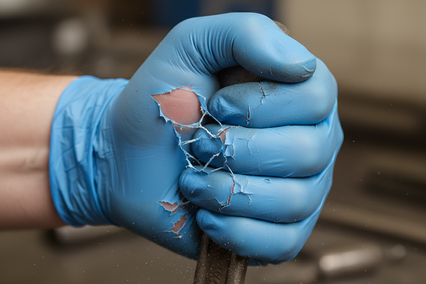


You pull on a fresh pair of cleaning gloves, start scrubbing, and ten minutes later there’s a tear at the fingertip. Sound familiar? Whether you’re burning through boxes of disposable nitrile gloves at a commercial facility or replacing your reusable kitchen pair every week, short-lived gloves are a constant drain on your budget and your patience.
The problem usually isn’t the gloves themselves — it’s how they’re used, stored, and selected. Most people unknowingly cut their cleaning gloves’ lifespan in half through avoidable mistakes: wrong sizing, improper storage, mismatched thickness, and poor cleaning habits.
This guide shows you exactly how to fix that. You’ll learn the specific techniques, habits, and buying strategies that keep your cleaning gloves lasting up to three times longer — whether you use reusable rubber gloves or disposable nitrile, latex, or vinyl. By the end, you’ll spend less on gloves and get better protection from every pair.
Why Cleaning Gloves Fail Prematurely
Before you can extend glove life, you need to understand what kills them. Most premature glove failures come down to five root causes.
1. Wrong Size
Gloves that are too tight stretch the material past its design limits, especially at the fingertips and between the fingers. Every flex and grip accelerates micro-tears. Gloves that are too loose bunch up and snag on surfaces, creating weak points. A proper fit — snug but not restrictive — is the single easiest way to extend glove life.
2. Wrong Thickness for the Task
Using a 3-mil glove for heavy scrubbing is like using a paper plate for soup. Thin gloves are designed for light tasks. Forcing them into heavy-duty work guarantees tears, punctures, and chemical breakthrough. Matching glove thickness to task intensity prevents premature failure and protects your hands.
3. Chemical Degradation
Every glove material has chemical vulnerabilities. Latex breaks down when exposed to oils and petroleum-based products. Vinyl offers poor resistance to most solvents. Even nitrile — the most chemically resistant disposable option — degrades faster under prolonged contact with acetone, strong acids, or certain ketones. Using the wrong glove material with the wrong chemical is the fastest way to destroy your gloves.
4. Improper Storage
Heat, sunlight, and humidity are glove killers. Reusable rubber gloves left crumpled under the sink develop cracks along fold lines. Disposable glove boxes stored near ovens, heaters, or windows degrade before you even open them. UV light breaks down nitrile and latex at the molecular level, turning flexible material brittle.
5. Skipping Post-Use Care (Reusable Gloves)
Reusable gloves that aren’t rinsed, dried, and stored properly after each use develop bacteria, mold, and chemical residue buildup. This weakens the rubber from the inside out and creates hygiene issues. A two-minute post-use routine can double or triple the lifespan of reusable cleaning gloves.
How to Make Reusable Cleaning Gloves Last Longer
Reusable rubber and neoprene gloves are built for repeated use, but only if you treat them right. Follow these steps after every cleaning session.
Step-by-Step Post-Use Care Routine
- Rinse while wearing them. Before removing your gloves, rinse the outside under warm water to remove chemical residue, grease, and debris.
- Wash with mild soap. While still wearing the gloves, lather them with a mild dish soap. This removes chemicals that degrade rubber over time.
- Rinse and remove carefully. Rinse again, then peel the gloves off by turning them inside out. This exposes the interior for drying.
- Rinse the inside. Sweat, moisture, and bacteria trapped inside accelerate breakdown. Give the interior a quick rinse.
- Dry completely. Hang gloves upside down (fingers pointing down) in a well-ventilated area. Never store damp gloves — trapped moisture breeds bacteria and weakens rubber.
- Store flat or hanging. Once dry, store gloves flat or hanging in a cool, dry place away from direct sunlight. Never crumple or fold them.
Storage Best Practices for Reusable Gloves
|
Do |
Don’t |
|
Hang to dry with fingers pointing down |
Leave crumpled under the sink |
|
Store in a cool, dry, shaded location |
Store near ovens, heaters, or windows |
|
Keep flat or on a glove rack |
Fold or bunch — causes cracking at fold lines |
|
Alternate between two pairs |
Use the same pair every day without drying time |
|
Inspect before each use |
Ignore small tears — they spread quickly |
The Two-Pair Rotation Strategy
One of the simplest ways to extend reusable glove life is to rotate between two pairs. While one pair dries completely (which can take 12–24 hours in humid environments), you use the other. This ensures you never wear damp gloves, which is the leading cause of interior degradation and odor buildup.
This single habit can extend each pair’s lifespan by 50–100%, effectively tripling your total glove coverage from the same investment.
How to Get More Life Out of Disposable Cleaning Gloves
Disposable gloves are single-use by design, but that doesn’t mean you can’t get dramatically more value per box. The key is reducing waste, choosing the right glove for each task, and buying smart. Browse bulk disposable gloves at gloves.com to find the right thickness and material for every cleaning job.
Match Thickness to Task Intensity
Over-specifying wastes money. Under-specifying causes tears and re-gloving. Here’s how to match glove thickness to actual cleaning demands:
|
Task |
Recommended Thickness |
Why |
|
Wiping counters, light dusting |
3–4 mil |
Low abrasion, no chemicals — thin gloves perform fine |
|
General kitchen cleaning |
4–5 mil |
Moderate contact with water and mild cleaners |
|
Bathroom scrubbing |
5–6 mil |
Chemical exposure (bleach, disinfectants) and abrasive surfaces |
|
Industrial degreasing |
7–8 mil |
Harsh solvents, rough surfaces, extended wear time |
|
Medical facility cleaning |
5–6 mil |
Barrier protection against pathogens plus chemical resistance |
Pro tip: Stock two thicknesses. Keep a box of 4-mil gloves for quick, light tasks and a box of 6-mil for heavy jobs. This alone can reduce your overall glove consumption by 20–30% because you stop over-using thick gloves on tasks that don’t require them.
Reduce Unnecessary Glove Changes
In commercial settings, one of the biggest sources of glove waste is unnecessary changes. Staff re-glove between tasks that don’t require it, or tear gloves rushing to put them on.
Train your team on these habits:
- Size gloves correctly — the #1 cause of tears during donning is forcing a too-small glove.
- Pull on gently from the cuff, not the fingertips.
- Plan your workflow to batch similar tasks together, minimizing glove changes.
- Only change gloves when switching between contamination zones (e.g., kitchen to restroom), not between identical tasks.
Buy the Right Material for the Chemical
Using a vinyl glove with an industrial degreaser will cause failure in minutes. Using nitrile with the same chemical might last the entire task. Material-to-chemical matching is one of the highest-impact decisions for disposable glove longevity.
|
Chemical Category |
Best Glove Material |
Avoid |
|
Bleach (diluted) |
Nitrile |
Vinyl |
|
Ammonia-based cleaners |
Nitrile or latex |
Vinyl |
|
Degreasers and solvents |
Nitrile (thick) |
Latex, vinyl |
|
Mild dish soap / all-purpose |
Any material |
— |
|
Acids (diluted) |
Nitrile |
Latex, vinyl |
|
Petroleum-based products |
Nitrile |
Latex |
Stocking the right material prevents mid-task failures. Shop nitrile, latex, and vinyl gloves at gloves.com to match every chemical in your cleaning supply closet.
How to Choose Cleaning Gloves That Last Longer
The glove you pick off the shelf has more impact on longevity than any care routine. Here’s what to look for when buying.
Prioritize Nitrile for Durability
Among disposable materials, nitrile consistently outlasts latex and vinyl in puncture resistance, chemical resistance, and overall durability. If you’re going through gloves too fast, switching to nitrile is often the simplest fix. Browse nitrile cleaning gloves at gloves.com.
Don’t Skimp on Thickness
A single box of 6-mil gloves that lasts through tough tasks costs less than two boxes of 3-mil gloves that tear halfway through. Buying slightly thicker gloves for demanding jobs reduces consumption and re-gloving, which saves money over time even at a higher per-glove price.
Size Matters More Than You Think
Correctly sized gloves last significantly longer than poorly fitted ones. Too tight means constant material stress and early tears. Too loose means snagging, bunching, and lost grip. Most manufacturers offer Small through XX-Large. If you’re ordering for a team, stock the full range of sizes — don’t just buy Medium and Large.
Gloves.com offers multi-size variety packs for teams that need a range of fits.
Look for Textured Gloves
Textured fingertips reduce the grip pressure needed to hold tools, bottles, and surfaces. Less grip force means less material stress, which means fewer tears. For any wet cleaning task, textured gloves outperform smooth-finish options in both performance and longevity.
The Real Cost of Short-Lived Cleaning Gloves
Glove waste adds up fast, especially at scale. Here’s what it looks like in practice.
Cost Comparison: Wasteful vs. Optimized Glove Use
|
Metric |
Wasteful Approach |
Optimized Approach |
|
Disposable gloves used per day (10-person team) |
120 pairs |
70–80 pairs |
|
Monthly disposable consumption |
~3,600 pairs |
~2,250 pairs |
|
Reusable glove replacement |
Weekly |
Every 3–4 weeks |
|
Annual reusable glove cost (per person) |
~$52 (52 pairs) |
~$17 (17 pairs) |
|
Estimated annual savings (10-person team) |
— |
$800–$1,500+ |
The savings multiply with team size. A 50-person janitorial staff implementing these practices could save $4,000–$7,500 per year on glove costs alone. Combine optimized usage with bulk purchasing from gloves.com to maximize savings with lower per-unit pricing.
7 Common Mistakes That Destroy Cleaning Gloves
Avoid these and your gloves will last dramatically longer.
|
Mistake |
Why It’s a Problem |
Fix |
|
Wearing the wrong size |
Constant stress on seams and fingertips |
Measure hands and order the correct size |
|
Using thin gloves for heavy tasks |
Tears and chemical breakthrough |
Match mil thickness to task intensity |
|
Storing near heat or sunlight |
UV and heat degrade rubber and nitrile |
Store in a cool, dark, dry location |
|
Not drying reusable gloves |
Bacteria, odor, internal rubber breakdown |
Rinse and hang dry after every use |
|
Pulling on from fingertips |
Stretches and tears finger ends |
Pull on from the cuff, smooth gently |
|
Reusing disposable gloves |
Micro-tears expand, contamination risk |
Use once and replace — buy in bulk to offset cost |
|
Ignoring small tears |
Small tears become blowouts mid-task |
Inspect before use, replace immediately if damaged |
When to Replace Your Cleaning Gloves (Don’t Wait Too Long)
Extending glove life doesn’t mean using damaged gloves. Knowing when to replace them is just as important as making them last.
Replace Reusable Gloves When You See:
- Visible cracks, especially at the fingertips or between fingers
- Thinning material that feels less substantial than when new
- Stiffness or loss of flexibility — the rubber has chemically degraded
- Persistent odor that doesn’t wash out (indicates bacterial or mold growth inside)
- Discoloration from chemical exposure
- Any puncture, tear, or hole — no matter how small
Replace Disposable Gloves:
- After every task or patient/customer interaction
- Immediately if you notice a tear, puncture, or snag
- When switching between contamination zones (e.g., restroom to kitchen)
- After 15–20 minutes of continuous chemical exposure, even without visible damage
- Every time you remove them — never re-don a used disposable glove
Frequently Asked Questions
How long should cleaning gloves last?
Reusable rubber cleaning gloves typically last 2–6 weeks with daily use. With proper care — rinsing, drying, rotating pairs, and correct storage — you can extend that to 4–8 weeks or longer. Disposable gloves are single-use, but choosing the right thickness and material for each task ensures you get full value from every pair without premature tears.
Can you wash and reuse disposable nitrile gloves?
No. Disposable nitrile gloves are engineered for single use. Washing them doesn’t restore their barrier integrity — micro-tears from the first use remain and expand, increasing the risk of chemical breakthrough and contamination. The cost-effective solution is buying in bulk to lower per-glove cost rather than reusing gloves designed to be discarded.
What’s the best way to store cleaning gloves?
Store reusable gloves hanging or flat in a cool, dry area away from direct sunlight and heat sources. For disposable gloves, keep boxes sealed in a climate-controlled room — avoid storage near ovens, windows, or in vehicles where heat accelerates material degradation. Proper storage alone can extend shelf life by months.
Why do my cleaning gloves tear so easily?
The most common causes are wrong sizing (too tight), insufficient thickness for the task, chemical incompatibility with the glove material, and poor donning technique (pulling from fingertips instead of cuffs). Switching to correctly sized nitrile gloves in the appropriate thickness for your tasks eliminates most premature tearing.
Is it cheaper to buy thick gloves or replace thin ones more often?
For moderate to heavy cleaning, thicker gloves almost always cost less over time. A box of 6-mil nitrile gloves that survives the full task is cheaper than burning through two boxes of 3-mil gloves that tear halfway. For light-duty work, thin gloves are perfectly cost-effective. The key is matching thickness to task. Shop gloves by thickness at gloves.com.
How much can a business save by optimizing glove use?
A 10-person cleaning team can save $800–$1,500 per year by implementing proper sizing, thickness matching, care routines, and bulk purchasing. Larger teams see proportionally bigger savings. Combining usage optimization with bulk pricing is the most impactful cost reduction strategy for any business that uses cleaning gloves daily.
Conclusion: Spend Less, Clean More
Making your cleaning gloves last three times longer isn’t about one magic trick — it’s about stacking small, smart habits. Choose the right material. Match the thickness to the task. Size them properly. Store them correctly. And for reusable pairs, invest two minutes in post-use care every time.
These changes cost nothing to implement but deliver measurable savings — especially for businesses going through cases of gloves every month. The less you waste, the more you keep in your budget.
Ready to stock up on cleaning gloves that last? Shop nitrile, latex, and vinyl gloves in bulk at gloves.com — find the right material, thickness, and size for every cleaning task your team handles. Buy in bulk, reduce waste, and get more from every glove.