
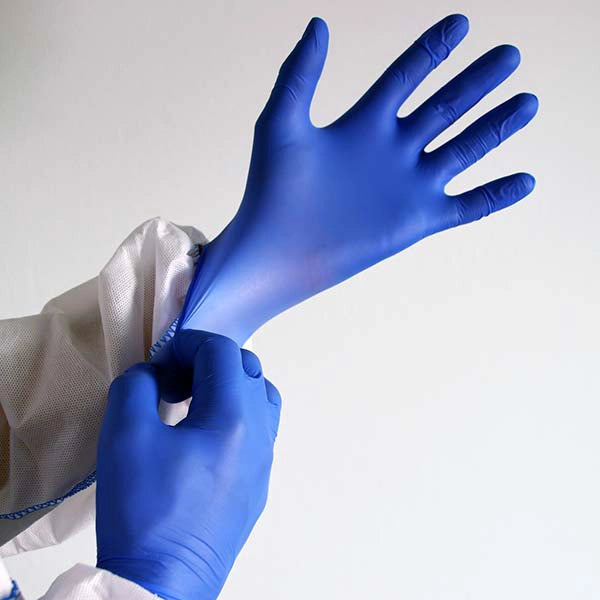

An OSHA inspector walks into your facility and heads straight for the supply room. Your team is wearing gloves—but are they the right gloves? Are they the right material for the hazards on-site? Are they documented in your PPE program? Is there proof your employees were trained on when and how to use them? If you cannot answer “yes” to every one of those questions, your gloves may not be OSHA compliant—and your business could be facing fines that start at $16,131 per violation.
This guide is for business owners, safety managers, facility directors, and operations leads who need a clear, no-jargon breakdown of what OSHA actually requires when it comes to hand protection. You will learn what OSHA is and what it regulates, which standards apply to gloves, how to conduct a proper hazard assessment, and how to build a glove program that passes inspection.
At the bottom, you will find a printable workplace safety checklist you can use right now to audit your own glove compliance.
What Is OSHA and Why Does It Regulate Gloves?
ℹ️ Definition: OSHA stands for the Occupational Safety and Health Administration. It is a federal agency under the U.S. Department of Labor that sets and enforces workplace safety standards to prevent injuries, illnesses, and deaths on the job.
If you have ever asked “what is OSHA?” in a practical sense, it is the agency responsible for making sure employers provide safe working conditions. That includes requiring businesses to identify workplace hazards and provide appropriate personal protective equipment—PPE—at no cost to employees. Gloves are one of the most commonly required forms of PPE across nearly every industry.
OSHA does not approve or certify specific glove brands or products. Instead, it sets performance-based requirements: your gloves must protect workers against the specific hazards present in your workplace. The responsibility falls on you as the employer to identify those hazards, select the right gloves, provide them, and train your workers on their proper use.
This distinction matters. Slapping a box of gloves on the shelf does not make you compliant. Compliance is a system—not a product.
Which OSHA Standards Apply to Gloves?
OSHA’s glove requirements are spread across several standards depending on your industry. Here are the primary regulations that govern whether your gloves are OSHA compliant.
29 CFR 1910.138 — Hand Protection (General Industry)
This is the core OSHA standard for glove use in general industry settings. It requires employers to select and require employees to use hand protection when their hands are exposed to hazards such as skin absorption of harmful substances, severe cuts or lacerations, severe abrasions, punctures, chemical burns, thermal burns, and harmful temperature extremes.
The standard is intentionally broad. It does not tell you which specific glove to buy. It tells you that you must provide gloves that are appropriate for the hazard—and that the selection must be based on a proper assessment of your workplace.
29 CFR 1910.132 — General Requirements for PPE
This is the umbrella standard that governs all personal protective equipment, including gloves. It requires three critical actions from every employer.
- Conduct a hazard assessment. You must perform a documented evaluation of your workplace to identify hazards that require PPE.
- Select appropriate PPE. The PPE you choose must match the identified hazards. For gloves, this means selecting the right material, thickness, and type for the specific chemicals, temperatures, or physical dangers present.
- Provide training. Employees must be trained on when PPE is required, what PPE is required, how to properly put on and remove PPE, and the limitations of the PPE.
29 CFR 1910.1030 — Bloodborne Pathogens
If your workers may come into contact with blood or other potentially infectious materials (OPIM), this standard applies. It requires employers to provide gloves that form an effective barrier against bloodborne pathogens. In practice, this means medical-grade or exam-grade gloves—typically nitrile or latex—that meet FDA barrier requirements. Workers in healthcare, janitorial services that handle biohazard waste, tattoo parlors, and first responder roles all fall under this standard.
29 CFR 1926.95 — PPE for Construction
Construction sites have their own PPE standard. The requirements mirror general industry—hazard assessment, appropriate selection, and training—but are enforced under the construction-specific regulation. If your crew handles chemicals, adhesives, solvents, or concrete on construction or renovation sites, this standard requires hand protection matched to those exposures.
Additional Industry-Specific Standards
Depending on your operation, other OSHA standards may apply. 29 CFR 1910.1048 covers formaldehyde exposure and requires specific PPE. 29 CFR 1910.1200 (Hazard Communication) requires that Safety Data Sheets (SDS) for every chemical in your facility include PPE recommendations—including glove type. Your SDS binder is one of the most important tools for choosing OSHA-compliant gloves.
|
OSHA Standard |
Applies To |
Key Glove Requirement |
|
1910.138 |
General industry |
Gloves must protect against identified hand hazards |
|
1910.132 |
All industries (PPE umbrella) |
Hazard assessment, PPE selection, training |
|
1910.1030 |
Bloodborne pathogen exposure |
Medical/exam-grade gloves with effective barrier |
|
1926.95 |
Construction |
PPE matched to site-specific hazards |
|
1910.1200 |
Any workplace with chemicals |
Follow SDS glove recommendations per chemical |
How to Conduct a Glove Hazard Assessment (OSHA’s First Requirement)
Before you can choose gloves, OSHA requires you to identify what your workers’ hands are exposed to. This is not optional—a written hazard assessment is one of the first things an inspector will ask for. Here is how to do it correctly.
Identify All Hand Hazards in Your Workplace
Walk through every work area and task. Document every hazard that could injure or expose a worker’s hands. Common hand hazards include the following.
- Chemical exposure. Contact with cleaning agents, solvents, acids, disinfectants, or other hazardous substances.
- Biological hazards. Blood, bodily fluids, mold, bacteria, or other infectious materials.
- Cuts and lacerations. Sharp edges, blades, glass, metal shavings, or abrasive surfaces.
- Punctures. Needles, staples, nails, wire, or sharp debris.
- Thermal hazards. Hot surfaces, steam, cryogenic materials, or extreme cold.
- Skin absorption. Chemicals that can be absorbed through the skin and cause systemic harm, even without visible irritation.
Review Safety Data Sheets for Every Chemical
Every chemical in your workplace has a Safety Data Sheet. Section 8 of the SDS lists recommended PPE, including glove material and minimum thickness. If the SDS for your bathroom cleaner says “nitrile gloves, minimum 4 mil,” that is not a suggestion—it is the manufacturer’s recommended protection level, and OSHA expects you to follow it.
Compile the SDS recommendations for every chemical your team handles. If different chemicals require different glove types, your program must account for that—either by stocking multiple glove types or by selecting a single material that covers the broadest range of hazards.
Document Your Assessment in Writing
OSHA requires a written certification of your hazard assessment under 29 CFR 1910.132(d)(2). The document must include the workplace evaluated, the name of the person who performed the assessment, the date of the assessment, and identification of the document as a certification of hazard assessment.
This does not need to be elaborate. A one-page form that lists each work area, the identified hazards, and the PPE selected for each hazard is sufficient—as long as it exists, is signed, and is kept on file.
How to Select OSHA-Compliant Gloves for Your Workplace
With your hazard assessment complete, the next step is choosing gloves that match. OSHA does not endorse specific brands, but it does expect your gloves to be “appropriate for the hazard.” Here is how to translate that into a purchasing decision.
Match the Glove Material to the Hazard
For chemical hazards, the glove material must resist the specific chemicals your workers handle. Nitrile gloves resist the broadest range of chemicals used in cleaning, laboratory, and industrial settings. Latex gloves work well against biological hazards and mild chemicals but degrade against solvents and carry allergy risks. Vinyl gloves are only suitable for low-risk, short-duration tasks with minimal chemical contact.
For biological and bloodborne pathogen hazards, you need exam-grade gloves that meet FDA barrier testing standards—typically nitrile or latex. For cut and puncture hazards, disposable gloves alone are not sufficient. Those tasks require cut-resistant gloves, sometimes with a disposable glove layer underneath for chemical protection.
|
Hazard Type |
Recommended Material |
Minimum Grade |
|
Cleaning chemicals (bleach, ammonia, quats) |
Nitrile |
Industrial or exam grade, 4–5 mil |
|
Solvents (acetone, toluene, MEK) |
Nitrile (thick) or specialty |
6+ mil or chemical-rated |
|
Bloodborne pathogens / biohazard |
Nitrile or latex |
Exam grade (FDA-regulated) |
|
Food handling |
Nitrile, vinyl, or latex |
Food-safe certified |
|
Mild chemicals / general tasks |
Nitrile, latex, or vinyl |
Industrial grade, 3–4 mil |
Verify Glove Sizing and Fit
OSHA expects gloves to fit properly. Gloves that are too large can slip, reduce grip, and catch on equipment. Gloves that are too tight restrict movement and tear more easily. For disposable gloves, stock a range of sizes—small through extra-large—to accommodate your entire team.
An ill-fitting glove is a non-compliant glove if it fails to provide the protection it is rated for.
Ensure Gloves Are Provided at No Cost to Workers
Under 29 CFR 1910.132(h), employers must provide required PPE at no cost to employees. This includes disposable gloves. If your team needs gloves to do their jobs safely, you cannot charge them for it, deduct it from their pay, or ask them to bring their own. The cost of PPE is a business expense—period.
OSHA Glove Training Requirements: What Your Employees Must Know
Providing the right gloves is only half of compliance. OSHA requires that every employee who uses PPE is trained on its proper use. For gloves, that training must cover the following areas.
- When gloves are required. Workers must know which tasks and work areas require glove use.
- Which gloves to use. Workers must know which specific glove type is required for each task or chemical exposure.
- How to put on and remove gloves properly. Especially critical for bloodborne pathogen compliance, where improper glove removal can cause cross-contamination.
- Limitations of the glove. Workers must understand that their gloves have a limited useful life, that no disposable glove provides unlimited protection, and when to change gloves.
- How to inspect gloves before use. Workers should visually check for tears, holes, discoloration, or stiffness before putting on a glove.
Training must be documented. Keep a record of each employee’s training date, the topics covered, and their signed acknowledgment. Refresher training is required whenever new hazards are introduced, new PPE is provided, or an employee demonstrates that they do not understand the previous training.
⚠️ Common Violation: The most frequently cited OSHA glove violation is not the wrong glove type—it is the lack of a documented hazard assessment and training records. Inspectors look for paperwork first. If you cannot prove it happened, it did not happen.
5 Common Mistakes That Make Your Gloves Non-Compliant
Even well-intentioned safety programs can fail OSHA inspection on technicalities. Here are the five most common mistakes that result in hand protection citations.
1. No Written Hazard Assessment
You know your workplace is hazardous. Your team wears gloves every day. But if you do not have a signed, dated hazard assessment document on file, OSHA considers your entire PPE program non-compliant. This is the single most common citation related to glove compliance.
2. Gloves Do Not Match the Actual Hazard
Providing vinyl gloves when your team uses bleach and ammonia daily is a mismatch. The gloves are present but do not provide adequate protection against the identified hazards. OSHA evaluates whether your glove selection is appropriate for the specific risks your workers face—not just whether gloves exist on-site.
3. No Training Documentation
Your crew might know exactly how to use their gloves. But if you have no training records—dates, topics, signatures—an OSHA inspector has no evidence that training occurred. Undocumented training is treated the same as no training.
4. Employees Required to Pay for PPE
If employees are buying their own gloves, paying for them through payroll deductions, or being asked to reuse disposable gloves to cut costs, you are in violation. Required PPE must be employer-provided and replaced as needed at no cost to the worker.
5. Expired or Degraded Gloves in Stock
Disposable gloves deteriorate over time, especially when stored in hot, humid, or UV-exposed conditions. Using gloves that have become brittle, discolored, or tacky from improper storage means the barrier may be compromised. Rotate stock and check expiration dates—especially when buying in bulk.
OSHA Glove Compliance Checklist for Your Workplace
Use this checklist to audit your current glove program. If you can check every box, your hand protection program is aligned with OSHA requirements. If you cannot, the items you miss are your action items.
HAZARD ASSESSMENT
- ☐ Written hazard assessment on file — Signed, dated, identifies all hand hazards by work area and task.
- ☐ SDS review completed for all chemicals — Section 8 glove recommendations compiled for every product in use.
- ☐ Hazards categorized — Chemical, biological, physical (cuts/punctures), and thermal hazards documented.
- ☐ Assessment updated annually or after changes — New chemicals, tasks, or work areas trigger reassessment.
GLOVE SELECTION
- ☐ Glove material matches identified hazards — Nitrile for chemicals, exam-grade for bloodborne pathogens, etc.
- ☐ Glove thickness meets SDS recommendations — Mil thickness appropriate for the most aggressive chemical handled.
- ☐ Full size range stocked (S, M, L, XL) — Every worker can access a glove that fits properly.
- ☐ Exam-grade gloves used where bloodborne pathogen standard applies — FDA-regulated barrier gloves for healthcare, janitorial biohazard, and first responder tasks.
- ☐ Latex-free alternatives available — Latex allergy accommodations in place for all affected employees.
TRAINING
- ☐ All employees trained on glove use — When to wear, which glove for which task, how to don/doff, and glove limitations.
- ☐ Training documented with dates and signatures — Individual records kept on file for each employee.
- ☐ Refresher training scheduled — Recurring training when new hazards, products, or glove types are introduced.
SUPPLY & ACCESS
- ☐ Gloves provided at no cost to employees — Employer-funded. No payroll deductions or out-of-pocket requirements.
- ☐ Gloves accessible at or near work areas — Workers can reach fresh gloves without leaving their station.
- ☐ Adequate inventory to prevent stockouts — Bulk supply maintained so teams never work without protection.
- ☐ Proper storage conditions maintained — Cool, dry, away from UV and chemical exposure. Stock rotated by expiration date.
RECORDKEEPING
- ☐ Hazard assessment certification on file — Meets 29 CFR 1910.132(d)(2) requirements.
- ☐ Training records current for all employees — Includes new hires and refresher training.
- ☐ SDS binder current and accessible — Updated whenever new chemicals are introduced. Available to all workers.
What Happens If Your Gloves Are Not OSHA-Compliant?
OSHA violations carry real financial consequences. As of 2024, the penalty structure for PPE-related violations is as follows.
|
Violation Type |
Maximum Penalty |
|
Serious / Other-Than-Serious |
$16,131 per violation |
|
Failure to Abate |
$16,131 per day past abatement date |
|
Willful or Repeated |
$161,323 per violation |
A “serious” violation is one where the employer knew or should have known about a hazard that could cause death or serious harm. Missing hazard assessments, wrong glove types, and lack of training all fall into this category. “Willful” violations—where the employer intentionally disregarded a standard—carry penalties that can exceed $161,000 per instance.
Beyond fines, OSHA citations become public record. They can impact your ability to win contracts, especially with government agencies or large corporations that require vendors to demonstrate safety compliance.
Build a Glove Program That Protects Your Workers and Passes Inspection
OSHA compliance is not about buying the most expensive gloves or stocking every type on the market. It is about a documented system: identify the hazards, match the glove to the hazard, train your team, and keep records that prove you did it. The checklist above gives you every element OSHA looks for in a hand protection program.
If your hazard assessment reveals that your team needs chemical-resistant gloves, exam-grade gloves for biohazard work, or simply a reliable all-purpose disposable glove in every size, the right product is only part of the equation. The system around it—the assessment, the training, the documentation—is what keeps you compliant and keeps your workers safe.
When you are ready to stock your facility with gloves that match your safety requirements, browse the full selection at gloves.com: where you can filter by material, thickness, grade, and case quantity to find the right glove for every hazard in your workplace.
Frequently Asked Questions About OSHA Glove Compliance
Are disposable gloves OSHA-compliant?
Disposable gloves can be OSHA-compliant—but only if they are the right type for the identified hazards in your workplace. A disposable nitrile glove that matches the chemical resistance requirements from your SDS and hazard assessment is compliant. A random box of vinyl gloves that was never matched to a hazard is not. Compliance depends on the selection process, not the glove format.
Does OSHA require a specific glove brand or certification?
No. OSHA does not certify, approve, or endorse specific glove brands. The standard requires that gloves be “appropriate for the hazard.” It is the employer’s responsibility to verify that the gloves they select meet the chemical resistance, barrier, and thickness requirements for their specific workplace hazards.
How often does OSHA require glove training?
Initial training is required before an employee is exposed to a hazard that requires PPE. Retraining is required when the workplace changes (new chemicals, new tasks), when new PPE is introduced, or when an employee demonstrates inadequate understanding of previous training. There is no fixed annual requirement, but many safety professionals include glove training in annual refresher programs as a best practice.
Do I need different gloves for different tasks?
Potentially. If your hazard assessment identifies different hazard levels across tasks—for example, mild cleaners for surface wiping versus bleach-based disinfectants for restroom deep cleaning—you may need different glove types or thicknesses. Alternatively, you can standardize on a single glove that meets the requirements of your most demanding task, which simplifies inventory and training.
What if an employee has a latex allergy?
OSHA requires employers to accommodate workers with latex allergies by providing suitable latex-free alternatives. Nitrile gloves are the most common substitute—they provide equal or better chemical resistance without the allergy risk. You must also ensure that latex particles from other workers’ gloves do not contaminate shared surfaces or equipment.
Are gloves required for food handling under OSHA?
OSHA does not specifically regulate food-handling gloves—that falls under FDA and state health department regulations. However, if food workers are exposed to chemical cleaning agents, hot surfaces, or sharp equipment, OSHA’s general PPE requirements apply. In practice, many food service operations need gloves that satisfy both food-safety regulations and OSHA standards simultaneously.