
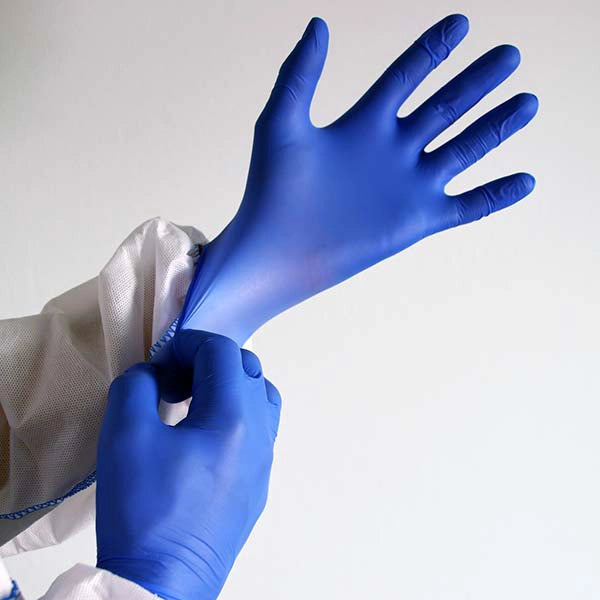

Four hours into a shift, your gloves are damp inside. Your grip has softened. Your hands feel like they've been wrapped in cling film since 6am. You're not thinking about protection anymore — you're thinking about getting these things off.
If that sounds familiar, you're already asking the right question: what is the best glove material for long shifts?
It's not the same answer as "what's the most protective glove" or "what's the cheapest glove per box." Long shifts introduce a specific set of problems — heat buildup, sweat accumulation, grip degradation, and skin fatigue — that most glove buying guides don't directly address.
This guide does. It's written for managers, procurement leads, and workers who need to make a smarter glove decision based on how gloves actually perform across a full shift, not just in the first ten minutes.
By the end, you'll know which material holds up, which features matter most, and exactly what to look for when buying gloves built for extended wear.
Why Glove Material Matters More on Long Shifts
For short tasks — a 10-minute food prep session, a quick cleaning job, a brief patient exam — almost any disposable glove will do. Material differences are minor when wear time is low.
Long shifts change that equation entirely.
What happens to your hands over 6–12 hours of gloved work:
- Sweat accumulates — The skin inside the glove becomes moist, increasing friction and the risk of maceration (skin softening and breakdown from prolonged moisture)
- Grip degrades — Wet skin inside a glove reduces the effective grip transferred to the glove's outer surface
- Heat builds — Thicker gloves trap more heat; in warm environments or active roles this compounds fatigue quickly
- Skin barrier weakens — Constant moisture and mechanical friction increases the risk of dermatitis, particularly for workers who change gloves repeatedly throughout a shift
- Fit changes — Some materials loosen or tighten as they absorb heat and sweat; a poor fit becomes a real hazard
Choosing the right glove material upfront addresses most of these problems before they start.
The Three Main Glove Materials: What You Need to Know
Before comparing them for long-shift performance, here's a clear baseline on what each material actually is.
Nitrile
A synthetic rubber compound (acrylonitrile butadiene rubber). Originally developed as a latex alternative, nitrile has become the dominant material in professional disposable gloves across medical, food service, and industrial settings.
Key properties: High puncture and tear resistance, excellent chemical resistance, no allergy risk, wide range of thicknesses available.
Latex
Natural rubber harvested from rubber trees. The original standard for disposable gloves — historically unmatched for feel and elasticity.
Key properties: Superior tactile sensitivity, exceptional stretch and form-fit, natural biodegradability. Carries allergy risk from natural rubber proteins.
Vinyl
Made from polyvinyl chloride (PVC), a synthetic plastic. The most affordable disposable glove material and the least protective.
Key properties: Low cost, loose fit, minimal elasticity, suitable for low-risk short-duration tasks. Not recommended for long shifts.
Glove Material Comparison for Long Shifts
| Feature | Nitrile | Latex | Vinyl |
|---|---|---|---|
| Sweat management | Good (textured versions best) | Moderate | Poor |
| Breathability | Moderate | Moderate | Low |
| Grip over time | ★★★★★ | ★★★★☆ | ★★☆☆☆ |
| Fit consistency during wear | ★★★★★ | ★★★★★ | ★★★☆☆ |
| Durability (puncture/tear) | ★★★★★ | ★★★★☆ | ★★★☆☆ |
| Skin comfort over 6–8 hrs | ★★★★☆ | ★★★★☆ | ★★☆☆☆ |
| Allergy risk | None | Low–Moderate | None |
| Recommended for long shifts | ✅ Yes | ✅ Conditionally | ❌ No |
Vinyl is out for long shifts. Its loose fit, low elasticity, and poor moisture management make it a poor choice for extended wear. It's a short-task glove.
Latex is conditionally suitable. Where allergy risk is managed and tactile sensitivity is critical — dental, surgical, precise assembly work — latex holds up well on long shifts. Its natural elasticity maintains fit over time.
Nitrile is the primary recommendation for most long-shift applications. It combines consistent fit, durable grip, broad chemical resistance, and no allergy risk — making it the most versatile and defensible choice across industries.
Gloves for Sweat: What Actually Helps
Sweat is the most common long-shift complaint, and it's largely a function of three things: material, thickness, and surface texture. Here's how to address each.
Material and Moisture
No disposable glove is breathable in the traditional sense — they're by design impermeable. But nitrile and latex differ in how they manage the microclimate inside the glove.
Nitrile: Modern nitrile formulations, particularly thin-film nitrile (3–4 mil), allow slightly more heat dissipation than thicker gloves. The lower mass means less heat retention. For warm environments or active roles, thinner nitrile outperforms thicker variants.
Latex: Latex's natural elasticity means it conforms tightly to the hand, which can actually reduce the air pocket inside the glove where sweat pools. Some workers report that well-fitting latex gloves feel less clammy over long periods despite no technical breathability advantage.
Texture and Grip
A textured outer surface — particularly micro-textured or diamond-textured nitrile — maintains grip as the hand sweats by providing mechanical traction that compensates for the reduced friction from wet skin.
Look for:
- Fully textured gloves (not just fingertip-textured) for the best all-around grip
- Diamond pattern texturing for maximum grip in wet or greasy conditions
- Avoid smooth-finish gloves for any task requiring tool handling, patient care, or fine motor work
Thickness and Heat
The thicker the glove, the more heat it retains. For long shifts in warm environments:
- 3–4 mil: Lightest option; best heat dissipation; suited to low-contamination-risk roles
- 5–6 mil: Balanced protection and comfort; the most common long-shift specification
- 7–9 mil: Heavy-duty protection; best for high-risk chemical or sharps environments; higher sweat risk
For most long-shift workers in medical, food service, and janitorial roles, 5–6 mil nitrile hits the sweet spot between protection and wearability.
Gloves for Comfort: The Fit Factors Most People Overlook
Gloves for comfort are often discussed as if comfort is a fixed property of the material. It isn't. Comfort on a long shift is primarily a function of fit accuracy — and fit is where most bulk glove purchases go wrong.
The Problem with Generic Sizing
Standard disposable gloves come in XS through XL. But hand shapes vary significantly even within a single size designation. A worker with wide palms and short fingers may find a standard "Large" too long in the fingers, creating bunching that causes fatigue and blistering over hours of wear.
What to look for:
- Ambidextrous vs. hand-specific: Most disposable gloves are ambidextrous (fit either hand). Surgical-style gloves are hand-specific and provide better anatomical fit — worth considering for roles requiring precision over long periods.
- Beaded cuff: A rolled cuff edge prevents the glove from rolling down the wrist during active wear — a small feature that significantly affects long-shift comfort.
- Low-modulus nitrile: "Modulus" refers to how much force is required to stretch the glove. Low-modulus nitrile requires less hand effort to wear, reducing fatigue in the muscles of the hand and wrist over an extended shift.
Donning and Doffing Frequency
In many roles, workers change gloves multiple times per shift — between tasks, when contamination occurs, during breaks. Gloves that are difficult to put on or remove quickly add cumulative fatigue and slow workflow.
Powder-free gloves are standard (and FDA-required for medical gloves) — but within powder-free gloves, chlorinated inner linings make donning and doffing significantly easier, particularly when hands are damp from previous glove wear.
Look for chlorinated or polymer-coated interior finishes when buying nitrile gloves for high-frequency change environments.
Long-Shift Glove Recommendations by Industry
Healthcare and Medical
Best material: Nitrile (5–6 mil, powder-free, low-modulus)
Why: No allergy risk to patients or staff, excellent puncture resistance against needles and sharps, consistent fit over long clinical shifts. Look for extended-cuff versions for additional wrist protection during procedures.
Shop 6 Mil Nitrile Gloves and save up to 50% today
Food Service and Processing
Best material: Nitrile (3–5 mil, fully textured, food-safe certified)
Why: Grip retention matters when handling wet or greasy foods over hours. Nitrile's chemical resistance also holds up against cleaning solutions used between tasks. Ensure gloves carry FDA food-contact compliance.
Janitorial and Cleaning
Best material: Nitrile (5–6 mil) or Latex (5–6 mil, if no allergy risk)
Why: Extended contact with cleaning chemicals, detergents, and disinfectants requires more than a light glove. Both materials offer adequate protection; nitrile is the safer default for shared-use environments.
Dental
Best material: Latex (5 mil, powder-free) or Nitrile where latex is contraindicated
Why: Dental procedures require the highest tactile sensitivity of almost any professional use case. Latex still leads here for feel and fit. Where latex allergies are present, thin nitrile (3.5–4 mil) is the best alternative.
Industrial and Assembly
Best material: Nitrile (6–9 mil, textured)
Why: Puncture resistance and grip are paramount. For chemical-adjacent environments, nitrile's chemical resistance profile is unmatched among disposable gloves.
How to Build a Long-Shift Glove Protocol for Your Team
Choosing the right glove is step one. Step two is making sure your team uses them correctly across a full shift — because even the best glove fails when worn incorrectly.
A practical long-shift glove protocol:
- Set a change schedule — Gloves should be changed every 2–4 hours in continuous-wear environments, or whenever contamination occurs, whichever is sooner. Prolonged wear of a single pair compounds moisture-related skin issues.
- Allow brief glove-off periods — Where safe to do so, short periods without gloves (during breaks, between tasks) allow the skin to breathe and significantly reduce maceration risk.
- Check sizing regularly — Workers' sizing needs can change seasonally (hands swell in heat) and over time. A quick size audit each quarter prevents the comfort drift that comes from an outdated size allocation.
- Stock two thicknesses — A lighter glove (3–4 mil) for tasks with low contamination risk and a heavier glove (5–6 mil) for higher-risk tasks gives workers the right tool for each job and reduces unnecessary heat buildup.
- Track glove complaints — Skin irritation, loss of grip, and premature tearing are signals that the wrong glove is being used. Treat complaints as data.
Quick Decision Guide: Which Glove for Your Shift?
You need maximum grip in wet conditions → Fully textured nitrile, 5–6 mil
You need maximum tactile sensitivity → Latex, 5 mil, powder-free (where allergy risk is managed)
You work in a warm environment and sweat heavily → Thin nitrile, 3–4 mil, textured
You change gloves frequently throughout the shift → Nitrile with chlorinated inner lining
You work with strong chemicals → Nitrile, 6–9 mil
You need an all-purpose long-shift glove → Nitrile, 5–6 mil, fully textured, powder-free
Frequently Asked Questions
What is the most comfortable glove material for long shifts?
For most workers, low-modulus nitrile in the 5–6 mil range offers the best balance of comfort, durability, and grip over extended wear. Latex is competitive on comfort and fit, but carries allergy risk. Vinyl is not suitable for long shifts due to poor fit and low moisture management.
Why do my hands sweat so much in disposable gloves?
All disposable gloves are occlusive — they prevent moisture from escaping, which causes sweat to accumulate inside the glove. Thicker gloves trap more heat and accelerate this effect. Switching to a thinner glove (3–4 mil), choosing textured nitrile, and following a regular glove-change schedule are the most effective strategies.
Do nitrile gloves cause more sweating than latex?
Not significantly. Both materials are impermeable and create similar internal conditions over time. Fit has a larger impact than material — a glove that fits tightly and accurately will generally be more comfortable and feel less clammy than a loose-fitting glove of either material.
How often should gloves be changed during a long shift?
Every 2–4 hours in continuous-wear roles, or immediately following contamination, breakage, or visible soiling. More frequent changes are required in high-risk clinical and food processing settings. Your industry's regulatory guidelines will specify minimums.
Can I use the same gloves for an entire 8-hour shift?
Not recommended. Prolonged single-pair use increases the risk of skin maceration, micro-perforations from accumulated wear, and grip degradation. Most professional protocols call for multiple glove changes across an 8-hour shift.
Are there gloves specifically designed for long shifts?
Not typically marketed that way, but certain features indicate a glove built for extended wear: low-modulus formulation, chlorinated inner lining, beaded cuff, full texturing, and 5–6 mil thickness. Look for these specifications when reviewing bulk options at gloves.com.
Conclusion: The Right Glove Pays for Itself on Long Shifts
The cost of the wrong glove doesn't show up on the invoice. It shows up in worker discomfort, increased glove consumption from early tearing, slower task performance from degraded grip, and in worst cases, skin injuries that take workers off the floor.
Choosing the best glove material for long shifts is a legitimate productivity and worker health decision — not just a procurement detail.
The framework is straightforward: nitrile at 5–6 mil, fully textured, powder-free with a chlorinated inner lining covers the majority of long-shift applications across industries. Refine from there based on your specific environment — thinner for heat, heavier for chemical risk, latex where precision and allergy control align.
Ready to find the right fit for your team? Explore the full range of professional disposable gloves — including long-shift-ready nitrile in bulk sizes and multiple thicknesses — at gloves.com.
![Best Glove Colors for Food Safety Compliance [2026 Guide]](http://www.gloves.com/cdn/shop/articles/some-nitrile-gloves-with-different-colors-for-a-chef-to-choose.png?v=1773146326&width=426)
