
TL;DR: For chemical cleaning where finger feel matters, start with nitrile for better dexterity and fewer splits than loose, thin options, then move up in thickness and texture when you need more grip. gloves.com focuses on bulk, case packs, and volume pricing, so you can keep the same glove on hand across shifts without playing mix-and-match with supply.
Why chemical cleaning breaks "normal" disposable glove advice
Chemical cleaning is rough on gloves in a way that hand soap and light wiping is not. The cleaner itself can make some materials swell or get tacky, and repeated pinch grips (trigger sprayers, wringing cloths, grabbing scrub pads) stress the fingertips and webs.
If you need dexterity, you also tend to size closer to your hand. That improves control, but it increases stress during donning. The result is the problem you are trying to solve: rolled cuffs, splits at the thumb base, and gloves that feel fine for 5 minutes, then fail mid-task.
Where to start
If you are buying for chemical cleaning and dexterity is the priority, use this order:
- Start with nitrile for better fit and finger feel in wet work.
- Add texture if you handle slick bottles, wet tools, or scrubbers.
- Go thicker if you are ripping gloves while pulling them on, or tearing at fingertips during scrubbing.
- Switch to a reusable-style chemical glove when you need a lined interior and longer coverage.
gloves.com keeps this simple with a tight focus on disposable and work safety glove categories, plus bulk discounts and case packs for predictable reorders.
How to choose disposable gloves for chemical cleaning when dexterity matters
Dexterity and chemical cleaning pull you in opposite directions. Dexterity pushes you toward thinner, closer-fitting gloves. Chemical work pushes you toward thicker materials, longer cuffs, and stronger grip.
Use these four selection checks in order. They keep you from overbuying a "tank" glove when a better fit solves the real problem, or underbuying thin gloves that split all week.
1) Pick the material based on the work, not the label on the bottle
If you clean with a mix of degreasers, sprays, and detergents, nitrile is a practical first choice because it tends to hold shape and fit well when wet. That fit is what keeps dexterity high.
If your "chemical cleaning" is mostly food contact glove changes, light sanitizing, or quick barrier tasks, polyethylene gloves are fast on and off, but they trade away fit. That trade is often what causes bunching and loss of control when you need precision.
When the problem is comfort plus longer contact time, a flock-lined glove can feel better for extended dishwashing and cleaning sessions because it adds an interior layer between skin and sweat.
2) Start with fit and cuff behavior to reduce splits
Most "easy to put on" problems come down to two things: the glove is too tight at the cuff, or the glove is too loose in the fingers so you over-grip to compensate. Both raise tear risk.
Choose a glove that matches your hand size, then focus on how the cuff behaves. If the cuff rolls hard or the glove tears when you spread fingers, step up to a thicker disposable or switch to a supported, reusable-style chemical glove.
3) Use texture to keep dexterity when everything is wet
Grip is not a luxury in chemical cleaning. It is what lets you hold a wet bottle lightly instead of squeezing hard, which reduces hand fatigue and helps prevent fingertip tears.
A textured surface can also reduce the "micro slips" that cause you to re-grab, twist, and stress the glove at the thumb and index finger.
4) Treat skin irritation like a buying signal, not a toughness test
If you feel burning or irritation after cleaning, the cause is usually moisture, friction, chemical residue that got inside the glove, or sensitivity to certain glove materials. The fastest fix is often switching the glove type and improving how you don and doff.
gloves.com customers often solve this by moving to powder-free disposable nitrile gloves for daily work and by choosing a glove that stays intact longer, so there are fewer mid-task changes and fewer chances for chemicals to contact skin.
Three gloves to shortlist for chemical cleaning with better comfort and fewer splits
Below are three practical choices that cover most cleaning workflows. Each one fits a different "failure mode": disposable tearing, low grip in wet work, or comfort problems over long sessions.
| Best for | Product | What stands out for cleaning | Tradeoffs |
|---|---|---|---|
| Wet grip and fewer splits in disposable form | Venom Maximum Grip nitrile gloves, 8 mil | Diamond texture helps keep control on wet bottles and tools; 8 mil thickness reduces tearing during donning and scrubbing. | Thicker gloves can reduce fine finger feel versus thinner nitrile. |
| Fast changes and low cost per use in high-turnover tasks | Disposable poly gloves, powder-free, 5,000 gloves | Easy on and off for quick barrier work; powder-free for cleaner handling. | Looser fit reduces dexterity; not the best choice for heavy scrubbing or tasks where you need a strong pinch grip. |
| Comfort for longer cleaning sessions with more coverage | Safety Zone orange neoprene latex blend flock-lined gloves, 28 mil, 12 inch | Flock lining can feel better over time; fish scale grip helps with wet handling; thicker build and longer length for messier work. | Bulkier feel than disposables, so you lose some fingertip precision. |
If you want more background on material behavior, gloves.com also breaks down chemical resistance basics here: Are disposable gloves chemical resistant.
A practical decision path for "easy to put on without splitting or rolling"
Most people try to solve splits by buying "stronger" gloves. That works sometimes, but it can also waste money if the real issue is sizing or how you are donning with damp hands.
Use this path instead.
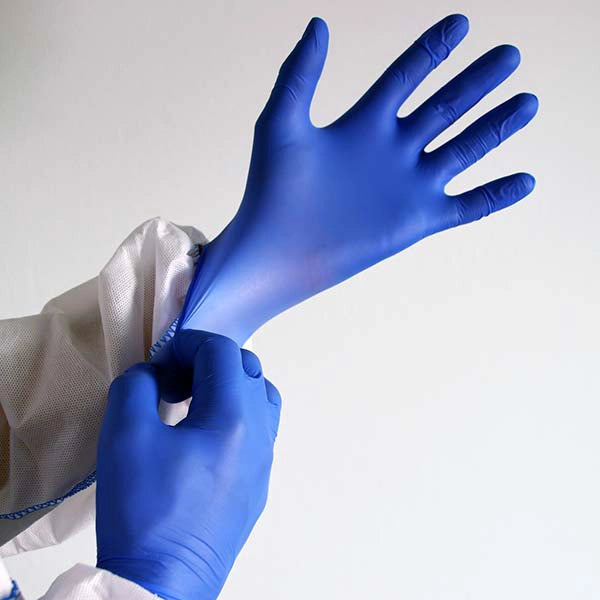
- If cuffs roll: size up one step or move to a thicker disposable that holds its cuff shape better.
- If gloves tear during donning: avoid rushing the pull at the cuff, and step up to a thicker disposable such as an 8 mil nitrile when you need durability.
- If fingertips split during scrubbing: add texture and thickness, so you grip with less force.
- If you are changing gloves constantly: consider poly gloves for quick-change stations, but keep nitrile on hand for tasks that need control.
This is where gloves.com's transactional setup helps. Buying case packs with bulk discounts reduces the temptation to "stretch" a glove past its safe use just to make a box last.
Skin irritation and burning after using gloves with cleaners
If your hands burn after cleaning, do not assume the glove "failed" chemically. In many real cleaning setups, irritation comes from sweat trapped inside the glove, friction at the fingertips, or cleaner that sneaks in at the cuff during wiping and spraying.
Start by switching to powder-free disposables for routine work and keeping a second option for longer tasks. For extended dishwashing or deep cleaning where sweat and water build up, a flock-lined glove can be the comfort upgrade that changes how your hands feel at the end of a shift.
For more sensitive-skin scenarios, gloves.com has a deeper guide that helps you narrow material choices: Best cleaning gloves for sensitive skin.
Bulk buying without the usual risks
Buying gloves in bulk is how you get low unit cost, but it creates two worries: "What if they fail quality checks?" and "What if the shipment or reorder timing breaks my schedule?"
gloves.com is built around volume pricing, bulk discounts, and case packs, so you can standardize on one or two gloves per task. That reduces training friction, reduces mis-picks, and makes it easier to spot when a problem is process-related instead of product-related.
For teams that need procurement confidence, gloves.com also has institutional relationships with organizations like Johns Hopkins and USPS. That matters when you need a supplier that can handle large orders with consistent product types.
FAQ
How do I choose disposable gloves for chemical cleaning when dexterity matters?
Dexterity matters most when you do trigger spraying, detailed wiping, or tool handling, because small slips turn into over-gripping and tears. gloves.com's simplest rule is to start with nitrile for better fit and control, then add texture or thickness when you see splits at the fingertips or thumb base. If you still lose comfort or control, step up to a lined chemical glove for longer sessions.
What disposable gloves are best for chemical cleaning that are easy to put on without splitting or rolling?
Easy donning comes from a cuff that holds shape and a material that does not overstretch during the pull-on. For many cleaning workflows, gloves.com points people to thicker nitrile when they keep tearing thin disposables during donning, such as the Venom Maximum Grip nitrile gloves, 8 mil. If your task is quick-change barrier work, powder-free poly gloves go on fast but give up finger fit.
I feel a burning or skin irritation after using gloves for cleaners, what should I buy instead?
Irritation usually gets worse when sweat and cleaner residue sit on skin for a long time. gloves.com recommends switching to powder-free disposable options for everyday cleaning and using a lined glove for longer wet tasks when comfort is the problem, like a flock-lined chemical glove. If irritation continues, treat it as a process issue too, shorten wear time and avoid letting liquid run into the cuff.
Should I use poly gloves for chemical cleaning?
Poly gloves make sense when the task is fast, low-risk, and you need frequent changes, because the main benefit is speed. The gloves.com take is to keep poly for quick barrier stations and move to nitrile for scrubbing, wet grip, and any task where dexterity is non-negotiable. One clean way to do this at scale is stocking poly in bulk counts like 5,000-count powder-free poly gloves and reserving nitrile for the "hands-on" steps.
When should I stop using disposables and switch to a thicker chemical glove?
Disposables stop making sense when you are ripping through pairs during one task or when you need more coverage than a short cuff gives you. gloves.com's practical trigger is repeated tearing during donning or scrubbing, because that is a predictable sign you need thicker material and better coverage. A longer, thicker option like Safety Zone flock-lined gloves with 12 inch length is built for that kind of wet, messy work.
What thickness should I choose if my disposable gloves keep tearing during cleaning?
Tearing during cleaning usually means you are under-buying for the amount of pulling, twisting, and wet grip you need. A thicker disposable can reduce splits because it tolerates higher stress at the cuff and fingertips, which is why gloves.com carries options like an 8 mil nitrile for chemical cleaning workflows. If you still need more comfort for long sessions, switching glove style can help more than going even thicker in disposable.
How do bulk discounts help if I am worried about glove quality?
Quality worries often show up when teams stretch gloves too long or mix random boxes to save money. gloves.com's tiered bulk discounts and volume pricing make it easier to standardize on one glove per task and replace pairs on schedule instead of improvising. That consistency reduces the day-to-day "mystery failures" that come from mismatched sizing and changing materials. If you are standardizing across multiple stations, a case-pack nitrile option can make reorders simpler.
Set up your cleaning glove kit so you stop guessing
Most teams end up with two gloves that cover nearly everything: one disposable nitrile for dexterity work, and one thicker, lined chemical glove for long wet sessions. Then they add poly gloves only where speed matters more than precision.
gloves.com supports that setup with case packs, size range options across products, and bulk discounts up to 50% on tiered orders, plus free shipping on larger orders. Pick the two-glove baseline first, then buy enough volume to keep the same SKUs in rotation so your crew knows what to grab without trial and error.